9/11/2021

Twenty-five years ago. Thirty percent of Americans alive today were born after 9/11/01. Another seven percent were five years old or younger, too young to remember.

As one of these post 9/11 babies said, “Dafry, 21, who lives in the Bronx, seems more confused. He admits he does not know much about what happened then—only that someone hijacked planes and crashed them, but he is not sure into what. “It was against the Empire State Building, right?” he asks. When told it was actually the Twin Towers, he replies that he had heard something but wasn’t sure. “Sorry, I’m a bit disconnected,” he apologizes. He does know, however, that the attacks changed many things, especially airport security. “It’s crazy. It happened 25 years ago and people still get emotional and keep talking about it,” he concludes.

Here are some reasons why, Dafry

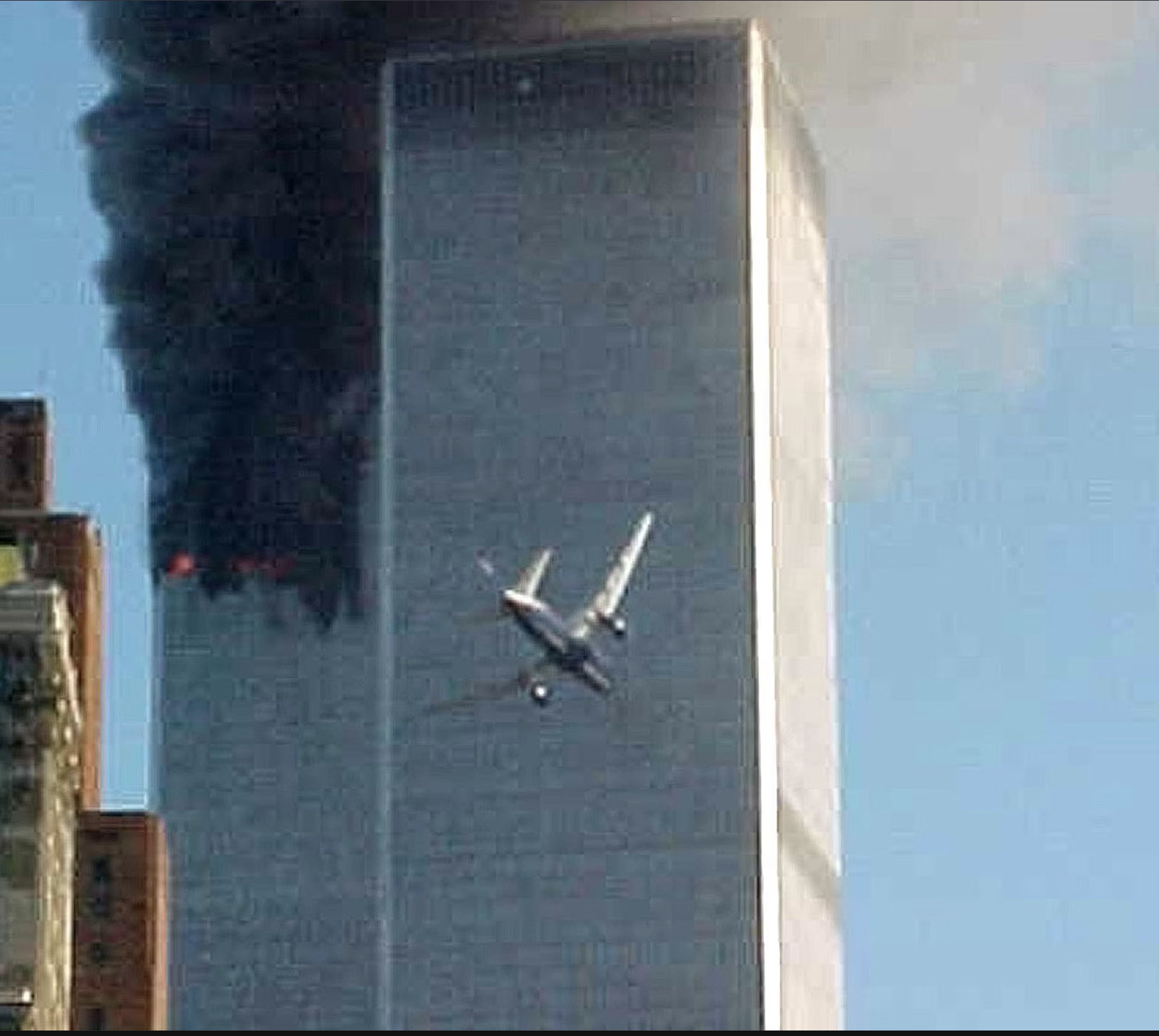
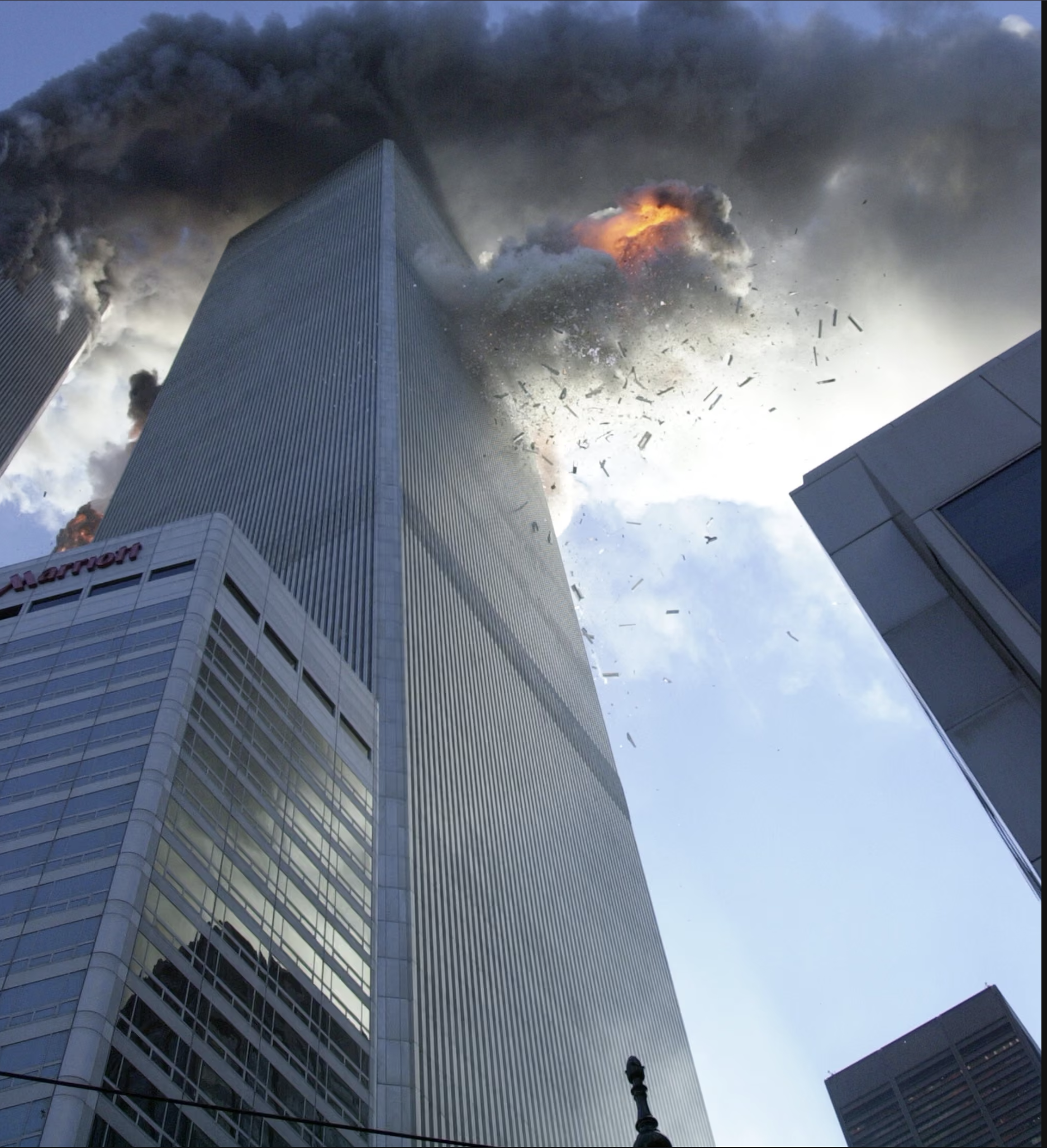
When the second plane hit we all knew it wasn’t a coincidence.

Photographers, occupied with images of the first tower, were prepared when the second tower was struck.

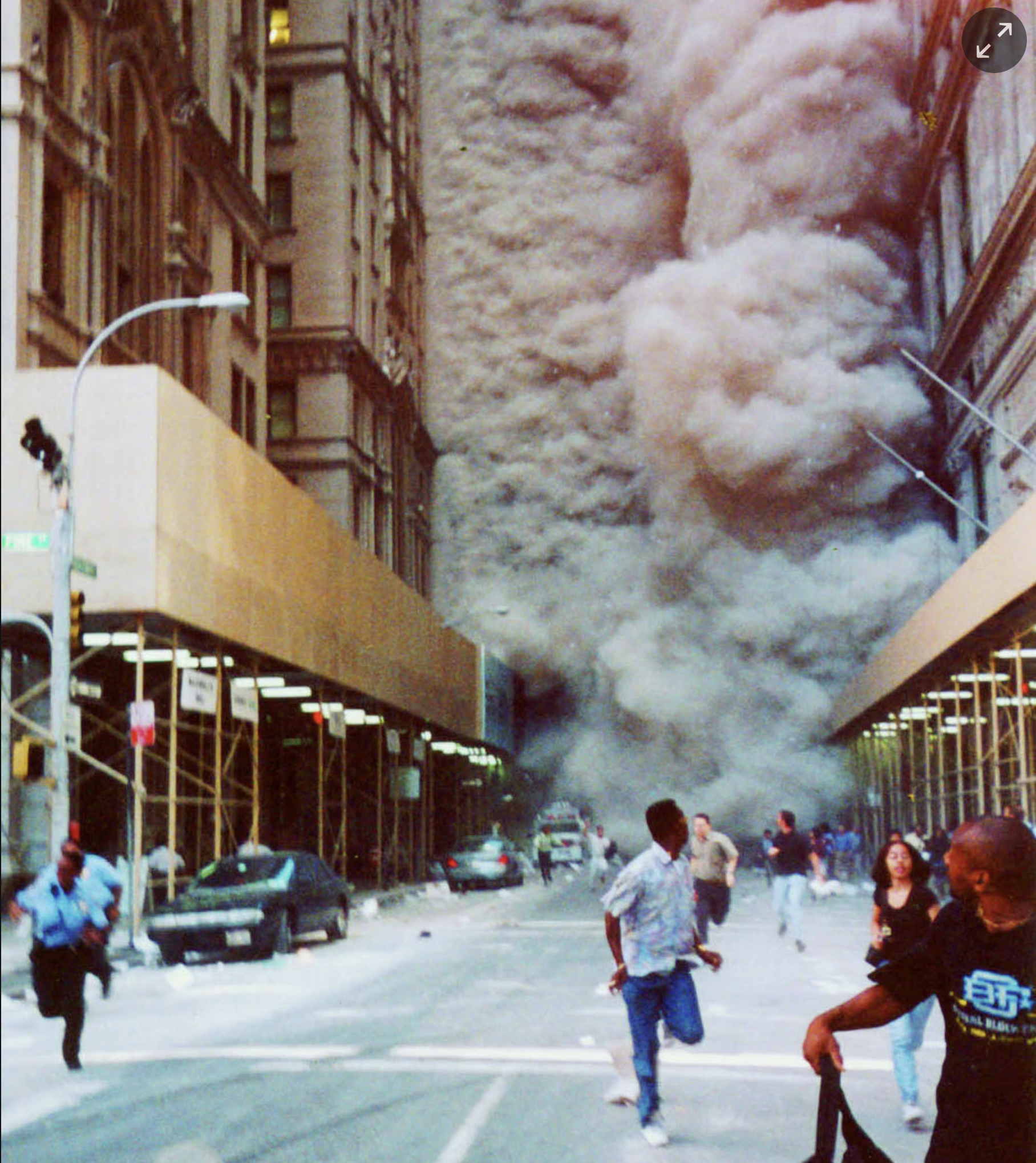
When the first tower collapsed

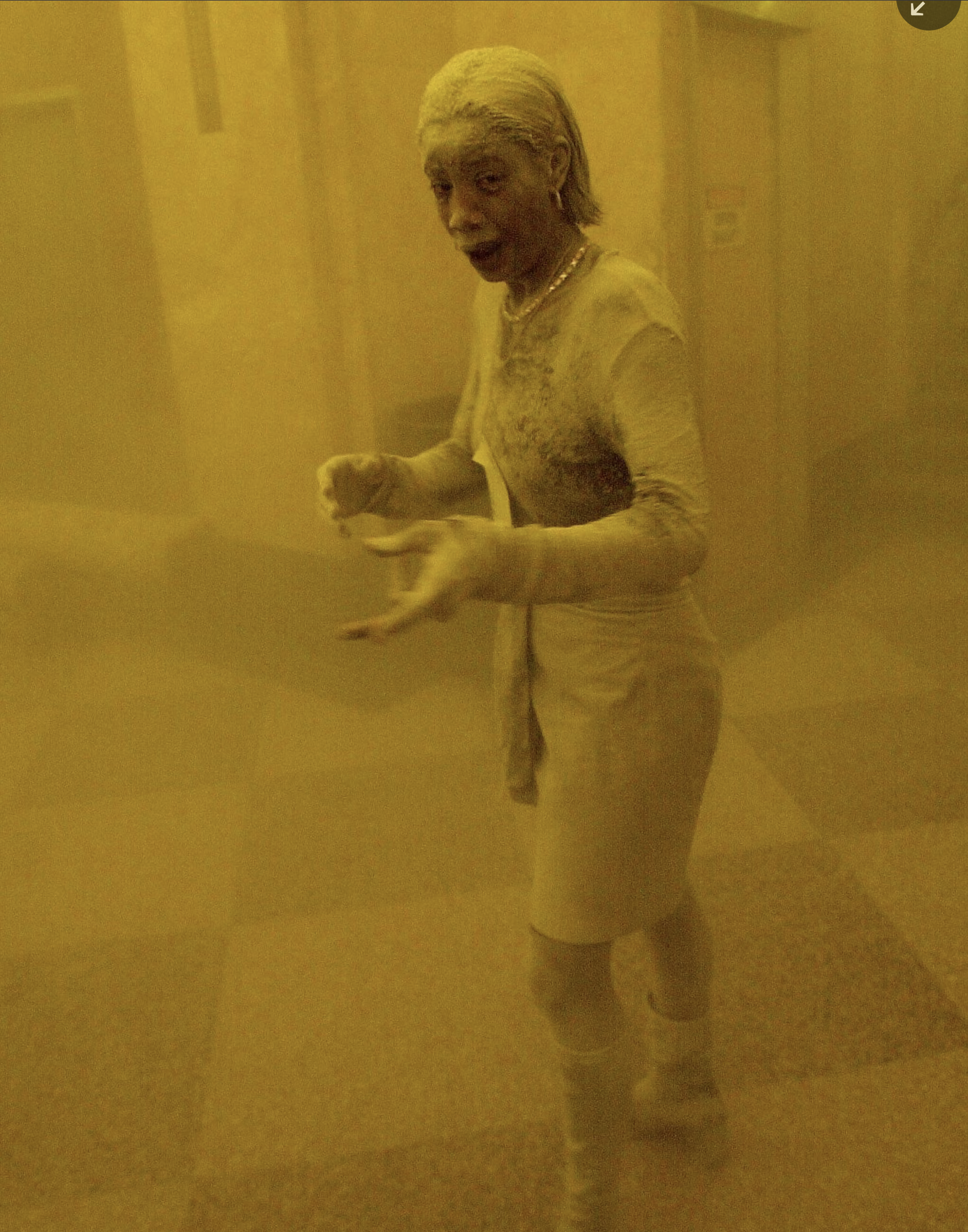
The survivors. The Dust Woman

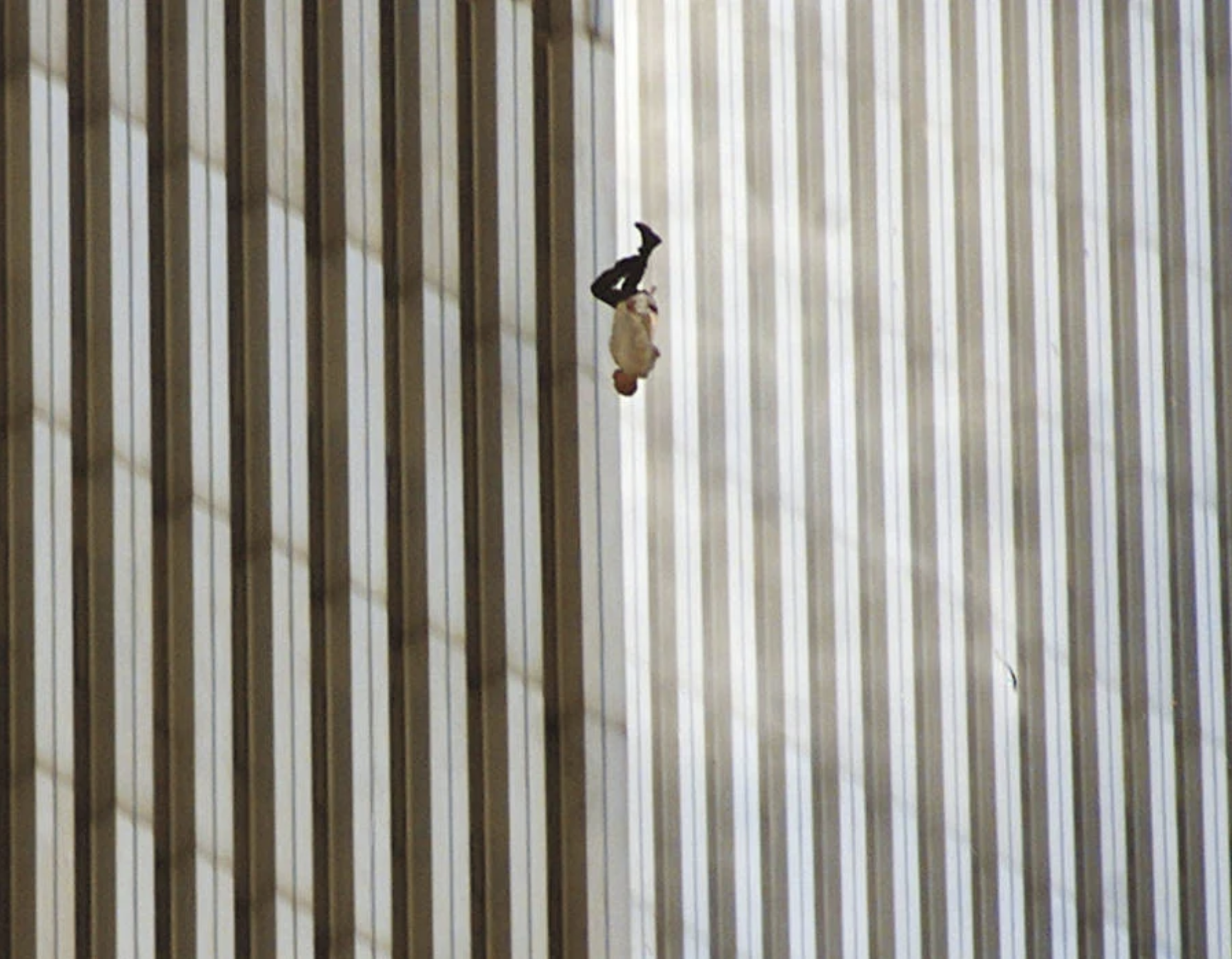
Falling Man. Perhaps the most gripping image from that day. Rather than burn alive, people jumped to their deaths.

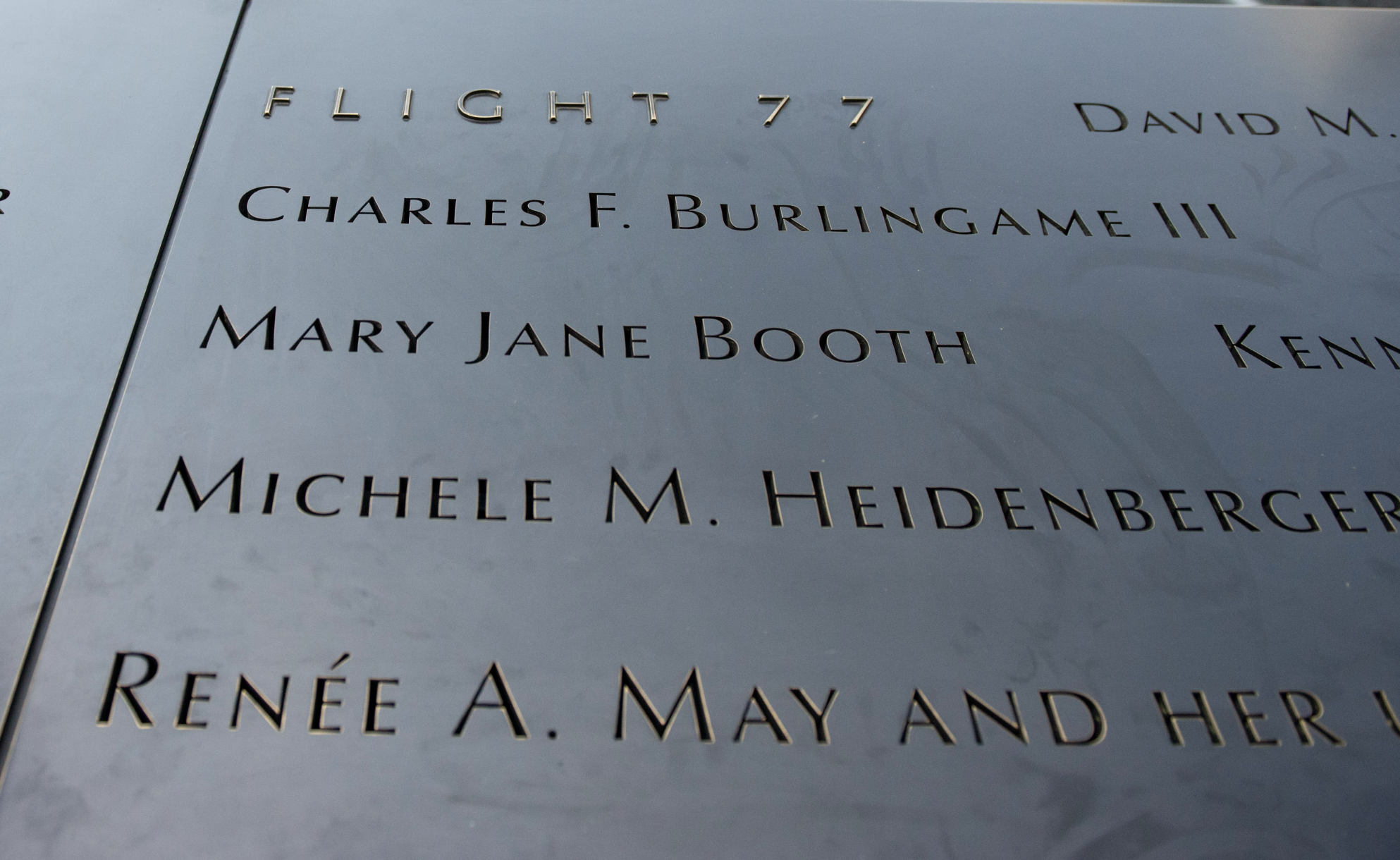
My father was never close to his family. His sister Adelaide had two daughters, one of whom was Mary Jane, the secretary to the president of American Airlines. She was officially my cousin, although I didn’t know her. She boarded Flight #77 for San Francisco, but her life ended when that plane flew into the Pentagon. My father died before that day, and my very political uncle Rowland had died a year earlier. I’m glad that neither one of them knew what happened on 9/11.

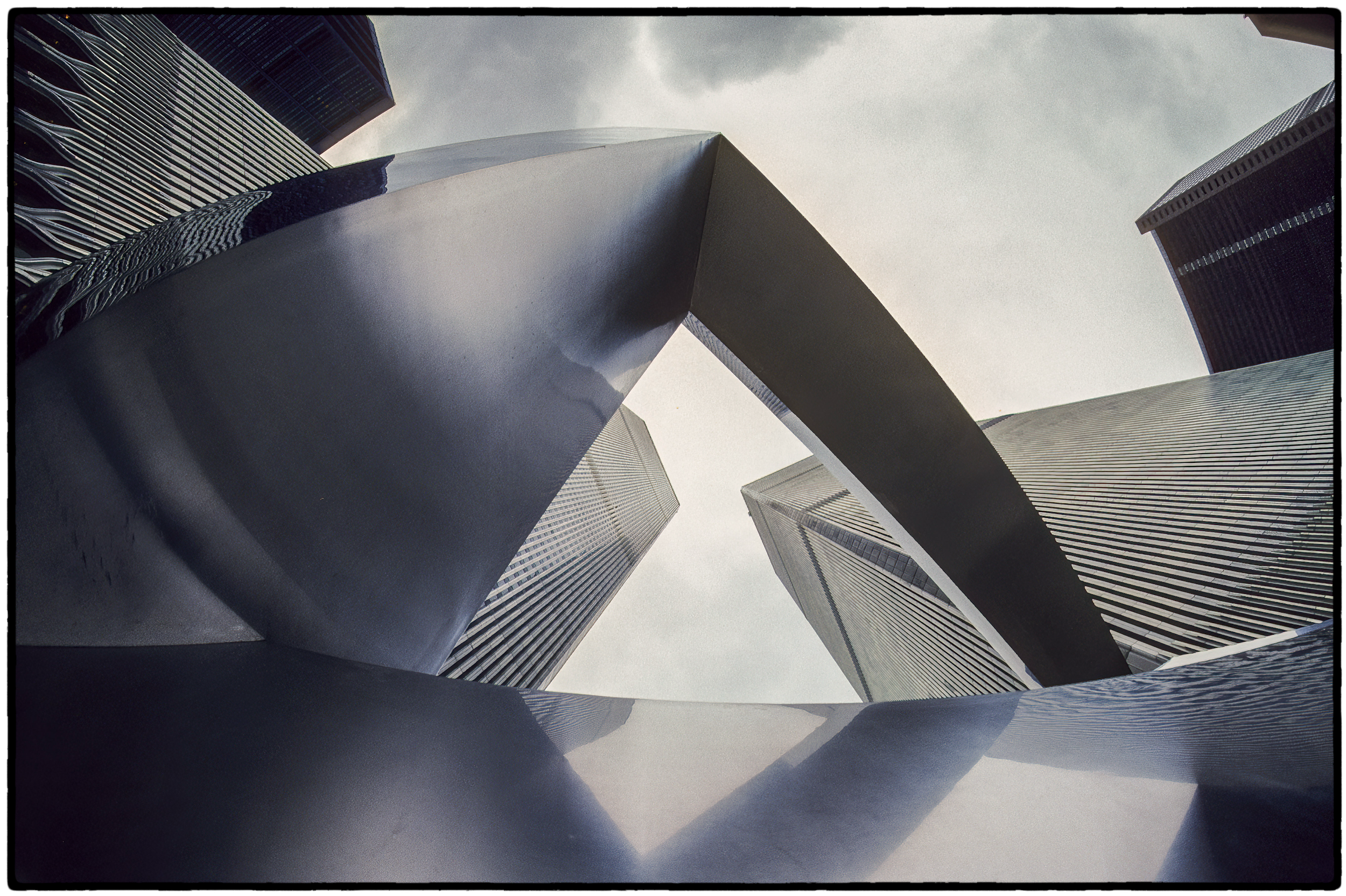
I took this image in an earlier visit to NY, using a rectilinear fisheye lens to shoot through a sculpture at the base of the World Trade Center towers.

The sixty-three percent of us who were alive then remember where we were at 9 am on that day. Jennifer was in England. She called us at 6 am P.S.T.. Her words were, “Turn your TV on.” No sittings, no senior portraits. We were just witnesses to an Al Quaeda attack on America, fully aware that thousands of our fellow citizens who went to work that morning didn’t come home, almost three thousand of them, a number that has trebled in the years since because rescue workers, firemen, and ordinary citizens breathed the toxic air that hung around for months. In the last couple of days it has been revealed that the city of New York knew that the air was unhealthy and failed to alert those who had to breathe it.

For those who are in their late fifties, most will agree that 9/11 signifies their most traumatic memory. We all remember where we were, what we were doing, how we learned about the attacks. The memory imprints events like this with permanent ink.

For those of us who are older, who came of age in the sixties, it might take a back seat to Kennedy’s assassination, followed by both King’s and Robert Kennedy’s. In fact the whole decade is one linked memory of turmoil and change—the Cuban missile crisis, the assassinations, hippies, free love, the democratic convention in Chicago, the Weatherman, Yippies, SDS, Charles Manson, Jerry Rubin and Abbie Hoffman, the Symbionese Liberation Army, the Vietnam War, the peripatetic draft notifications, Nixon’s dirty tricks, and the Black Panthers, all fused together in a very memorable stew. When my peers are asked, “What was the most dramatic event you remember?”the likely answer is “The Sixties.”

Meanwhile, Back at the Ranch

The Sixties, 9/11, may not be the last catastrophes facing America in our lifetimes. Last night Donald Trump asked of the attendees at the GOP midterm convention in Dallas:

“Please raise your right hand,” Mr. Trump instructed a rowdy crowd of thousands inside a Dallas arena on Thursday evening. Many of them complied. “I pledge to the greatest president in the history of the United States that loves us so much he can’t even breathe that I will go out with my family, my friends, I will do it any way — I don’t care if I’m registered or not, I’m going to try and cheat like hell, like they do.” (Mr. Trump usually frowns on election fraud.)

He added: “I am going to go out, and I’m going to get my friends, my family, and we are going to vote on November 3.”

What’s been left unmentioned in this blog entry is January 6, 2021, when Trump incited an insurrection against the USA, resulting in the deaths of not only several people, but democracy itself. With MAGA in attendance last night, a stream of election deniers in power, Trump is attempting to create an authoritarian regime paying obeisance only to himself, arguably the most stupid, corrupt person in America. The midterm elections are coming in two months. He just announced that he will cheat in the election. If he can he will. If he wins, 9/11 will take a back seat to an America that will be steeped in cruelty, authority, and hatred, his personal way of making America “Great” Again.

Lord of the Rings

“You Don’t Own Me” Lesley Gore

Apple Watch Rings

But you did for more than two years. For those of you who don’t have Apple watches or iPhones, these deceptively little rings that are part and parcel of those two devices are hypnotic, controlling, possessing powers that can overwhelm the owner into digital slavery, making them swear daily obedience to them.

The red ring represents calories spent during a day. The owner selects an arbitrary number (in my case it’s 740), and the ring begins to take its circular turn as I move about, closing at the top when I’ve spent as much time moving or exercising to expend the 740 calories. For an eighty year old man that means a one mile freestyle swim and a host of other physically undemanding actions normally taken during the course of a day. It could mean cutting the grass, vacuuming the carpets, washing the car, or just taking a one mile or so walk around the neighborhood. Apple wants me to close that ring every day, and for the past several weeks I’ve been able to do that, although as the sun began to set, and I found myself at 682 or so, I might have taken a walk that I wouldn’t have taken otherwise, all just to close the ring. I could lower the number a bit, making it that much easier, but I wanted it to be high enough that it wouldn’t close if I just watched the news or read a book. Turning pages doesn’t have much of a caloric effect.

Since many of the watch faces show the rings, a quick glance reveals where the owner stands at any given time. I used to see it whenever I wanted to know what time it was. I needed to know that I was making sufficient headway towards the top of the mountain, that elusive 740. The watch face I’ve chosen now doesn’t show anything other than the time. Isn’t that quaint? A watch that shows the time! Not seeing the ring, not knowing how much progress I’m making, renders the whole concept of shedding 740 calories every day of my life unnecessary and irrelevant. I’m still doing the same things I’ve ever done, only the rings no longer have dominion over me. I’m free.

The other two rings are largely meaningless. The green exercise ring is set to 30 minutes, although it is adjustable. A thirty minute walk takes care of that, although flying to Ethiopia made that hard, too. And the blue ring? The watch reminds me that I need to stand and walk around for one minute at least once an hour. Twelve hours, twelve minutes on my feet, and after completing my one minute stand (going to the bathroom takes more than that), the watch congratulates me, as if I just set a record in the Chicago marathon: “You did it!” I’m so proud when I see that.

So these are the three Apple rings. Completing them over long periods of time bring “badges” and other meaningless “rewards.” My reward, though, has been escaping them. They still count, they still measure, only I don’t see them. I could sneak a peek, but so far I’ve resisted the temptation.

More Numbers

The Apple rings identify only three of the numbers that measure me. My scale gives out another number, and I’m avoiding looking at that, as a combination of a Kirkland ice cream bar, a scotch mallow from a box of See’s candies, and a few Kettle chips combined lad night to give me a number that I don’t need to know. It’s like my portfolio. With the economy as it is, not knowing how much is left in my 401K won’t make me lose sleep, but knowing would. What we don’t know won’t hurt us.

My blood pressure is high. That’s another number that I don’t choose to know, as knowing would only make me sad. Oh yes, I’m taking Lisinopril, a medication to combat high blood pressure, but it doesn’t drop it down to 120/70, a far off dream. My cholesterol isn’t going to win any contest, either. I take a statin, which helps. But do I want to know what the numerical equivalent of a likely stroke is? And do I want to know that I’ve reached it?

I do know my resting heart beat. It’s in the low forties, a number that usually only belongs to athletes, Possibly the only thing I have in common with real athletes. Possibly the swimming helps. I’m good with that.

Seven. That’s the number of hours of sleep I like to get each night. Sometimes that happens. Fifty-six, the number of years that Jadyne and I have been married. Grateful for that, too. Three. The number of kids we have. Six. The number of grandkids, all healthy and well. We’re adding two more with Sunny’s kids, Alex and Serena. Eighty. The number of years I’ve been on terra firma, definitely grateful for all eighty of those.

Some numbers are unknown, such as the number of years the world has to put up with Donald Trump, the number of lies he’ll tell while he’s still in office, and the number of people that will die because of his policies. I don’t know if knowing these numbers would bring joy or depression. Hope and optimism aren’t susceptible to numerical values; they exist in a parallel universe, one that I’m most grateful to inhabit, today, September (the ninth month), Third, Two thousand and twenty-six.


Pushing the Button

Globally, it has been estimated that 2.1 trillion photographs are taken annually, roughly 5.3 billion each day. The abstract nature of big numbers obscures the fact that a button is pushed 61,400 times a second. That’s a lotta photos. Since over 90% of those photos are taken with a smartphone, that leaves less than 8% taken with a traditional camera. It is noted that quality and volume don’t correlate. Where phones win, though, is finding moments that would vanish without them.

Today National Geographic revealed a drone photo of a humpback whale delivering a calf. Because calves can’t breathe underwater mom gives her calf a nudge towards the surface.

Such an image would have been impossible in the film era.

Today digital output matches 1998 film camera output in less than two weeks. With such an increase in volume does the quality of what’s produced match or exceed what film photographers used to do? After all, autofocus replaced manual focus, built-in meters replaced handheld ones, AI assists with autofocus, exposure and subject recognition. But Tiffany Tangen, a writer in the magazine Amateur Photographer, assumes that just because photography has become technically easier, people somehow mistakenly believe it has become less demanding to take a meaningful photograph.

She adds, “To me, the hardest part of photography was never learning which button to press. It was learning what was worth pressing it for. A camera can recognize an eye, but it can’t recognize grief, sorrow or pure, elated joy. It can track a bird through tangled branches. It can’t understand why this particular bird, in this particular light, at this particular moment reminds you what it feels like to be free. It can produce astonishingly clean files, flawless autofocus and immaculate image quality until your memory card begs for retirement, but it still can’t replace curiosity, patience, empathy or that peculiar instinct photographers develop for pressing the shutter a fraction of a second before everyone else realizes something extraordinary is about to happen.”

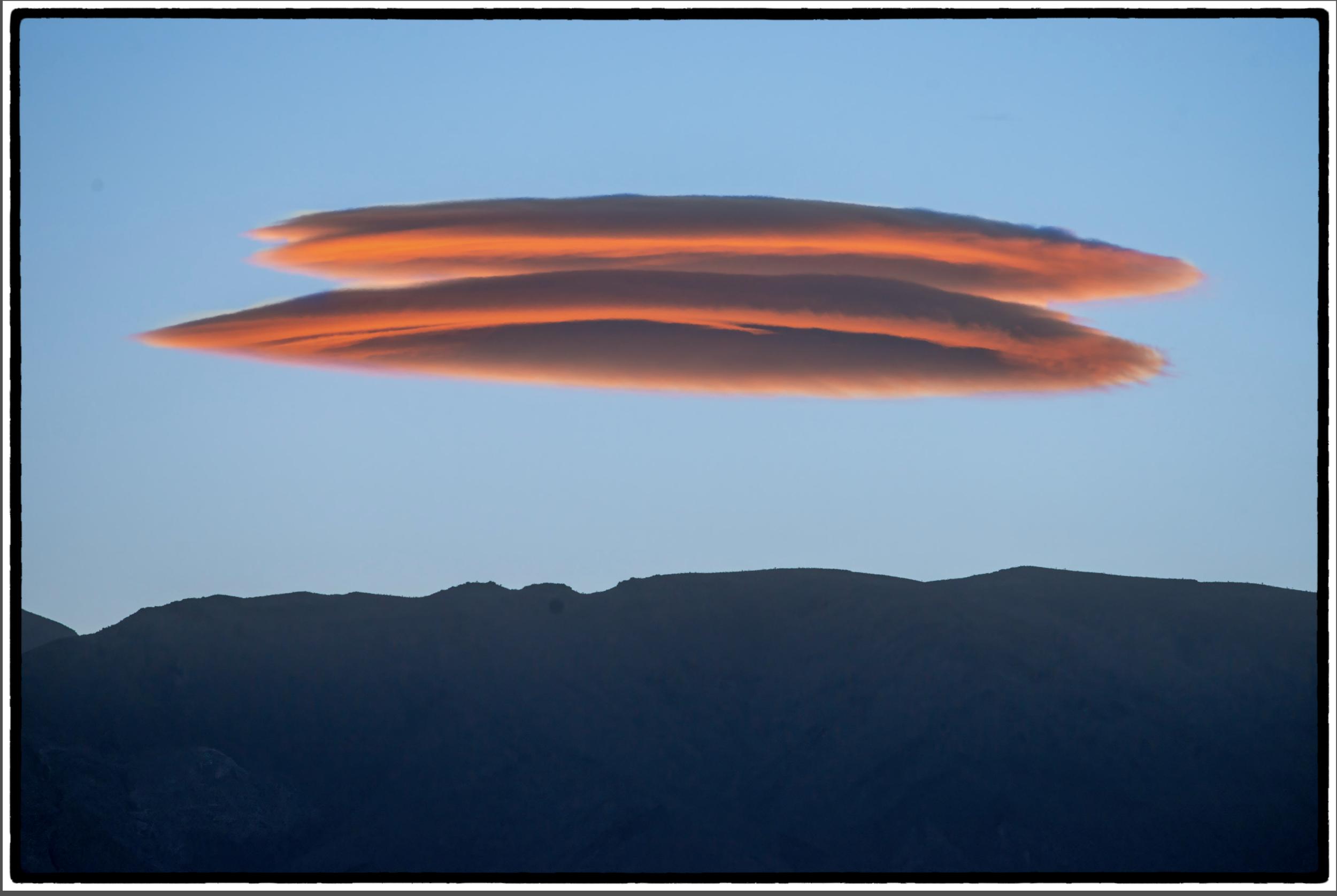
It can’t see that these two clouds captured during a Death Valley sunset become transformative.

All the photographic technology can’t tell the photographer to be prepared for the split second when the sun breaks through the storm clouds.

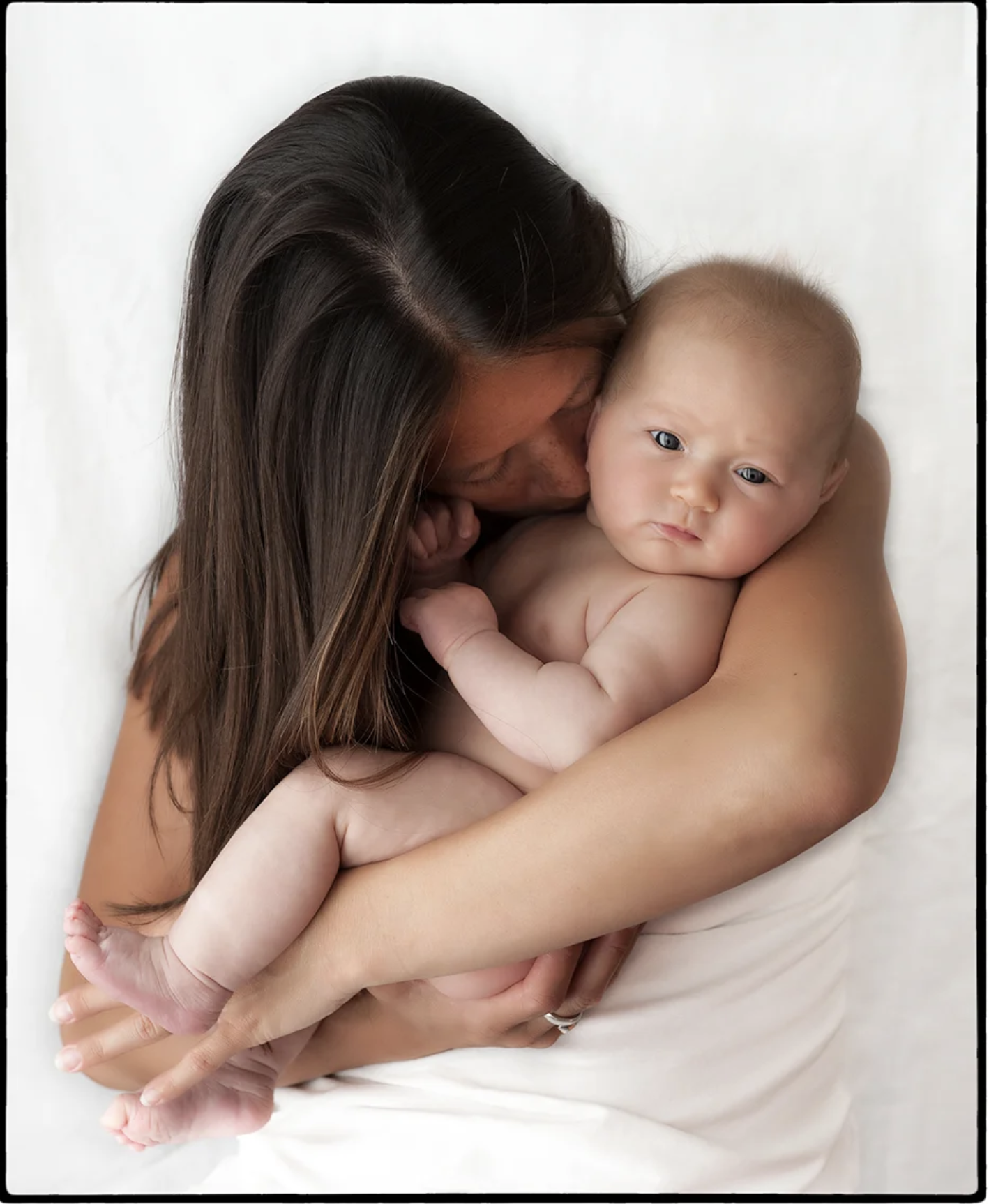
Or that the baby will stop crying for an instant so the shutter can be depressed

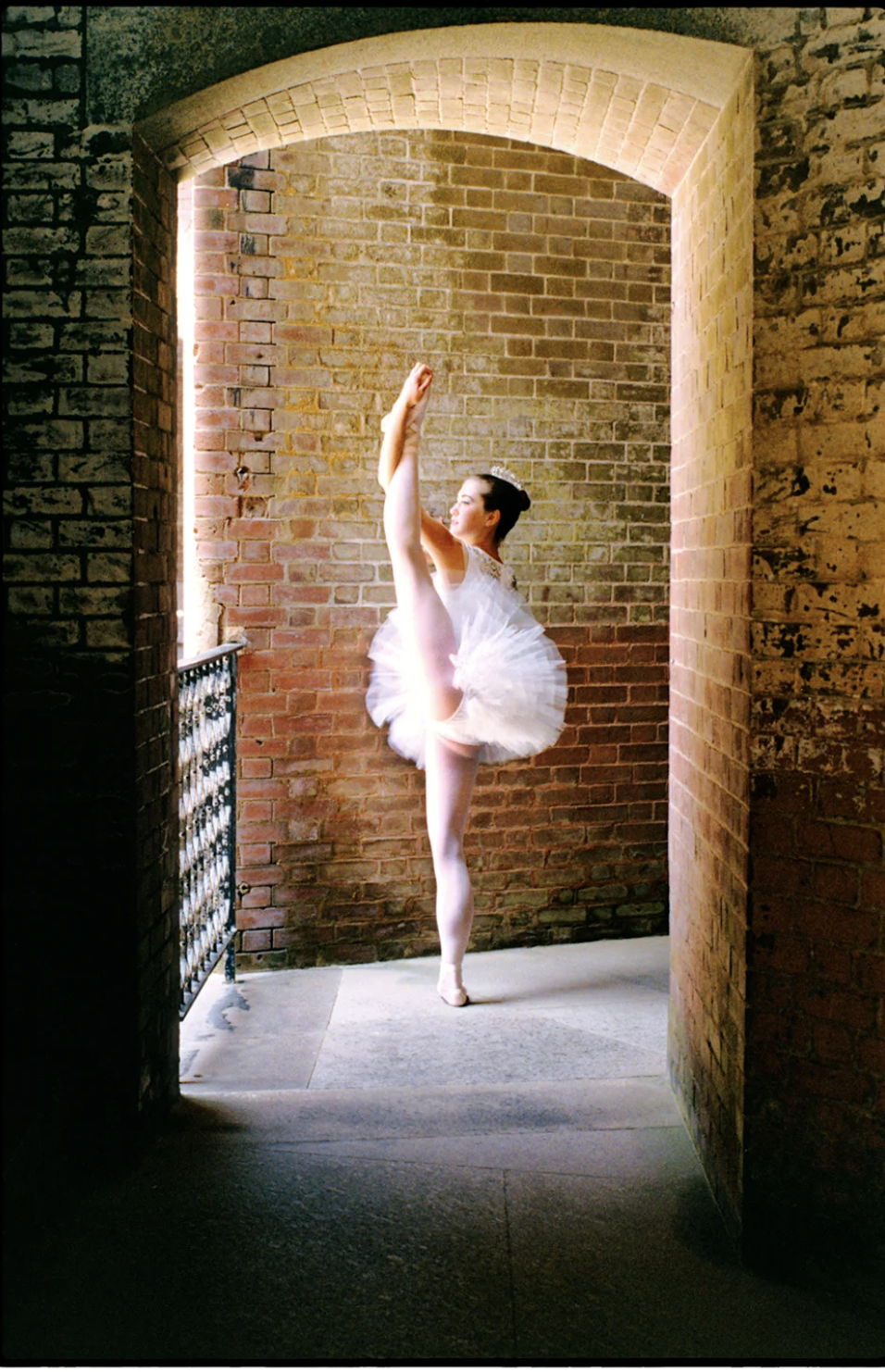
Five seconds after I took this image the sunlight flooded the ballerina, and the effect was lost.

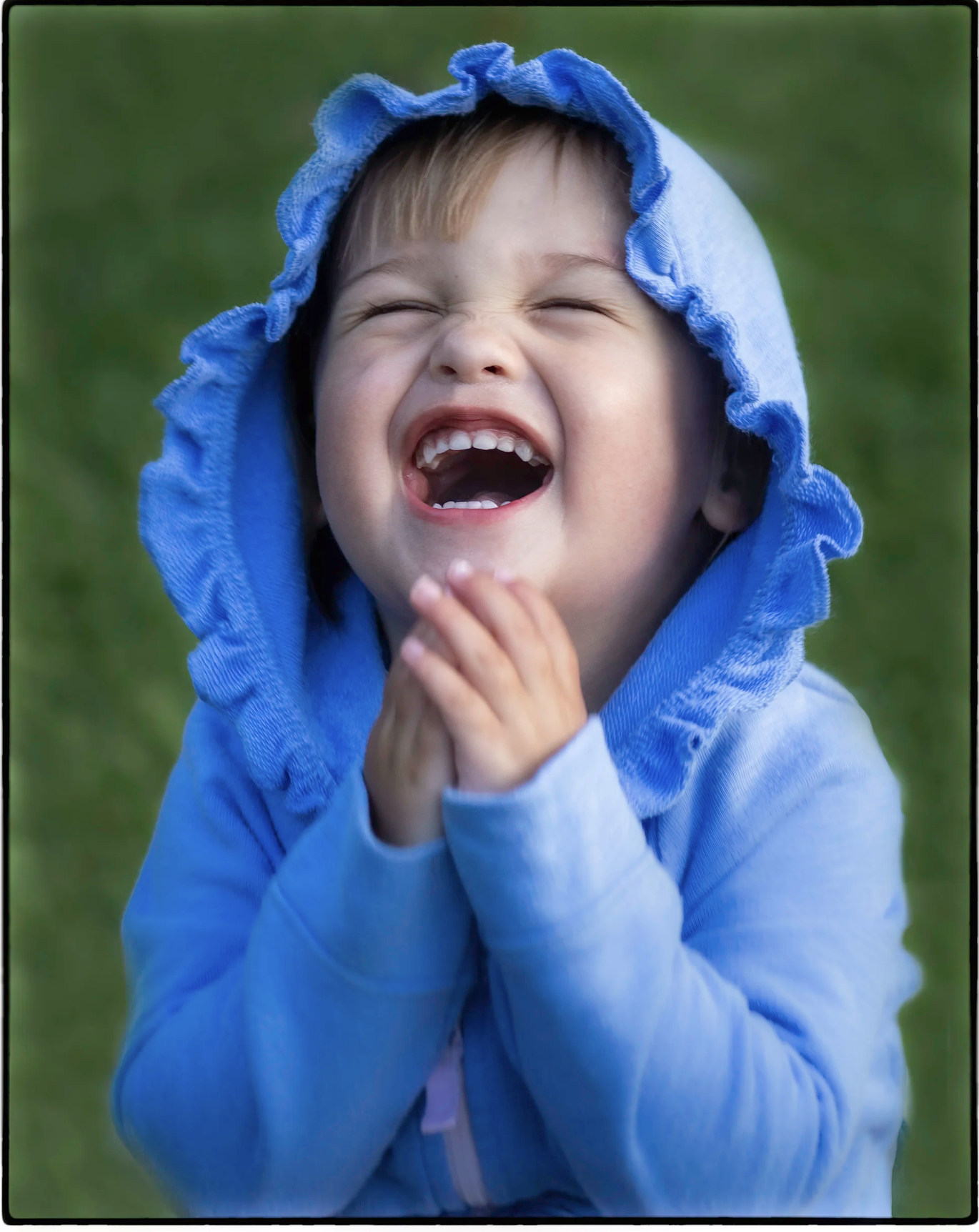
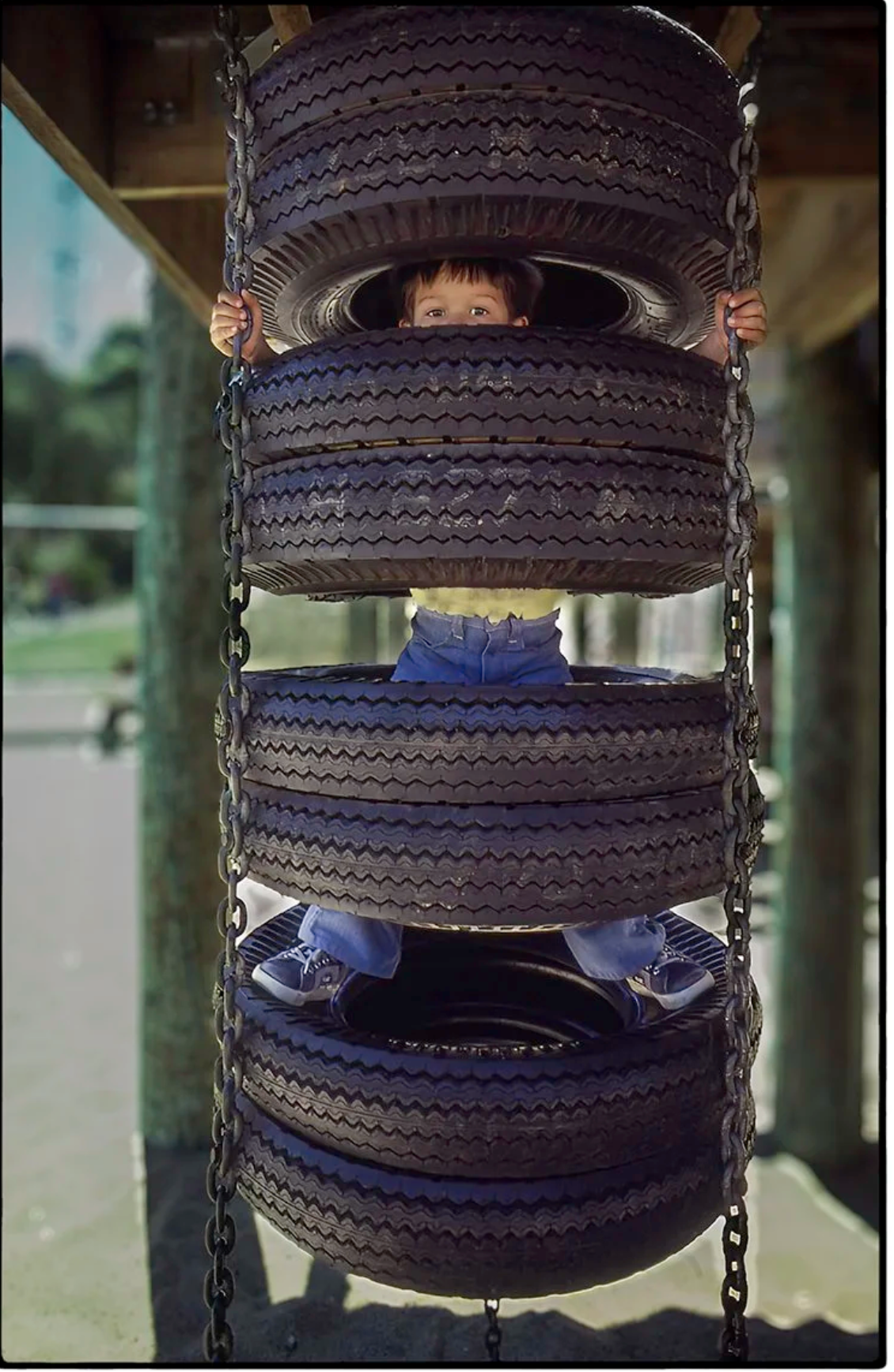
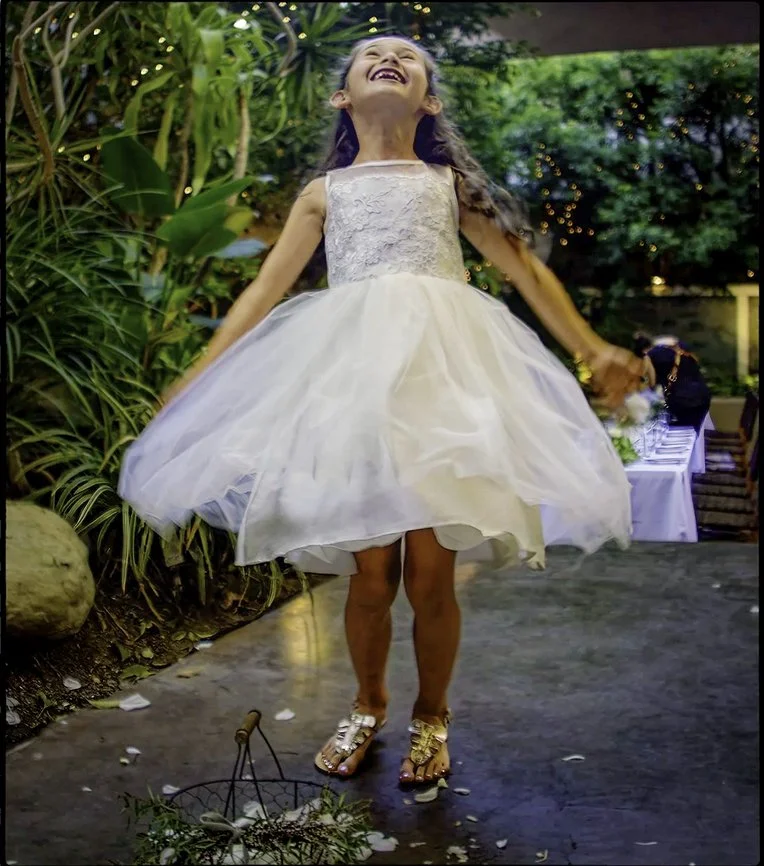
Technology doesn’t understand a child’s joy,

but the photographer has to be prepared when it happens.

Technology doesn’t even know what it’s like to be a child.

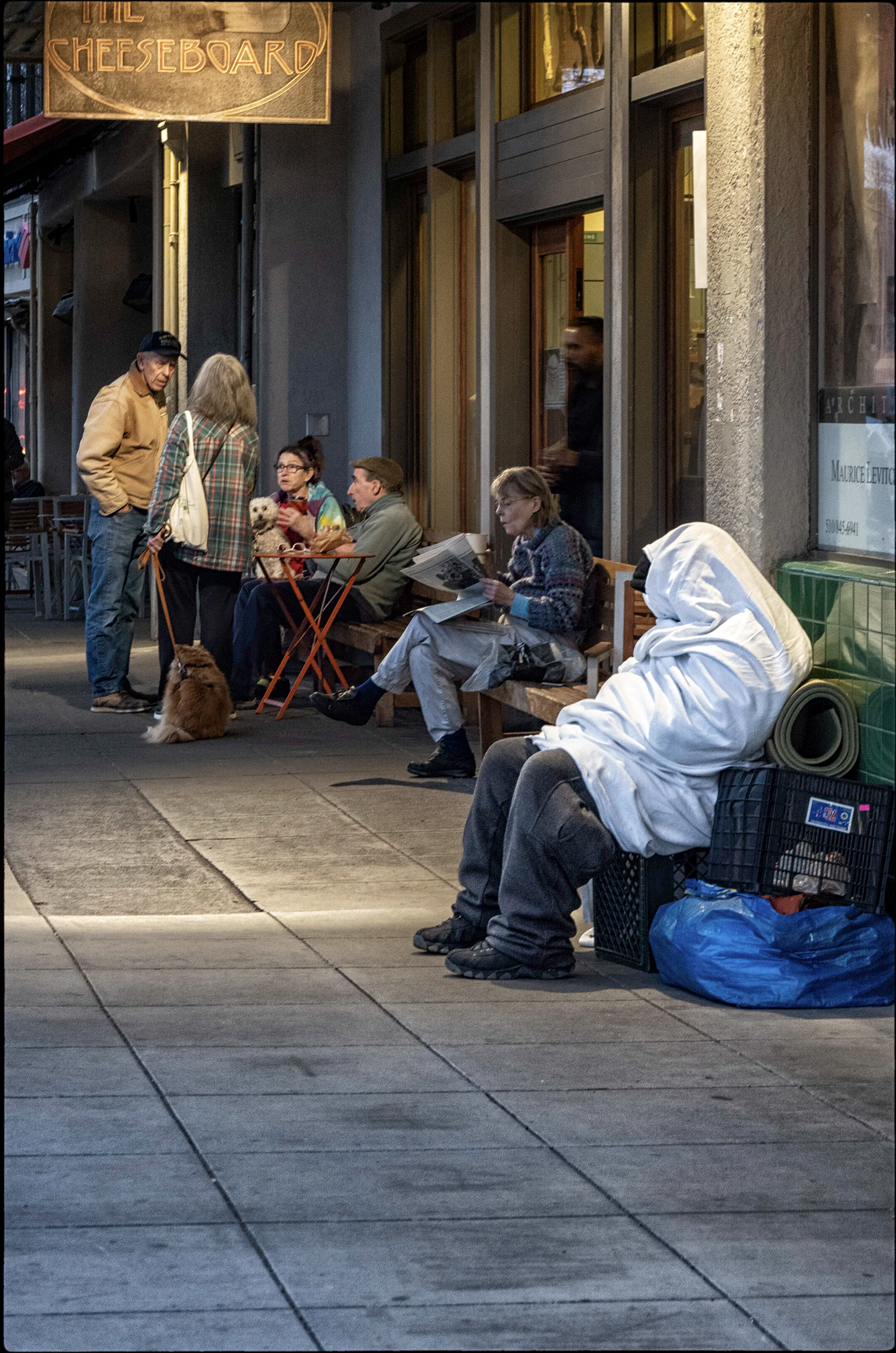
Or to live on the streets

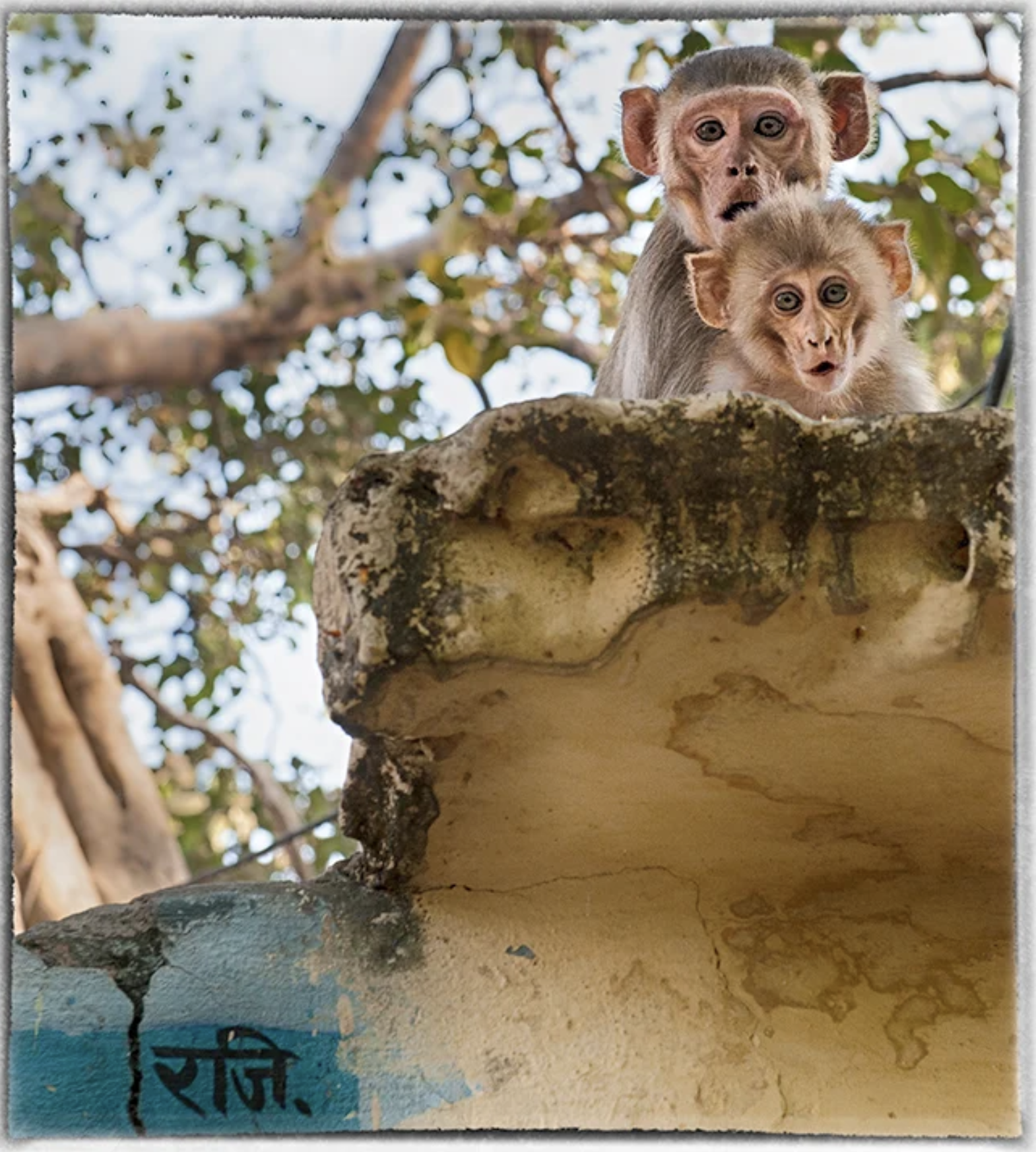
It doesn’t tell us how monkeys’ expressions mirror our own

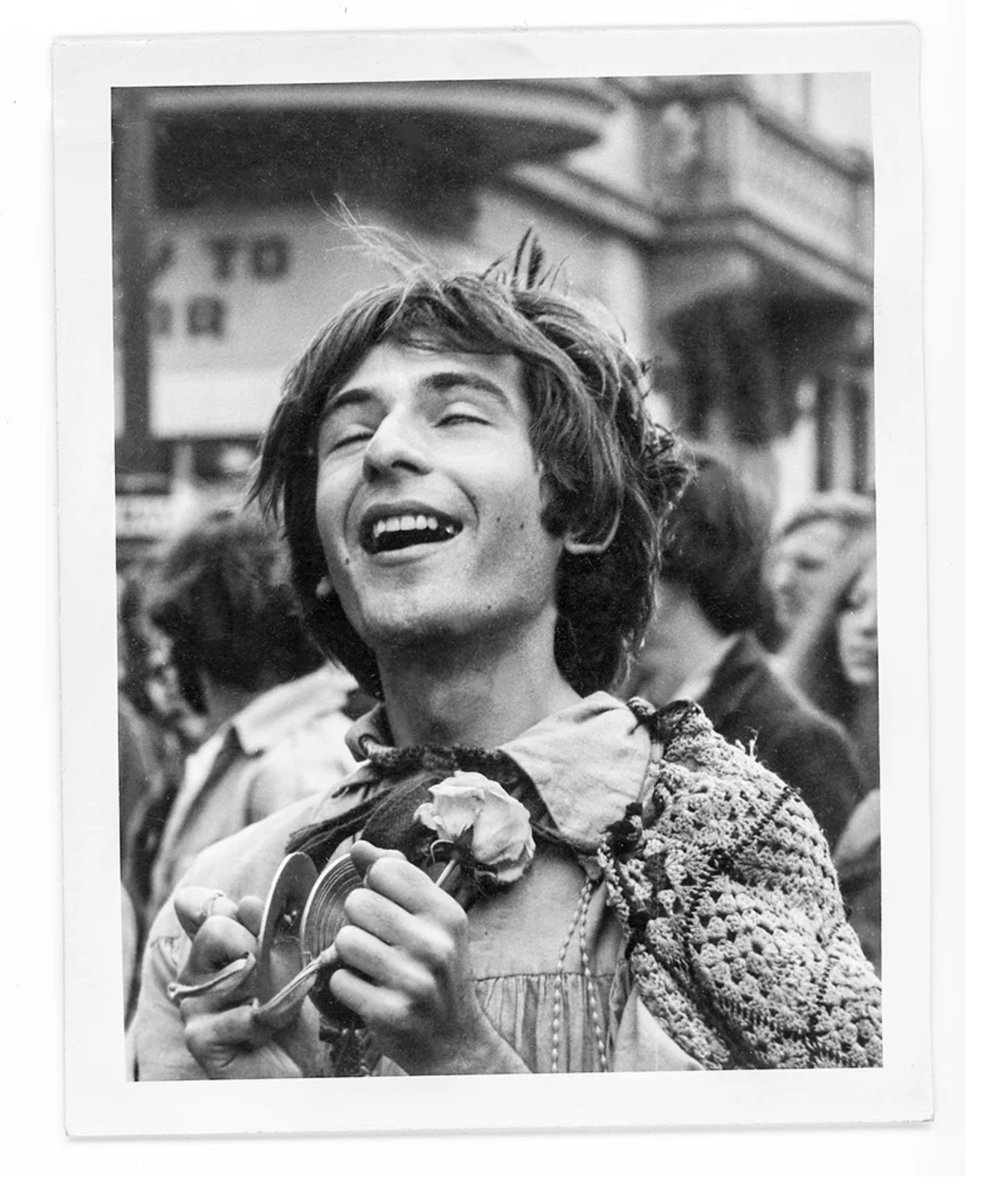
Technology can’t go back to the Sixties in San Francisco and interpret the Summer of Love. Only a photographer can do that, one who is selectively looking at what he’s seeing, prepared to capture it, knowing that if he does it right others will see and respond to it. And if he’s successful he’ll reveal himself, too, that what he chooses to show, what he photographs is a mirror to who he is.

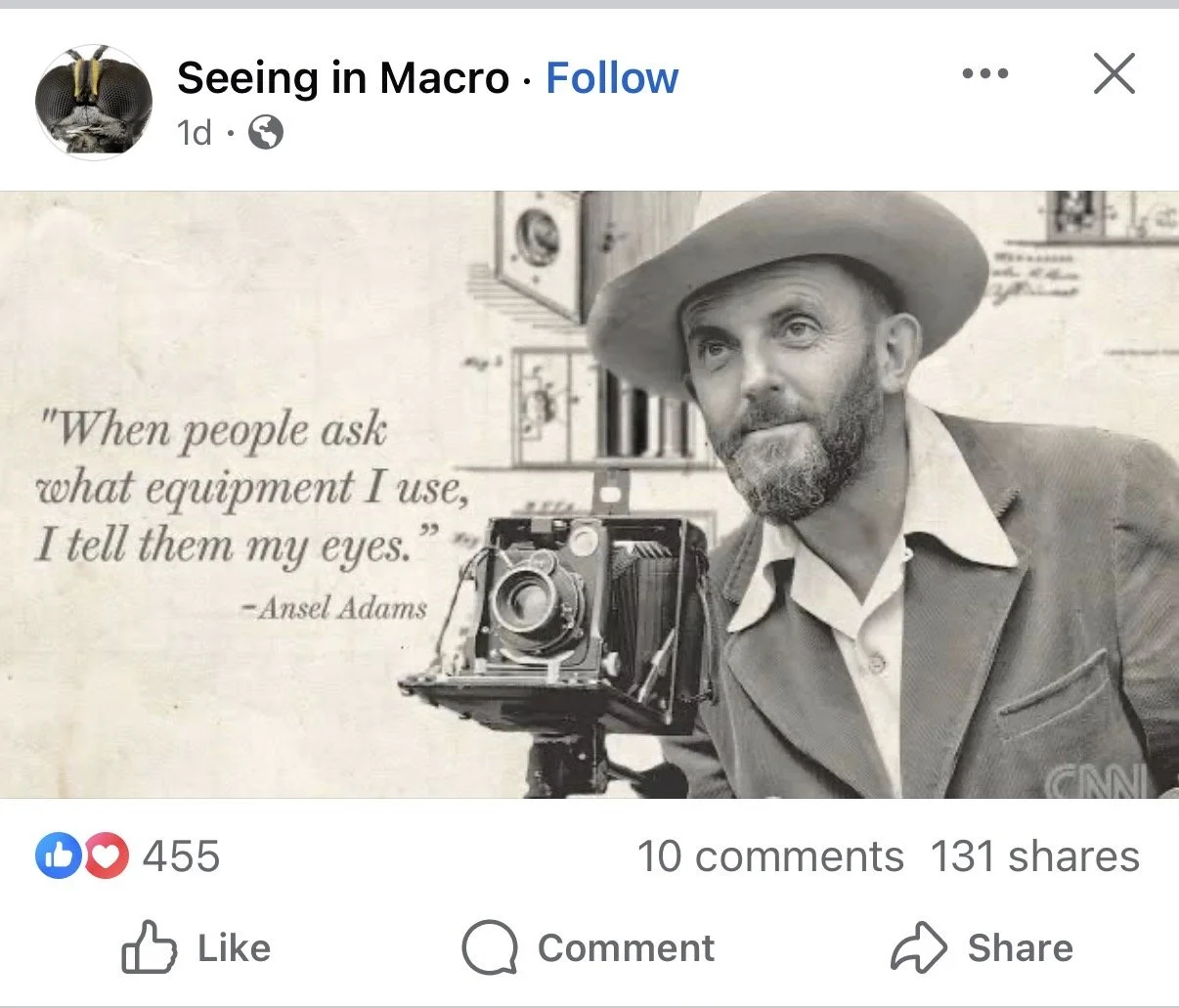
This witnessing, the care in what he does, doesn’t come 61,000 times a second. His camera isn’t even involved. When asked what kind of camera he uses, his response should be just this—his eyes. Without paying attention to his world, the colors and the life that surround him, technology won’t matter. Most of these images were made on film, with manual light meters, without autofocus, without AI, but with open eyes.

P.S. I sent this link to a friend. I added that I had been frustrated in believing that my family doesn’t really understand what I’m trying to show with my photography. She wisely responded, “My thoughts on not being understood is it happens all the time, let it go. Like the prayer of St Francis says- “may I seek not so much to be understood as to understand.” Touche.

The Cosmic Commander

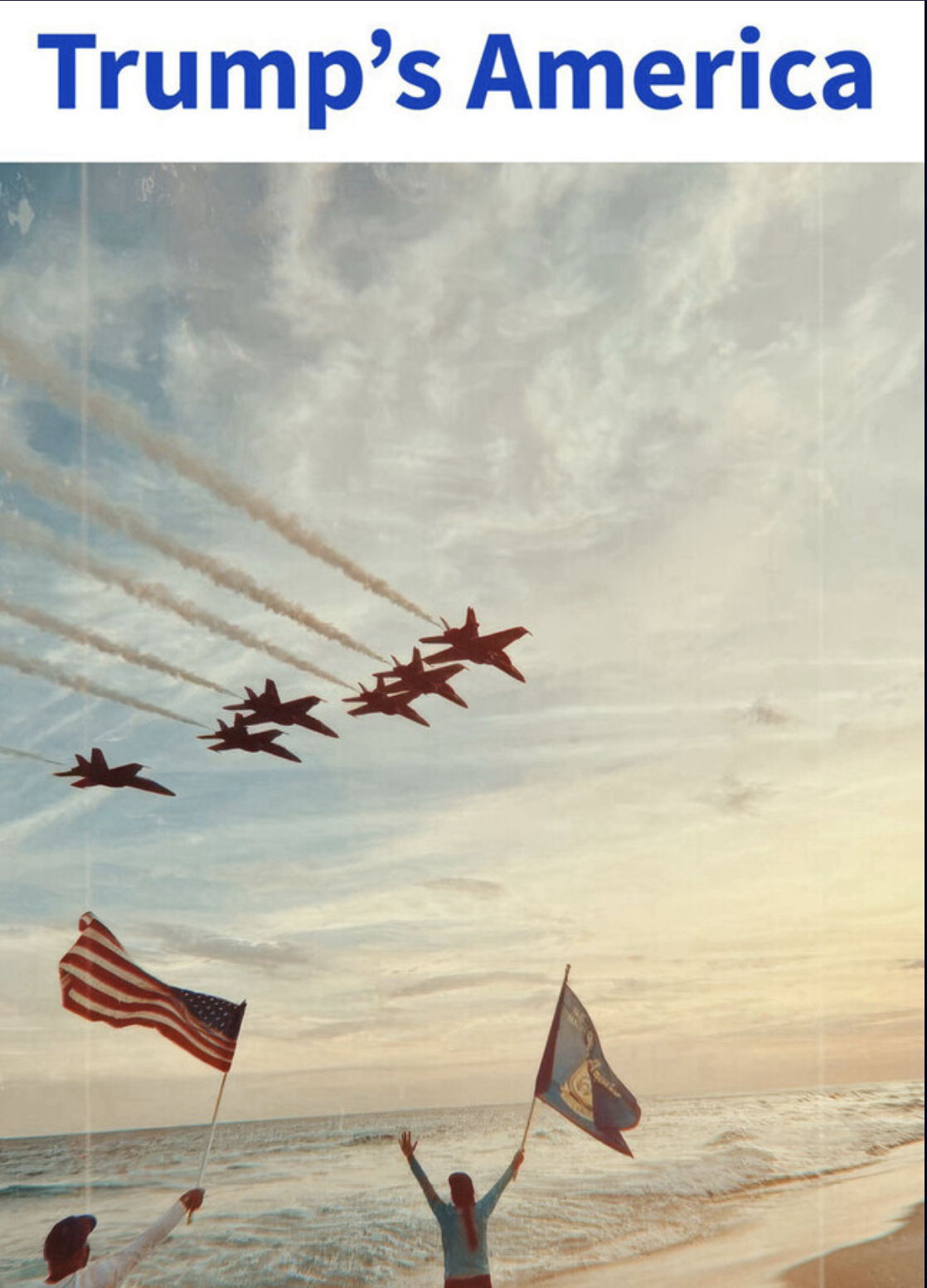
I have managed to avoid the elephant in the room for several months, although this presidential elephant has been shitting all over the room, making it next to impossible to avoid being contaminated by his effluent, namely his manic posting on his failing website, “Truth” Social. Last night, after having played a round of golf, the elephant took to the keyboard and left us with countless videos and photos, all of which sang praises to his greatness and showered his foes with aforementioned effluent.

In my college years I volunteered at Longview Hospital in Cincinnati, playing games with patients in the maximum security ward. For several years I’ve served breakfast to the homeless in Berkeley. I have had experiences with people whose mental state is, at best, precariously balanced. Look at these images. Do they reveal anything to you?

A war he’s losing, Part 1

A war he’s losing. Part 2

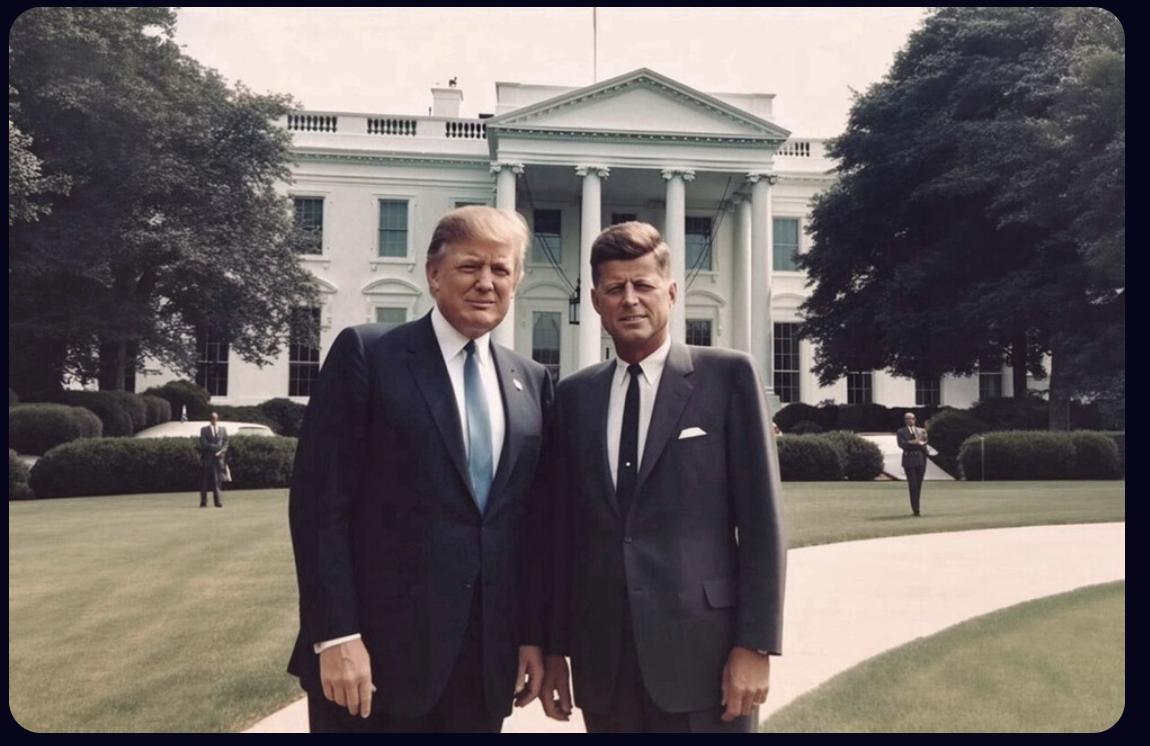
Can you imagine how much JFK would have hated DJT?

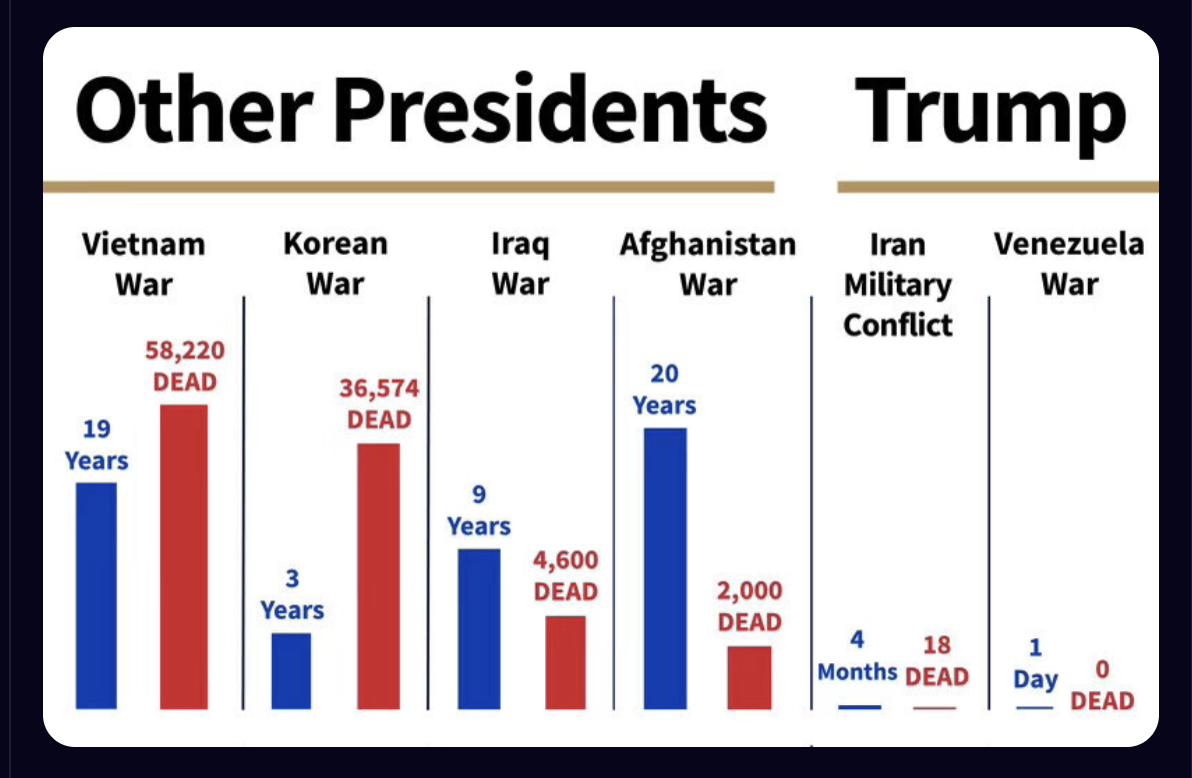
Trump honors the war dead in a graph comparing how few soldiers have died under his watch than under “other presidents.” Wow! Only 18 dead? You’re a genius, Mr. Trump!

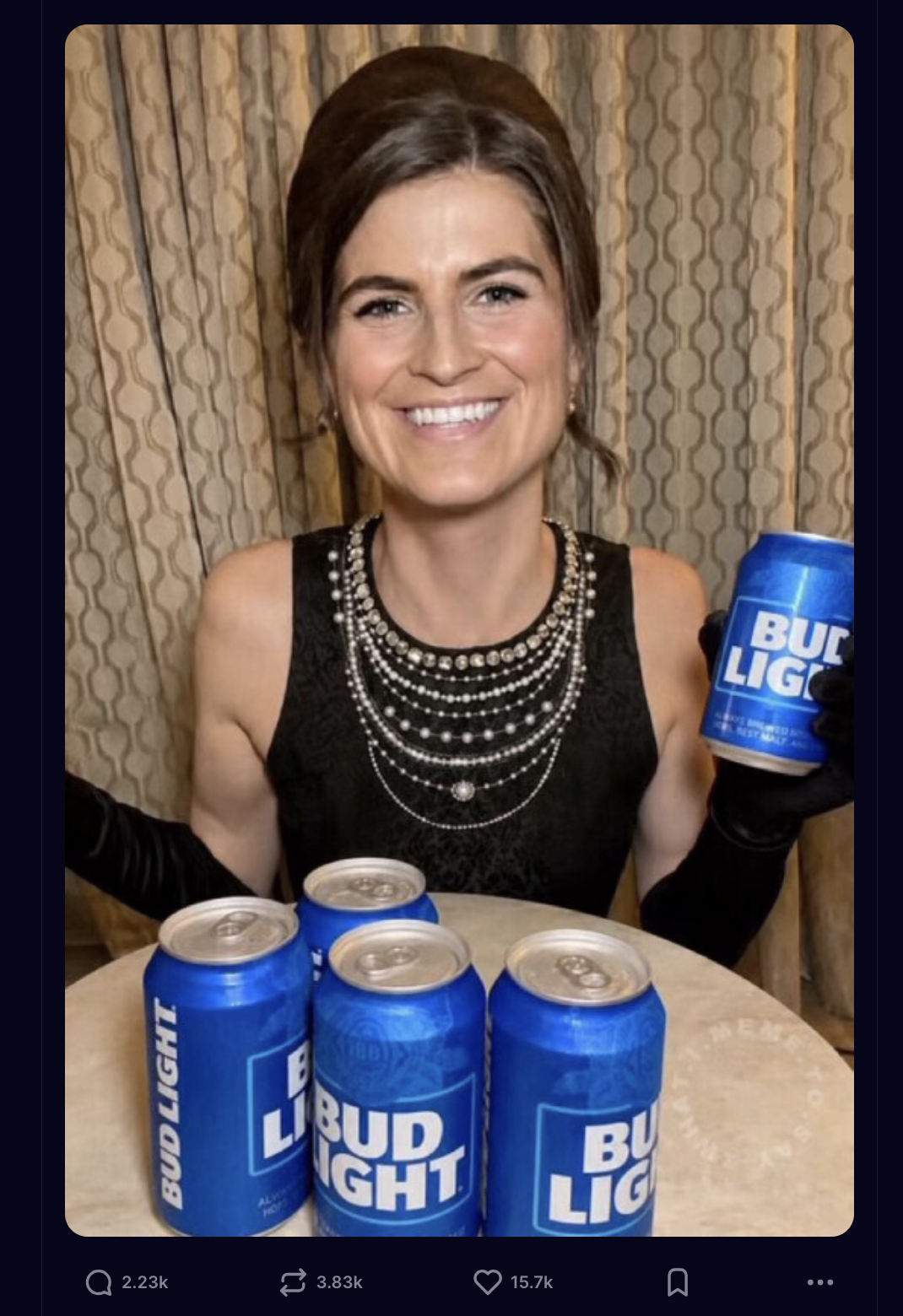
And if praising himself wasn’t enough, he has to to skewer his opponents. In this case he takes the highly respected CNN reporter, Kaitlan Collins, and puts her head on the body of an ill-conceived Bud Light commercial spokesman, a trans sexual, Dylan Mulvaney. Collins has courage. Trump has none. He criticizes her for “not smiling.” He has never criticized a male reporter for not smiling. Women are playtoys to him. Collins responded by quoting a real first lady, Eleanor Roosevelt, “Nobody can make you feel inferior without your consent.”

And to think, all this from the President of the United States, the person with all the codes to launch nuclear weapons.

But Wait! There’s so much more!

Trump Loves Jesus! That the feeling is reciprocated is unclear.

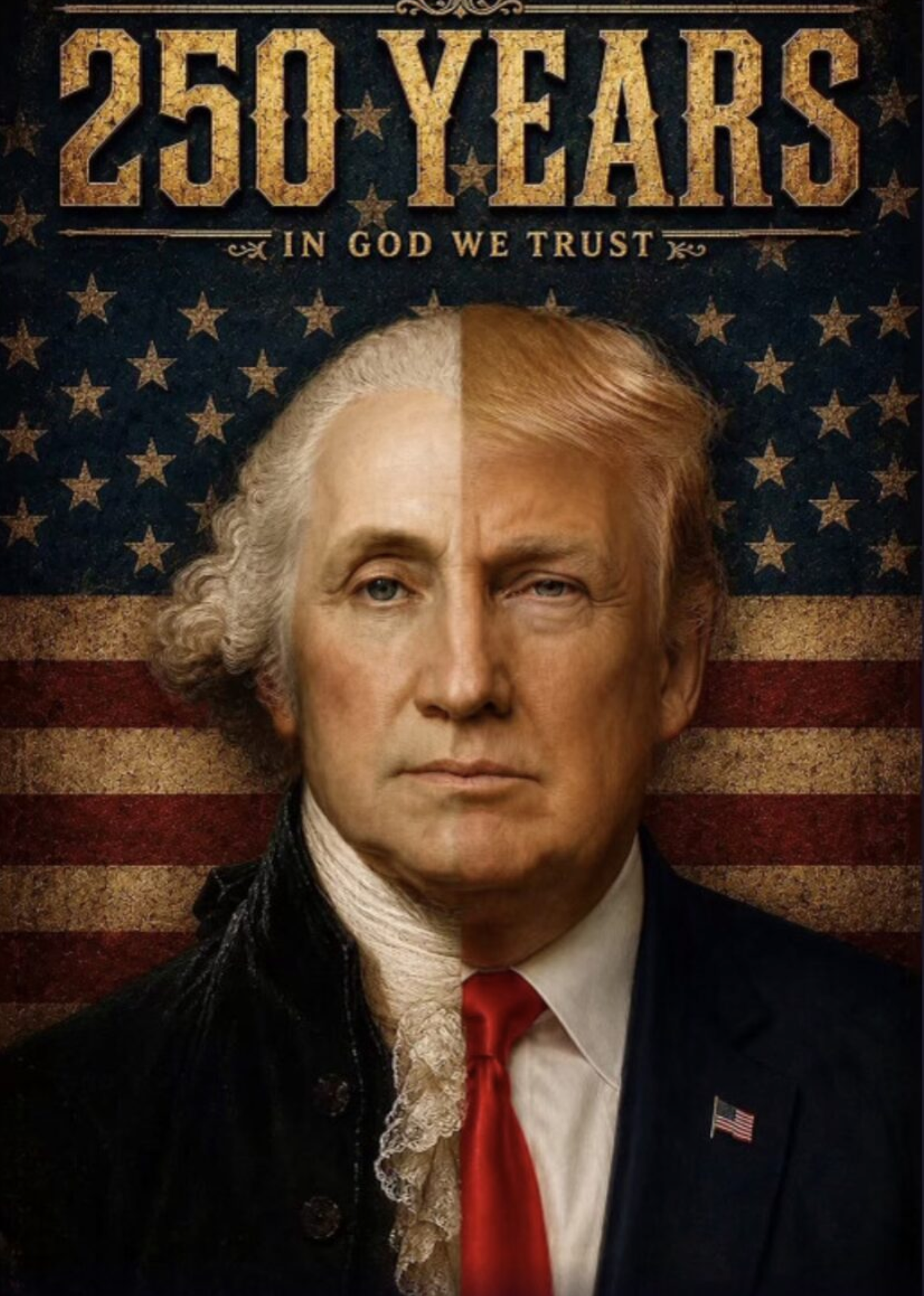
And Fancies Himself as George Washington’s Twin!

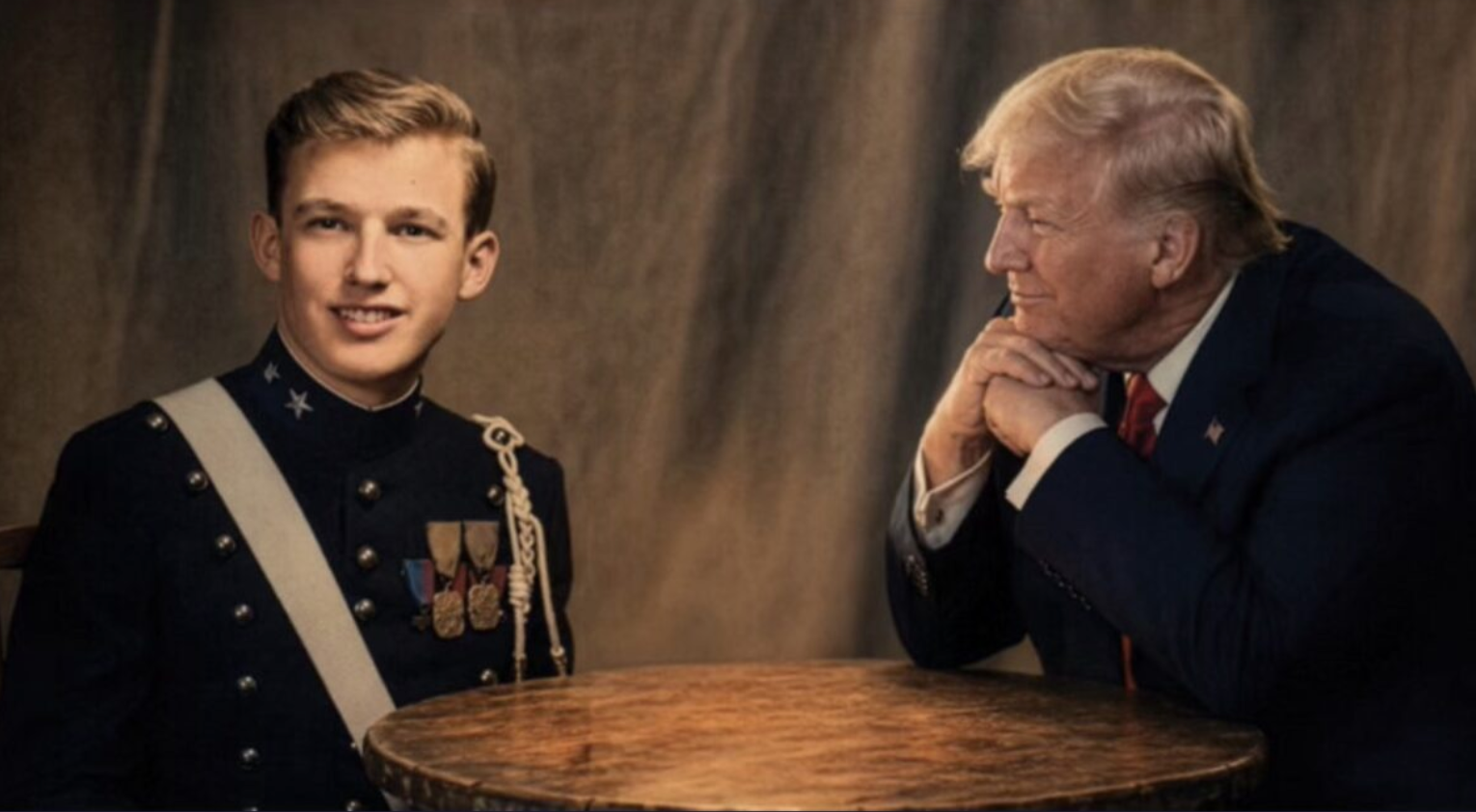
And admires himself as a youth wearing a classmate’s jacket, as he didn’t have any medals of his own. And this, of course, was as close as he ever got to the military. Cadet Bone Spurs, indeed!

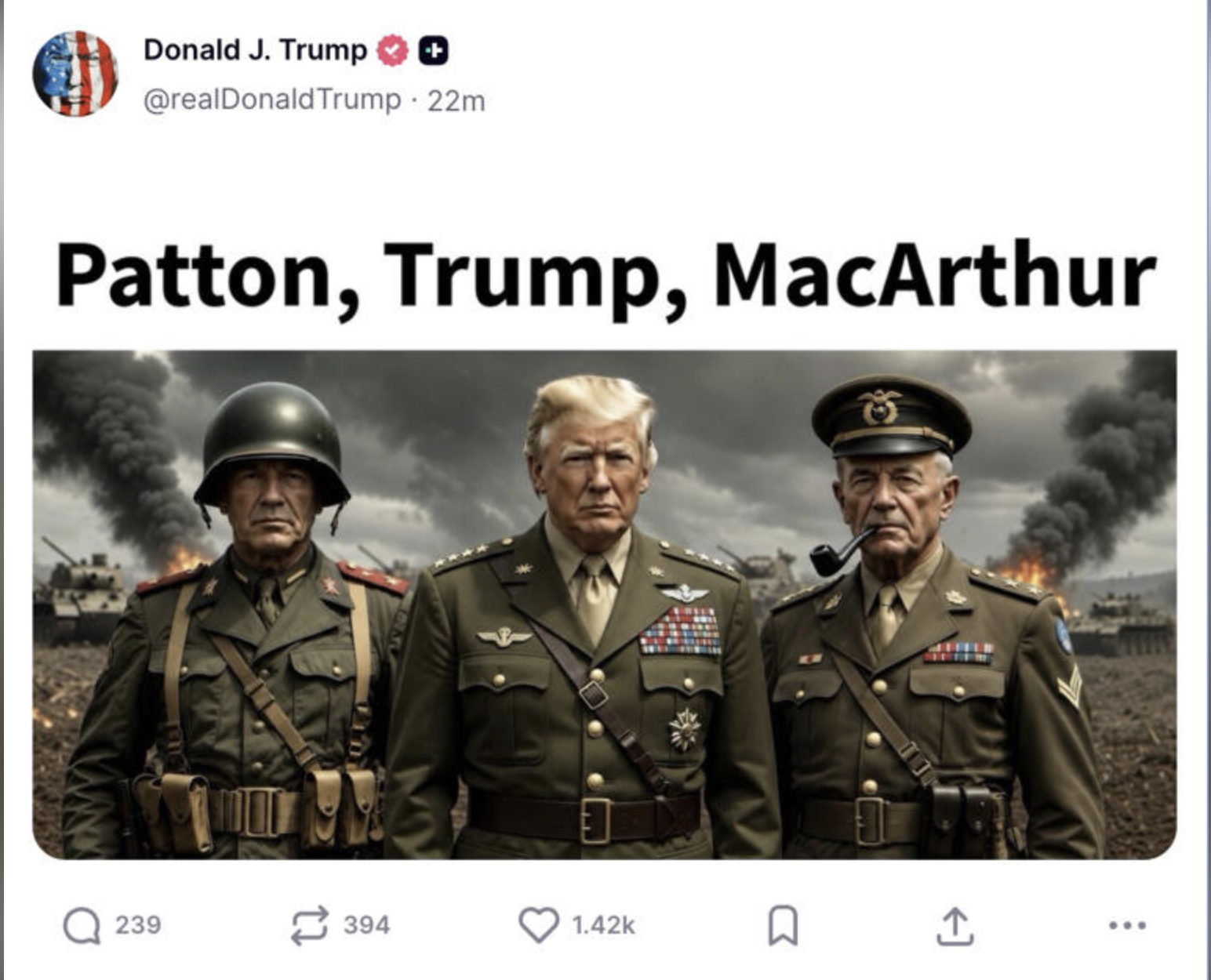
Artificial Intelligence is right, although I take exception to the word “intelligence.” Trump is not only standing in the center and in front of the two distinguished generals, but he’s bedecked with unearned medals commemorating his five deferments, four as a student and one, arranged by his father for bone spurs.

He imagines himself as someone else because if he ever confronted himself for who he really is there wouldn’t be a there there.

And planning on adding Greenland to his CV

Nero fiddled as Rome burned. Trump fiddled with how well Artificial Intelligence could prop up the delusions of a snake oil salesman, a con artist, a narcissistic sociopath intent on destroying the country and the people who elected him.

Our House is a Very Very Fine House

It’s one we’ve lived in for the past twenty-two years.

Since then it’s been painted gray with black trim.

It’s not as big as it looks. The walls behind the back bench simply cover a storage area for the pressure washer, the lawn mower, and other stuff. We bought it in 2001, rented it for three years, then on June 26th, 2004, filled a U-Haul truck with half of what we took from Santa Rosa, then returned for the second half. It was an exhausting day for everyone, but that night we slept here.

And here’s where we slept June 25th.

1524 Dutton Avenue, Santa Rosa, CA

The Barn

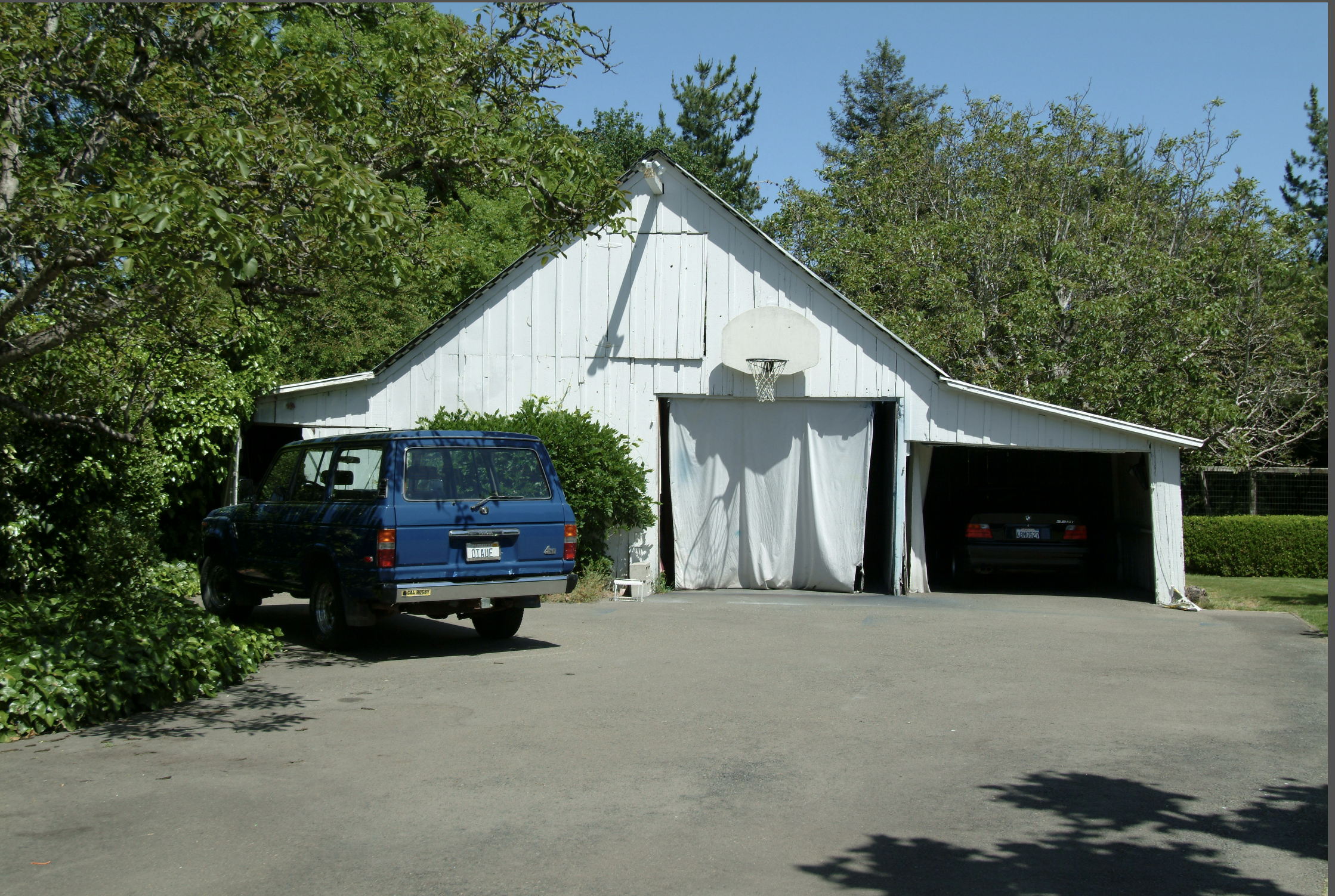
We moved here in 1979, leaving twenty-six years later. We parked cars in the barn. On the right is the Acura Integra, a car that replaced our last Volvo (F.A.N.N.Y.) John named it after being told about dinner: “Fish Again, No, Never, Yuck.” A few other cars were sheltered behind the sheets, too, Casper (because we hid it behind the sheets), and a couple other BMWs, two of which sustained damages when Jadyne drove into the wrong sheeted bay. (In looking at the barn photo more closely I see that the Integra had already gone, replaced by BMW #1).

Jay was tired of the home business thing, and she knew that Dozens of Muslins could generate enough income to keep us financially afloat, so she expressed her wish to leave Santa Rosa, a place where she lived virtually all her life. We discarded nearby Sebastopol, Pacific Grove, and other places in California, before looking at the East Bay. She found our current home in an online search in 2001, arranged for an agent to show it, then picked me up at SFO after returning from Cincinnati. We were both captivated by the size of the lot, the trees, semi-isolation, and what we saw as a potential garden spot, arranging a bid to be delivered either that day or soon after.

Jadyne knew that I didn’t want to move. I had friends in Santa Rosa, racquetball at the Park Point Club, three-day a week golf outings at Bennett Valley, a familiarity with just about everything. “We only need to live here two years,” Jadyne said. but within two weeks I told her that I was already coming to like Rugby, and, well, here we are, twenty-two years later, still loving living here. No longer loving golf, racquetball, and not missing the life I left behind. At first it seemed so strange—college professors, not taco trucks, silence at night instead of low-riders cruising down Dutton. I asked my nephew Kevin (whose birthday is also June 26th) how Dutton and Juniperview (his Cincinnati home) differed. He replied, ‘Well, I never saw anyone ‘cuffed’ on Juniperview”).

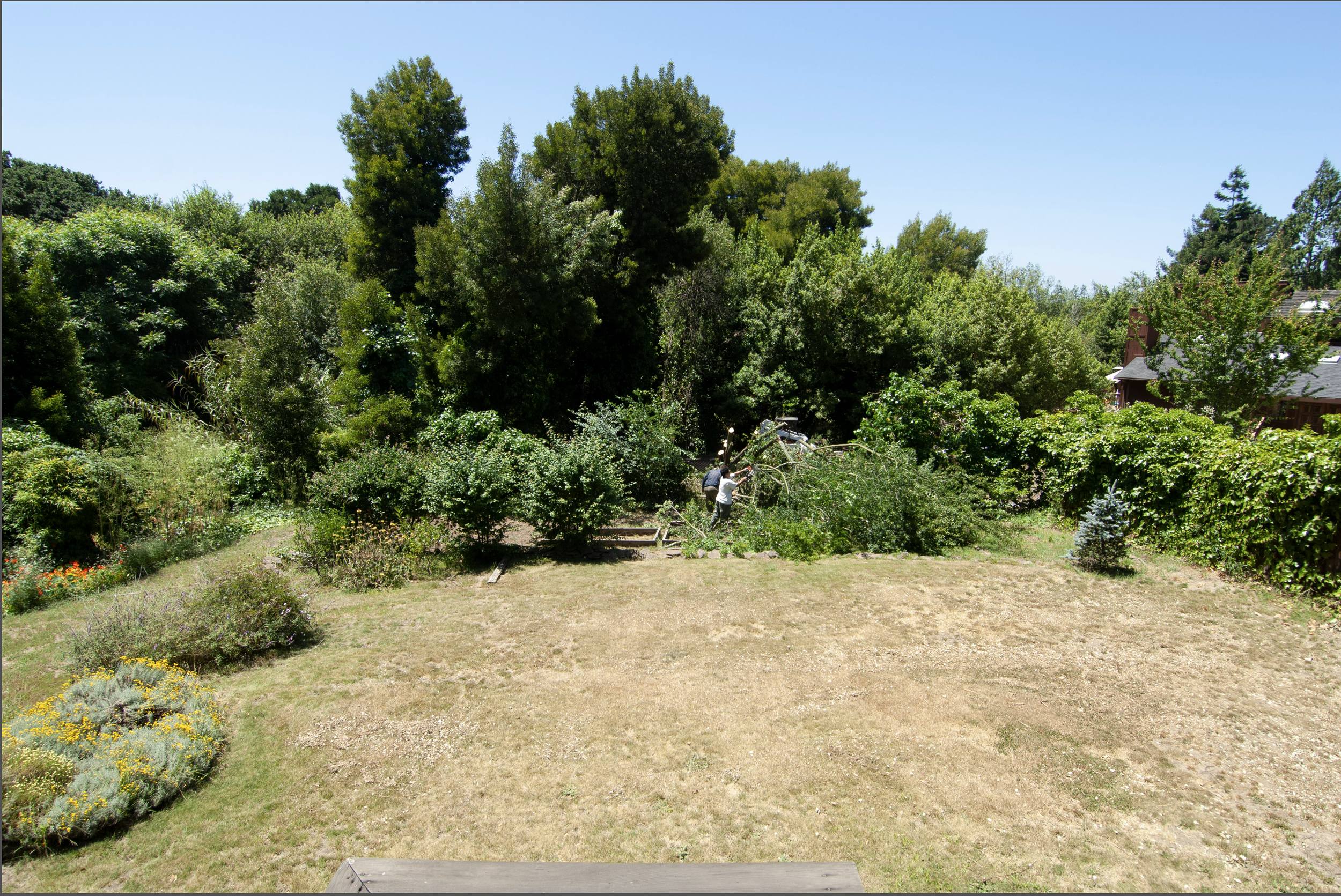
And what we found isn’t what we have. Here’s our backyard in 2004, and here’s what we have today.

What was here

What’s here now

Eighty F*cking Years Old? Part 2

The beginning of this is a post to my WHHS 1964 Message Forum.

Stephanie asked, "When did the conversations among friends become a recitation of everyone's health problems?"  My friends call it an "organ recital."

And Steve acknowledged that he isn't afraid of death.  I prefer Woody Allen's take on it.  "I'm not afraid of death.  I just don't want to be there when it happens."

Some years ago I took a class called "A Year to Live," based on the book by the same name.  Each month we were instructed to perform one of the tasks that the author Stephen Levine suggests.  One of the weeks we gave another member of the class something unique that we treasured, something that couldn't be replaced.  I gave up a clock I had bought for my late uncle from Gump's Department Store in San Francisco, an item from a store that he liked so much.  I salvaged it from his estate after he passed.  Giving it away was a reminder that hearses have no room for suitcases, that in death we would be giving up everything we had in this life.  On the day of the last class a bell signified that we had officially "died", and we were driven to Solano Avenue in Berkeley to wander among the stores and restaurants, noting that all of these cars, pedestrians, shoppers, buses and the like would still be doing this whether we were there or not.  I went to a Starbucks and sat by myself in a chair under a window, looking at the line of customers ordering ventis and Grandes, the couples chatting, the laptops, and the carryouts.  No one looked at me.  I thought that if I quietly began removing my clothes they wouldn't look, either, unless someone needed a chair.  NB.  I didn't do it, but I did go across the street to an Andronico's Grocery Store restroom and questioned why I was locking the door.  If I wasn't there, why bother?

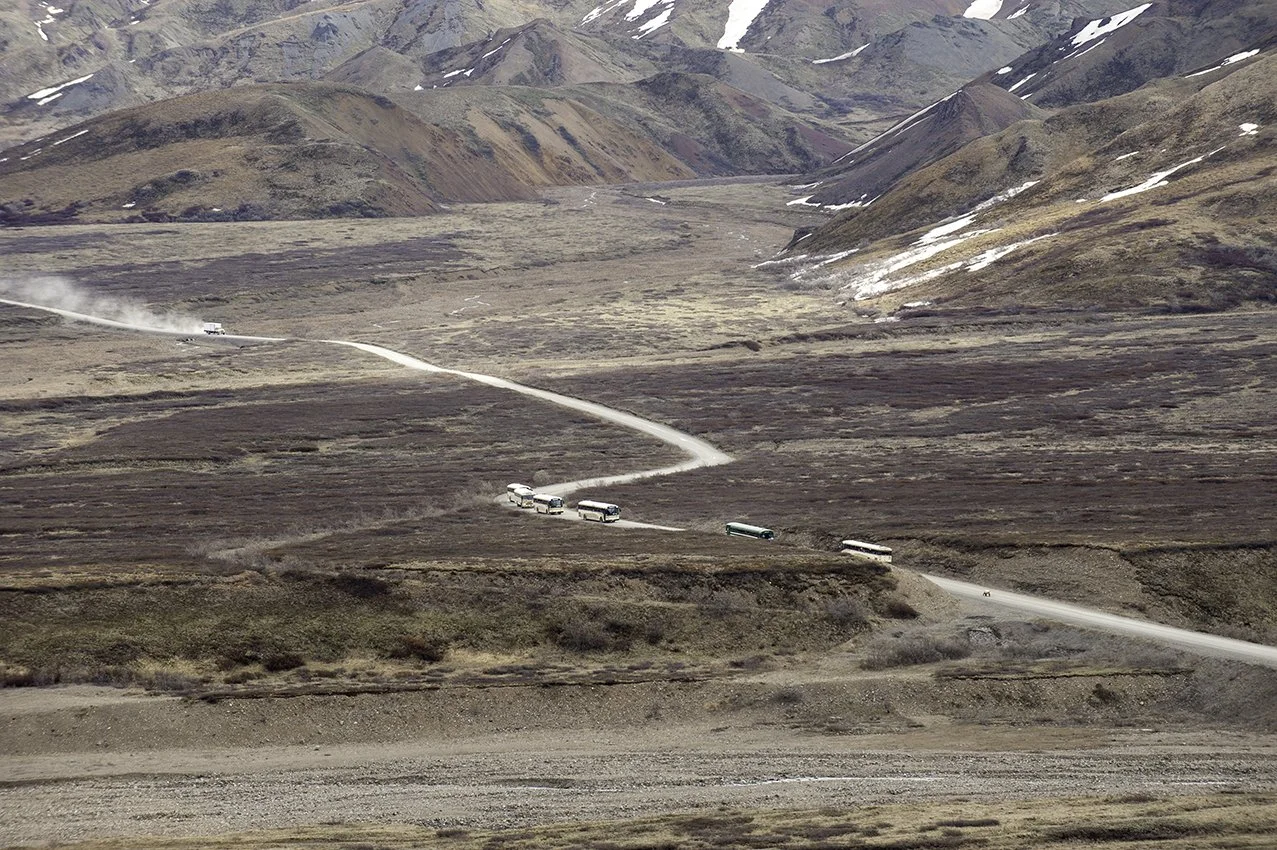
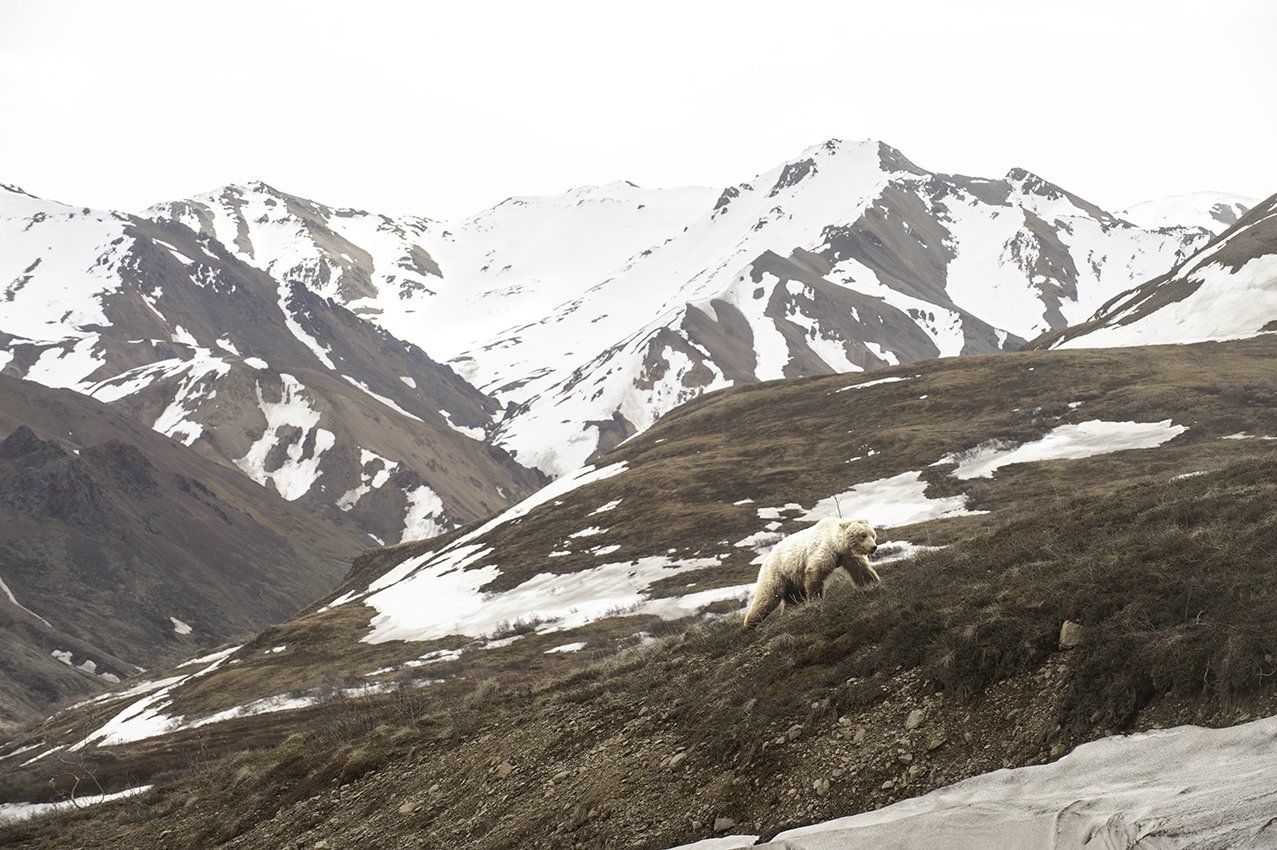
Some years ago we rode a bus up park roads to the base of Denali in Alaska.  (Nelson, so impressed that you climbed it).  Jadyne and I asked to be let out of the bus on the soft tundra with our picnic lunch. there to climb a long hill and enjoy a warm Alaskan June day and my roast beef sandwich.  I noticed that down below all the buses had stopped and noticed, too, that a grizzly bear on the road had captured their attention.  

Perhaps you can see the little speck in the bottom right of this image.

I didn't think much of it at the time, but when the bear crossed the road and became the only living organism between us and the bus road my feelings changed a bit.

It was shortly before this that I decided that my roast beef sandwich could stay behind at the picnic site, that we had always been taught that it was good to share with others.  

I looked at death the way I first looked at that bear, that there was, as the first photo reveals, nothing between it and me, and that it was on an inevitable path towards where I was having such a wonderful time, so enjoying my sandwich, but perhaps it was not interested in the sandwich at all.   

I try to dress up the inevitable as best I can.  In a cartoon (one of the New Yorker's, Stephanie, that I did understand) the figure of the hooded, caped black sickle-bearing death is leading a husband out of the apartment and down the hall.  His wife calls after him, "Change is good!"

And me? Taking Stock, July 8th, 2026.

So here I am on the eve of my eightieth birthday, sitting at my computer listening to Segovia playing “Sevilla.” I met him once. Uncle Rowland was the President of the Cincinnati Symphony Orchestra (I think), and he introduced me to the maestro when I was about fourteen. “He plays guitar, too!,” Uncle Rowland said to Segovia.

So I’m pleased that I’m still here, having lived a couple of years longer than the average American male, showing little signs of infirmity or decay. My ideal weight is 150 lbs. I checked in today at 148. All my limbs function as intended, although the titanium left leg isn’t nearly as flexible as the right, and I struggle to put socks on or tie my shoes. Bending down, rising without using my hands from the floor challenges me. My vision is 20-20, as I’ve had cataract surgery in both of my eyes. I wear glasses for reading, and the coating on the lenses works almost as well as sunglasses. After septoplasty (long overdue) I can breathe freely through both sinuses. The advent of tinnitus was something to overcome, and I have. Besides, hearing cicadas during all my waking hours keeps me in touch with nature. My hearing itself is another story, but new hearing aids have been wonderful. I wear them from the moment I wake up until I climb into bed. I sleep close to seven hours a night, but my sleep schedule is all screwed up because I’m usually out by 8:30 and up by 3:30, or with luck sometime after 4. I have enough hair to have to pay for haircuts every two months or so. So that’s me at 80.

I’ve been happily married for more than fifty-six years, and am comforted and relieved to know and believe that Jadyne feels the same way. In those fifty-six years we’ve managed to become parents to three—Jason at 52, Jennifer, 50, and John, 47. And they, too, have been blessed each with a son and daughter. Jennifer and John are happily married, too, and we love and respect their spouses. Jason’s first marriage collapsed, but he’s now romantically interested in Sunny Lee, a woman we haven’t had any trouble admiring and loving, too.

The usual signs of mental deterioration are, at this point, not worrisome either for me or for Jadyne, who is a year younger. We do forget. We have to be occasionally reminded of some things that we’ve either forgotten or missed, but nothing out of the ordinary. We both have friends, meaningful relationships. One couple donated money to a food bank to honor my birthday tomorrow. We have good diets. We exercise more than most. We aren’t easily discouraged.

We both give back to our community. For me it’s Dorothy Day Homeless Shelter, where tomorrow I know I’m going to be feted with some birthday acknowledgment. Jadyne does that, too, and volunteers at a Thrift Shop several hours a week. We’re grateful for all the love and support we’ve received for so many years and are trying to pay it forward. As our President might conclude, “Thank you for your attention to this matter.”

Eighty F*cking Years Old? Today ROBERT REICH JUN 24

If Robert Reich hadn’t written this column today, June 24, I would have tried to write something similar. Eighty F*cking Years Old? I copied his column at the end of this post. As far as this turning 80 goes, I found a cartoon that resonated with me: two men talking to each other on a park bench. One says, “I was just minding my own business when suddenly I looked around and discovered I was the same age as old people.”

Eighty years of age always belonged to the province of “other people”, the homeless, movie stars, the imprisoned, the filthy rich, amputees, astronauts, NBA stars, you know, other people, people that we’re not likely to encounter in our lives, much less become one. But here we are.

Last year I received a birthday card which read: “I See Dead People.” Inside it read, “You’re not dead, just old.” Yes, and I’m pleased that the latter has preceded the former, the inevitable part of the equation. And the following statement, like the word “pepper” that follows “salt”, is “It’s better than the alternative.

I think about it every day. I think about it when I have to tie my shoes, as the titanium in my left leg prevents me from comfortably bending. I think about it when I become tired after less work, less effort than I used to have. I think about it when in restaurants I miss too much of what’s said around me. I think about it when I forget a name or a word that should come naturally. Not too long ago I had ordered sushi, and I wanted more of the hot green stuff, wasabi, but I couldn’t remember the word. I think about it when I see that my interest flags in being as deeply involved in community or even national affairs. “Involved” means caring.

Daily meaningful activity keeps aging at bay, and I have discovered over the last year or so two activities that formerly kept me occupied are no longer as important to me as they once were. Sixty-six years of playing guitar is one. I practiced a lot, trying to improve. I learned new songs. I tried to play them better and better. I’m not playing nearly as much now. It no longer brings me the satisfaction that it did. Two. No longer do I go out with my camera, looking for images in the everyday. The photographs that I took in Ethiopia brought me joy, and printing many of them was rewarding, too. I haven/t lost my love for photography, but hundreds of images of herons, hummingbirds, and flowers are enough. I'm not interested in repeating myself. With guitar and camera occupying minor roles in my life I’m looking for something to replace them.

I still care. I care about Jadyne’s diabetes, and the issues that she’s facing daily in her high and low glucose readings. I care about my kids and their families. I care very much about the political corruption that tarnishes America. Vance said that Watergate wouldn’t even merit a twelve hours news cycle; we’re experiencing and ignoring so much worse today. I care very much about that.

When I first saw the x-rays that led to my hip replacement I was saddened, as if my own mortality came into focus in a physical way for the first time. The onset of tinnitus was the second time, but the first when I became aware of the expression “the new normal”, a normalcy that continues to be newer and newer with each passing day. A year ago I wrote that I hoped I could swim my accustomed mile in less than forty-four minutes; now more than ten minutes more is my newest normal.

If I’m whining I have Robert Reich’s company and that of three baby boomer presidents, all part of the wave of 1946,

Here’s Reich’s column for today.

“Friends,

Today I start my ninth decade on earth. It’s astounding and distressing, but I suppose it’s better than the alternative.

In his latter years, my father would always answer my weekly phone question, “How are you, Dad?” with a brisk “Still here!”

Several of my joints ache, I can’t remember shit, I can no longer do 20 pushups at a clip, several good friends have passed, my bald spot is claiming more territory, and I can’t hear very well (especially in restaurants). But, hey, I’m still here.

And hardly alone. All 1946 boomers still here are turning 80. More babies were born in 1946 than in any other year of American history up to then — 3.4 million of us little darlings, 20 percent more than the year before. Which is why it was called a boom.

Trump is now 80. I’m not proud of that. He’s a wreck of a human being, physically, mentally, and morally.

George W. Bush will be 80 in 12 days. Trump is probably the best thing ever to happen to George W. because George W. will no longer be remembered as the worst and stupidest president in modern American history.

Bill Clinton has another month or so before he’s 80. He still looks great, but his voice seems to have gained two octaves, sounding rather like a squeaky tire. That’s another thing that happens.

Dolly Parton has been 80 since January 19 of this year. I still haven’t met her. Meeting her has been on my bucket list for six decades. She’s my height. We have similar values. I’ve been in love with her since I was 15, but so far, zilch.

Cher has been 80 since May 20 of this year, and I haven’t met her, either. But I take heart that someone can look so fabulous at 80.

When I was a small boy, my grandma Frances was courted by a man named Jack Hirsch, who was then 80. I had never before encountered someone as old as Jack. I was scared to speak loudly in his presence, or sneeze, or cough, for fear he’d fall over and die. I remember thinking he could be Methuselah (who, according to the Bible, lived until the ripe old age of 969).

What happens after you hit a ripe old age? Do you ripen until you rot?

Three score and ten is the number of years of life set out in the Bible. Modern technology and Big Pharma add at least a decade, bringing us 1946 boomers to where we are now. Beyond this is an extra helping. “After 80, it’s gravy,” my father used to say. (His gravy lasted almost 22 years.)

All this celebratory nonsense about America’s 250th obscures that we’re still a baby nation. Lay three of us 80-year-olds end-to-end and we’re almost as old as the country. It was roughly 80 years between the nation’s founding and the Civil War, another 80 or so between the Civil War and World War II, and then about 80 from the end of World War II until now.

Life expectancy for American women is now 81.4 years on average; for men, 76.5, so I’ve already beaten the odds. Why do women outlast men by more than five years? Has evolution made them stronger? Or do men get worn down by competing with other men — testosterone poisoning’s revenge? And if it’s the latter, why the hell is Trump still alive?

Lifespan is important, but health-span is equally important. By health-span I mean how long you feel well.

Yesterday I ran into a former student who upon seeing me exclaimed, “You look great!” I thanked her even though she was probably just being polite. An elderly friend once told me there were four ages to life: youth, middle age, old age, and “You look great.” I’m now in the fourth stage.

My wish for you is that you have a long lifespan and a long health-span, that you relish every day you have, spend time with people you love and value, let go of all the petty crap, wish no one ill (except perhaps Trump), and continue to fight for what’s good and noble and important.

And regardless of your age, my thanks to you for joining me on this journey.

(By the way, you look great.)”

Extremes

A photo from our recent trip to Ethiopia.

Women work as hard as the men, all without the conveniences of labor saving devices, and income from these hard labors is minuscule.

Last night was our 56th wedding anniversary. Here’s what we ordered at Ruth’s Chris Steak House in Walnut Creek.

French onion soup, filet with shrimp, garlic mashed potatoes, and Creme Brulée, topping it off with a blueberry mojito. Two dinners, a glass of wine for Jadyne, a mojito for me, and tip, $300. While I was thoroughly enjoying my dinner the thought of the Ethiopian woman bearing wood flitted into my consciousness. I didn’t feel guilty, just uncomfortable.

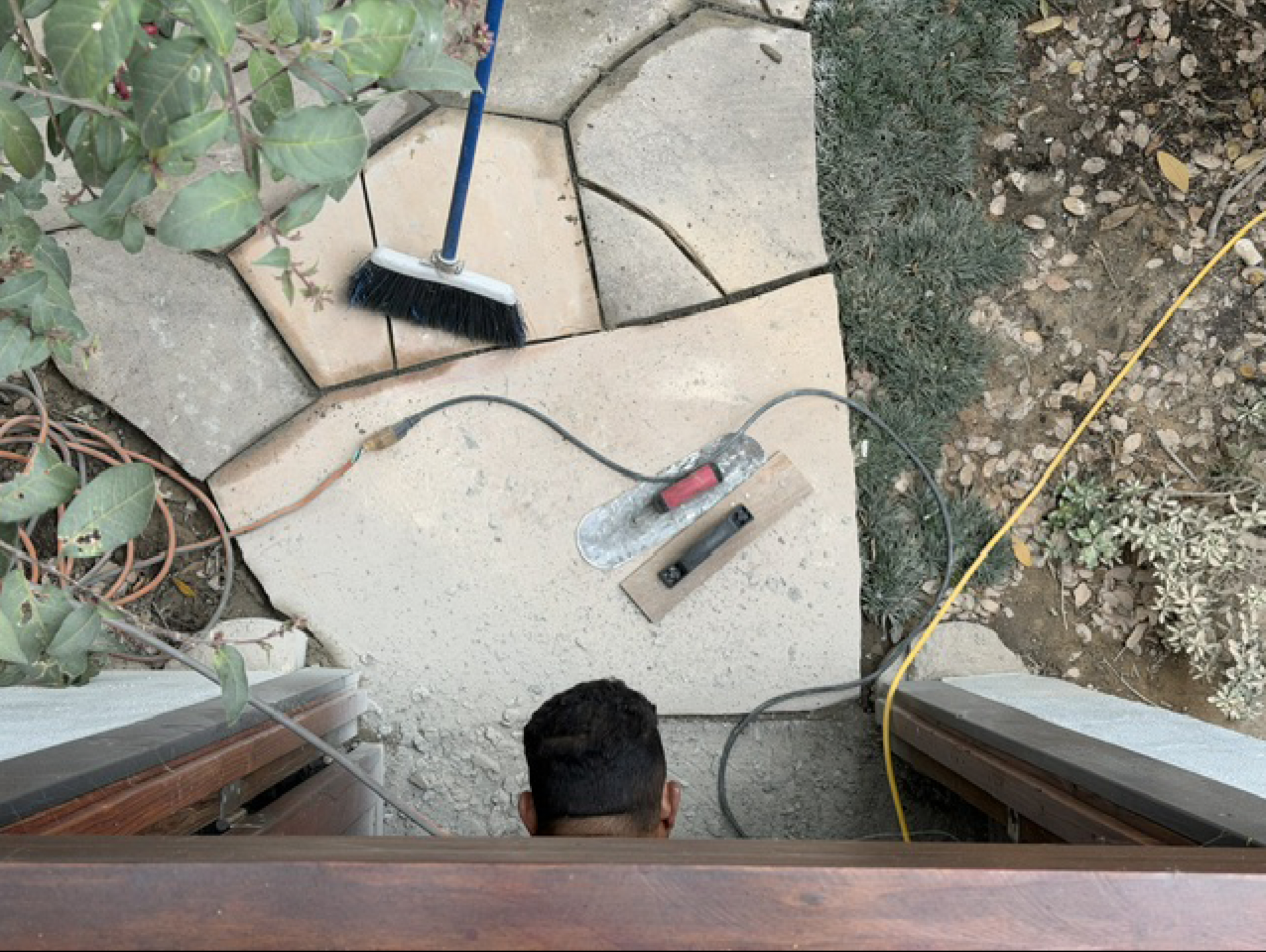
Work at our house. Marco is a skilled craftsman. Nineteen years ago he built our deck. He has returned to stain it twice. His work is impeccable. We hired him to put a cement base beneath a flagstone path that was sitting on sand. He has a Monday-Friday job, so his only “free time” is on the weekend. He has subcontracted with three other workmen who have joined him in the project. Here’s a photo from our deck looking down at Marco as he cuts through the flagstone.

The four may finish today. If they do they will have worked immeasurably hard for the money we’ve agreed to pay Marco, and he, in turn, will pay them.

Another extreme. In 2008 Americans had the good fortune of electing Barack Obama to the Presidency of the United States of America.

In his closing address in 2016 he said, “My fellow Americans, it has been the honor of my life to serve you. I won’t stop. In fact, I will be right there with you, as a citizen, for all my remaining days. But for now, whether you are young or whether you’re young at heart, I do have one final ask of you as your President— the same thing I asked when you took a chance on me eight years ago. I’m asking you to believe. Not in my ability to bring about change—but in yours.
I am asking you to hold fast to that faith written into our founding documents; that idea whispered by slaves and abolitionists; that spirit sung by immigrants and homesteaders and those who marched for justice; that creed reaffirmed by those who planted flags from foreign battlefields to the surface of the moon; a creed at the core of every American whose story is not yet written: Yes, we can.”

And today, June 14, 2026, Donald Trump celebrates his 80th birthday with a UFC fight on the front lawn of the White House, what conservative writer Bill Kristol described with these words, “It’s vulgar, it’s violent, it’s commercial, it’s grandiose, it’s tacky, and it dishonors a place one thought worthy of care and respect. In other words, it’s Donald Trump.”

Extremes? We went from the President of the Harvard Law Review to an uneducated narcissistic psychopath. Never have two such extreme opposites occupied the same honored position in our history.

The NY Times published a graphic yesterday exposing the relative wealth of Elon Musk, and the rest of us. If dollar bills were stretched across LA, they hypothesized, the bottom 25% of Americans would be able to carpet a large living room carpet; the middle class, a quarter-acre house lot, and the top 10%, all the home lots on a street. and Musk? All of LA County. Put another way, if dollar bills were seconds, Musk’s money would last 32,000 years.

A trillion dollars could buy 100 major global airports, all the NFL franchises, or as a gift to Americans, $3000 for everyone.

We live in a world of extremes, and extremism isn’t limited to money. The poor people we met in Ethiopia seemed at least as happy as the wealthy ones in the US. If anything has changed, it is perhaps in the sense that the extremes are even more extreme, the poor are poorer and the rich are richer, the healthy are healthier, and the Trump administration has “lifted” people away from necessary health benefits. If “lifting” only meant something other than “depriving.”

Neuroscience with Nora

Lately I’ve been made aware of a neuroscientist (Nora) whose one-two minute “talks” address issues that we all face. She makes sense, and today she brought up an issue that I was planning to address in my blog, but now I have a different take on it.

First, here’s the issue. Last week I was preparing to back the car out of the garage and run an errand. Marco had backed his truck into the driveway with several bags of cement. I was presented with a choice: either try to back out and swing wide enough to go around Marco’s truck or wait for Marco to move it. I chose to back around the truck, unaware of the lift gate on the truck which as I backed up scratched the last panel on the car, a $4800 mistake. I could have waited for Marco, perhaps a minute’s time.

When I saw the scratch I didn’t know what the cost to fix it was going to be. It didn’t matter. I didn’t wait for Marco, and for my impatience and poor decision-making I paid a price, a very large price. I certainly won’t try to defend it. Nothing to defend. It was incredibly stupid. It isn’t the first (and not likely to be the last) stupid decision that I have made, and will make. For four days I’ve been carrying the weight of my stupidity, losing self-assurance, having revealed to myself that I’m not the person that I thought I was.

I also thought about not having it repaired so that every time I climbed in the car I’d be reminded about what I had done. Yes, it would have lowered the trade-in price of the car, so even if I didn’t have it repaired now I would have lost the money one way or the other in the future.

So what does Nora think about all that? Nora didn’t want me to take it personally, to actually believe that I am stupid. She wants me to see the decision as part of a pattern that came to visit me. In other words, instead of looking at it in the first person, I could stand back and see this visitor in the third person, something that came for a brief moment, then went away. It’s not part of my fabric. I saw it come and I’m seeing it go away.

Nora wasn’t done, though. She suggested that when these patterns come to visit don’t pay them any attention. Focus on something that you’ve done that was smart, that would leave you with good feelings about yourself. It works. The burden is lighter.

So I went to see Nora on Facebook.

My friend Nora

For $30 Nora will sell me a 30-Day Brain Reset which will give me neuroscience-backed tools I will use for the rest of my life.” A fan said, “Thanks Nora I never received your other document for another topic the other day. Hope you are doing well Nora. Thanks for this video. I am interacting with others today to prevent onset of loneliness. Thanks.”

Another: “Nora, your commentaries perfectly describe my physical maladies. Dopamine has controlled my life for as long as I can remember. I was going to ask you to come live with me. With you here guiding me, I would be perfect. Unfortunately, southwest Ohio is not quite as picturesque as what I see out side your patio. Thanks for all of your help.”

Looking closely at her profile on Facebook I saw that she has no friends, none of the accoutrements that accompany Facebook profiles. How strange. Looking more closely I saw this: “Nora is an AI-generated educational persona. For general wellness education only—not medical advice.”

Oh Nora, we hardly knew you.

"Don't Let the Old Man In"

When the country singer Toby Keith met Clint Eastwood at a charity golf tournament Keith asked the movie star how he managed to have so much energy at age 88. Eastwood responded “I don’t let the old man in”, a quote that Keith turned into a song about a man dealing with his increasing age.

“Don't let the old man in, I wanna leave this alone
Can't leave it up to him, he's knocking on my door
And I knew all of my life, that someday it would end
Get up and go outside, don't let the old man in

Many moons I have lived
My body's weathered and worn
Ask yourself how would you be
If you didn't know the day you were born

Try to love on your wife
And stay close to your friends
Toast each sundown with wine
Don't let the old man in

Many moons I have lived
My body's weathered and worn
Ask yourself how would you be
If you didn't know the day you were born

When he rides up on his horse
And you feel that cold bitter wind
Look out your window and smile
Don't let the old man in

Look out your window and smile
Don't let the old man in”

Keith sent the recording to Eastwood who included it on a movie about an elderly man who becomes a drug courier.

The thought has been following me for several months, as in forty-five days I will turn 80 years old, and I’ll do all I can to prevent that old man from climbing through a window, appearing at my bedside, setting a place at the table, texting me, sending emails, or making any effort to become friends. I’m not that social, anyhow, and the thought that someone I don’t know wants to friend me doesn’t make my heart skip a beep. Whoops! That heart has no business skipping a beat.

So what am I doing to keep him away? Some good, some not so good. I’ll begin with the good: a decent diet, 6-7 hours of sleep, five miles a week freestyle in a 25 yard lap pool, a few miles on foot, some grandparent things, the efforts to keep old man companions away, too—alcohol, cigarettes, candy, chips, salt, and more generally, stress, disappointment, anger, and the trifecta of the “coulda woulda shouldas”. I’ve made it clear that regrets aren’t welcome, either.

I struggle with another old man who has been playing with my mind for the last ten years—Old Man Trump. I’ve suggested to my persistently knocking-on- the- door old man that he go to Washington, where his services, already in motion, are needed.

But there’s more. I’ve just returned from Ethiopia and brought back with me some meaningful expressions of photographic art. I did the same last fall after three weeks in Brazil. All of that followed trips to Jordan and Egypt. I fell in love again in all of those places—with the people, the kindnesses, the warmth, hospitality, and welcomes from people on the street, from hotel and restaurant staff, knowledgeable guides, and most memorably from the children celebrating the end of Ramadan who welcomed me and my camera in Aswan. I never tire of making images.

I’m keeping the old man out when I continue to make art, to print, to examine my work, and show what I still can do with a camera. I keep him out every Thursday when I help serve breakfast to the homeless. I keep him away when I walk four miles with Ted every Tuesday, keep in touch with friends, invite my brothers to dinners, watch grandchildren kick soccer balls and hit baseballs.

Hemingway focused on the old man in his novella, “The Old Man and the Sea.” He wrote, “A man can be destroyed but not defeated.” Someday the old man will find me, despite my best efforts to keep him away. I’d like to be like Hemingway’s old man, destroyed but not defeated.

The Trump Trifecta

I know it’s presumptuous to assume that we can know the essence of someone else. Strike the word “else” from that last sentence, as it’s probably just as hard for us to understand the essence of ourselves. but two statements made by Trump yesterday revealed as much of his essence as anyone would care to know, and what it revealed is unimaginably sick and bizarre.

The two backstories. One. CNN’s video shows a Tomahawk missile headed towards an Iranian elementary school in Teheran, a strike that killed 170 Iranian girls. The missile is made in the USA. Iran has no Tomahawk missiles, and even though the US has sold a few of them to other countries, none of those countries—Britain, the Netherlands, Australia, and Japan—are involved in the Iranian war.

During a press conference held at Trump’s golf resort in Doral, Florida, on Monday, the president was asked about reports that found an American Tomahawk cruise missile was likely what destroyed an Iranian girls’ school on Feb. 28. MS said,

“President Donald Trump blundered his way through a grilling surrounding U.S. responsibility for the bombing of an Iranian elementary school. Trump, 79, interrupted the reporter, saying, “Well, I haven’t seen it, and I will say that the Tomahawk, which is one of the most powerful weapons around, is sold and used by other countries. And whether it’s Iran, who also has some Tomahawks—I wish they had more—but whether it’s Iran or somebody else... a Tomahawk is very generic, it’s sold to other countries," Trump rambled. “But that’s being investigated right now.”

Two. The backstory. A US submarine sunk an Iranian warship with a single torpedo. “Sri Lankan Foreign minister Vijitha Herath said 180 people were on board the IRIS Dena. Thirty-two people were subsequently rescued by Sri Lankan naval personnel. Commander Buddhika Sampath, a Sri Lankan navy spokesman, said the rescue effort was also recovering bodies from the scene.”

Thirty-two sailors survived, One hundred and forty eight died.

In a press conference Trump said, 'Why don't we just capture the ship? Why did we sink them?' He said, 'it's more fun to sink them.'" The comment earned him laughter from the crowd."They say it's safer to sink them. I guess it's probably true." Trump's comments were shared online, where users accused him of treating the war like a board game.

Iran bought a Tomahawk missile and launched it towards an Iranian elementary school, and it’s fun to sink a boat and kill sailors, a pleasure that was shared by so many others.

And these two stories, both from yesterday, marked the sixth anniversary of Trump’s not letting a cruise ship dock in Alameda because Covid was spreading among the passengers, and if they were to set foot on land, there would officially be Covid in America, and his election chances would go down. What a guy.

.

Yesterday

My day in two parts:

Part 1. I just finished reading 1984. I was struck by this passage midway through the book: “In a way, the world-view of the Party imposed itself most successfully on people incapable of understanding it. They could be made to accept the most flagrant violations of reality, because they never fully grasped the enormity of what was demanded of them, and were not sufficiently interested in public events to notice what was happening. By lack of understanding they remained sane. They simply swallowed everything, and what they swallowed did them no harm, because it left no residue behind, just as a grain of corn will pass undigested through the body of a bird.”

Part II. I belong to a health club that has along the front windows twenty-five treadmills. The only one open was under a giant TV that was tuned to FOX news. When no one else is there I ask for the remote because CNN is available. Alas, not yesterday. I walk fast at the steepest grade on the treadmill for thirty minutes, then cool down for five more. Yesterday Trump was fielding questions from reporters. Regardless of what questions were asked his answers focussed on the assurance that Iran was absolutely going to attack us first, that none of this would have happened had the Democrats not rigged the election in 2020. And so on. Then the FOX news “hosts” took over in the studio, praising his leadership, courage, and wisdom. They showed a tweet by Tim Walz: “No New Wars.” The rest of the time, even during the cool-down, they centered on his “failed vice-presidency” and that all the damage in Minnesota was his fault.

I couldn’t tell where Part 1 left off and Part 2 began.

The Swimmer

True Confessions

Many years ago I photographed a wedding in Sonoma. The bride and groom had arranged for Aaron Neville to sing “Ave Maria” at their wedding. I was captivated by the singer’s performance (I even had a recording of him singing “Ave Maria”, but I didn’t make the connection.) Was it because it was so unexpected? I took a number of photographs of him singing during the ceremony, was stunned by his performance, but didn’t put two and two together.

Years later I was photographing an Ursuline HS father-daughter dinner dance and Joe Montana showed up with his father and his two daughters. I photographed them…and didn’t recognize Joe. To be fair I focussed on how they were standing, where the arms were shown to their best advantage, etc. Still, it was Joe Montana, for chrissakes.

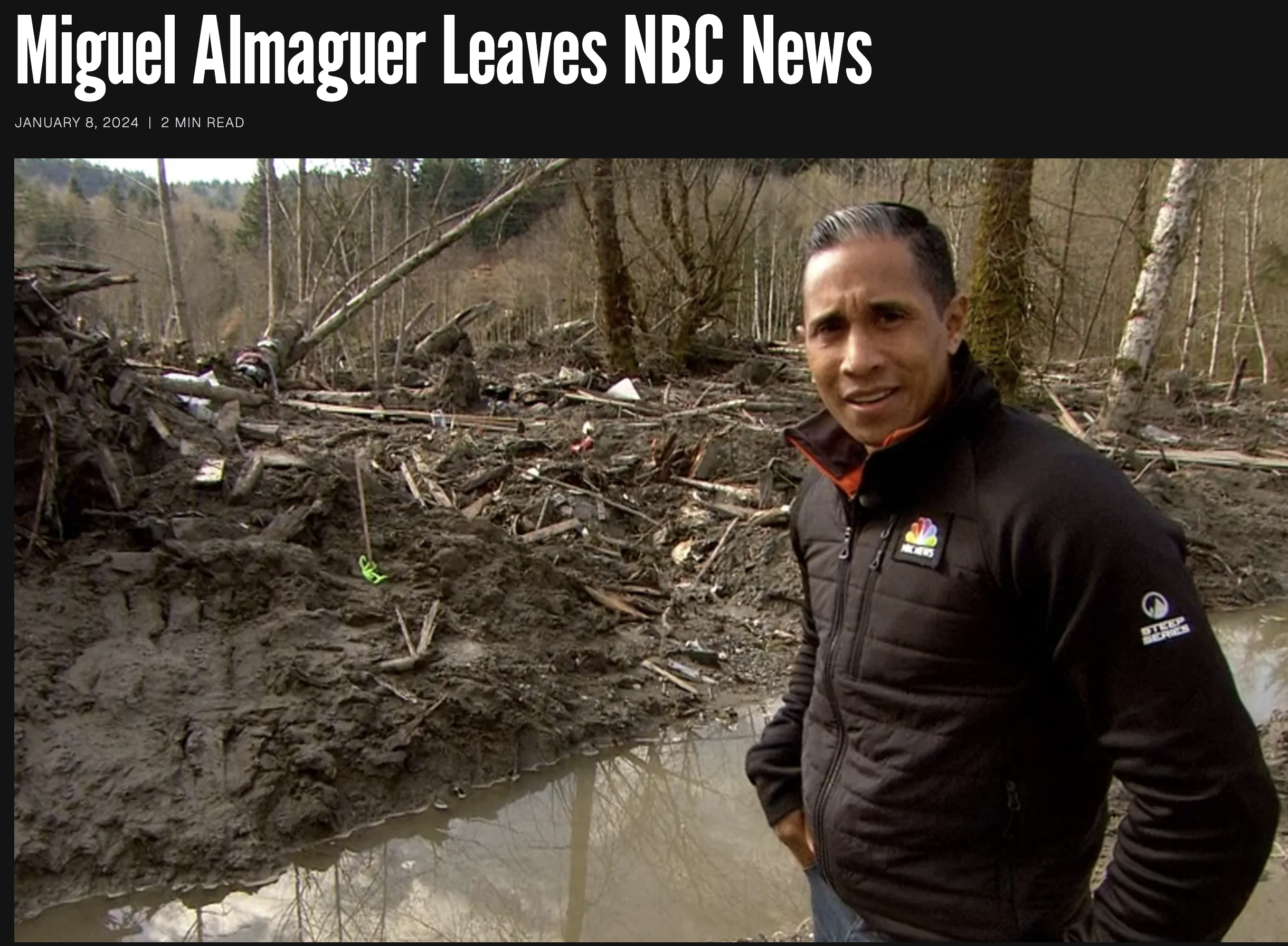
It happened again this week. Meet my friend MIguel.

For years Jadyne and I watched NBC News, first when Brian Williams was the anchor, then when the job passed to Lester Holt. For eighteen years we witnessed stories that Miguel produced, and for years we saw his face on our TV.

I belong to a health club called 24 Hour Fitness. Three days a week I walk on a treadmill, then swim a mile in the pool. On other days I swim either a half mile or when I’m feeling particularly energetic, a full mile. Seventy-two laps. Twenty-five yards.

For some time I was aware that there was one swimmer, Miguel, who swam very quickly, with an excellent stroke, doing flip-turns at the end. I admired his skill and intensity, noting that he swam well over an hour at speeds much faster than I could imagine. We frequently ran into each other at the pool, and I’ve expressed my admiration for him. What puzzled me all of this time was that I was sure I’d seen him before, but couldn’t imagine where or when.

When I talked to him earlier this week he told me about his NBC connection, and this time two and two fit added up to four.

Miguel works out in the gym before he swims, then swims two to three miles. “In the evening,” he said, “I run ten miles.” “You’re insane,” I said. “I know,” he answered, “but my house is being remodeled, and I can’t stand to be there while they’re working. When they finish I may cut down a little.”

FYI. One Emmy award for a report on San Diego Fires, several others, one an Edward R Murrow award.

If I Had Your Camera...

If I had your hammer I wouldn’t be a carpenter. If I had your scalpel I would suggest you choose someone else to operate on you. If I carried Callaway clubs it wouldn’t be my age alone that would prevent me from joining the PGA. We respect the skilled carpenter, the surgeon, the golf pro. They are artists, and those are their tools. Why do so many think that the camera is the artist here? Is it because camera companies convinced you that their camera was all that stood between you and museums and galleries?

Good photographers don’t spend nearly as much time dealing with their equipment as they do refining their ability to see and recognize what that equipment can do to fulfill their vision.

Annie Liebovitz said about the seeing part of photography.“It’s not something you can turn off.” Jadyne said that about me. “You’re always looking.” “Yes,” I replied. “I am.” I’ve heard veiled criticism about this passion. Some suggest that in spending as much time with a camera in front of my face I’m missing so much. They’re twice wrong. The camera isn’t in front of my face. My eyes are. I see more than they can imagine. I see the way the woman in the black dress moves out of the shadows and into the sunlight, an image I took through a bus window in Cairo. The simplicity of the lines and shapes interrupted by the lone figure makes this something more. Everyone else was looking at their phones. It’s because I’m looking, not because there’s a camera there.

Because I’m Looking…

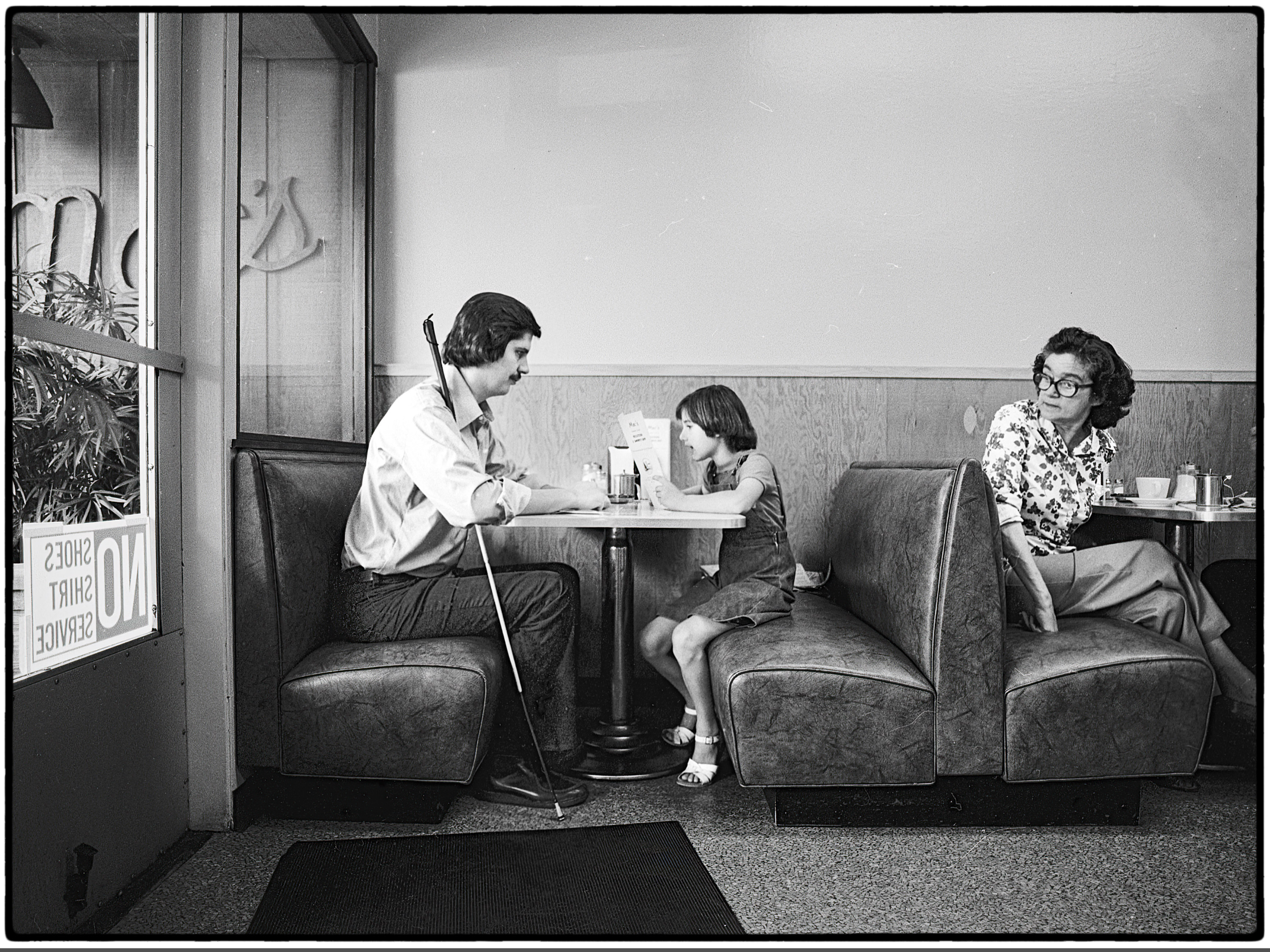
I see and recognize events in my life that merit attention. I was taking a photograph of a blind man and his daughter in a restaurant. Upon hearing the girl reading the menu out loud to her father, the diner in the next booth, puzzled by hearing the girl’s voice, turned around and stared. This is the real image, a slice of life.

I Look For Things that Reveal Truth

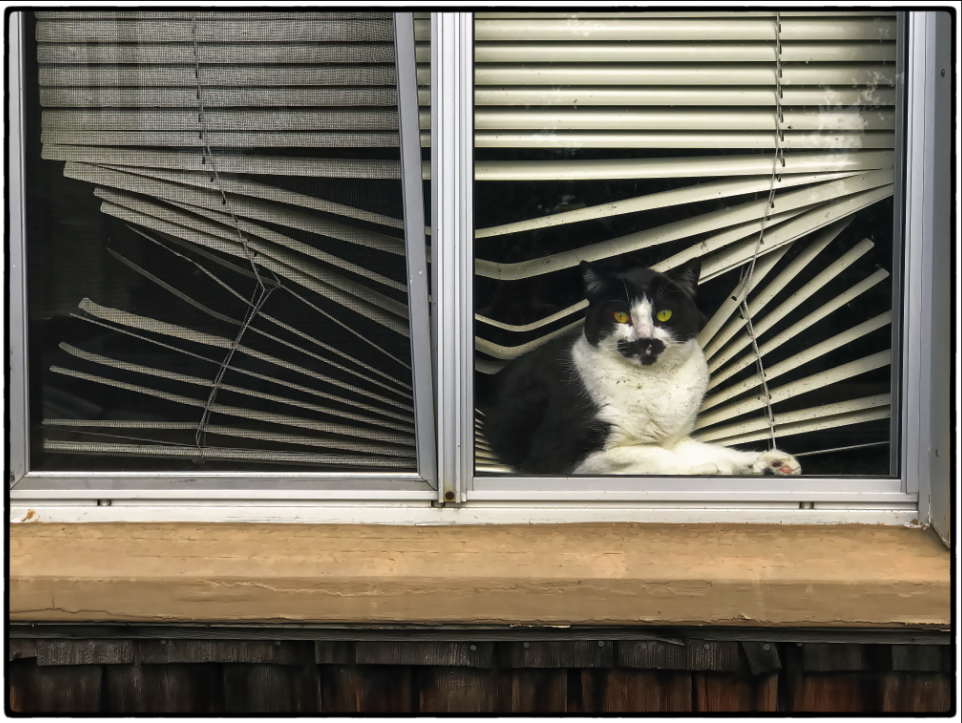
What is truth in a photograph? Truth enters the image when it transcends the mere representation of something. In this case the cat’s climbing through and bending the blinds reveals a truth about the nature of cats. This isn’t only a photograph of a cat; it’s a photograph of all cats

In this photograph of a preschool child dressing up the image reveals a truth about all children. N.B. Her feet are in the wrong shoes.

Mexicans cut our lawns, prune our trees, cook our food, wash our cars, pick our vegetables, build our decks, and paint our houses. They do these jobs with care and precision. And they do them all anonymously. This is one of a series of photographs I took of the workers who painted my house four or five years ago. In none of the images did I reveal their faces. No Latino signature appears at the bottom of the canvas that is our house. Anonymity in the USA is a truth for Mexican laborers, too, albeit an inconvenient one.

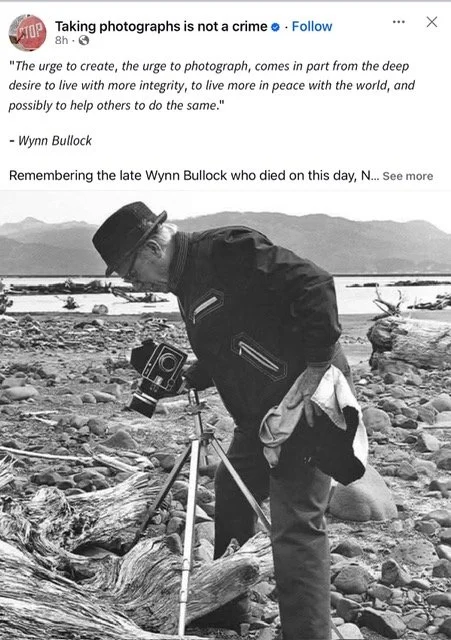
Photographers look at what they do as a creative act. They transform a dynamic three-dimensional world into a static two-dimensional one, arresting motion and revealing something that others miss. In “helping others do the same,” as Wynn Bullock said, the goal is to share the vision, the truth, the essence of things many miss, ignore, or take for granted.

The key word is “make.” Photographers don’t take, they create, add, transform, they “make.”

What Photographers Make

Photographers make by recognizing, identifying, and transforming what they see into something that through their photographs they hope others see and feel, too. In best cases there is a coming together of the elements that make up the photograph with the vision that inspired the photographer to push the button. Sometimes it’s a visual representation of a scene, a place where light and shadow, color and composition, shapes and figures, align in a new and interesting way.

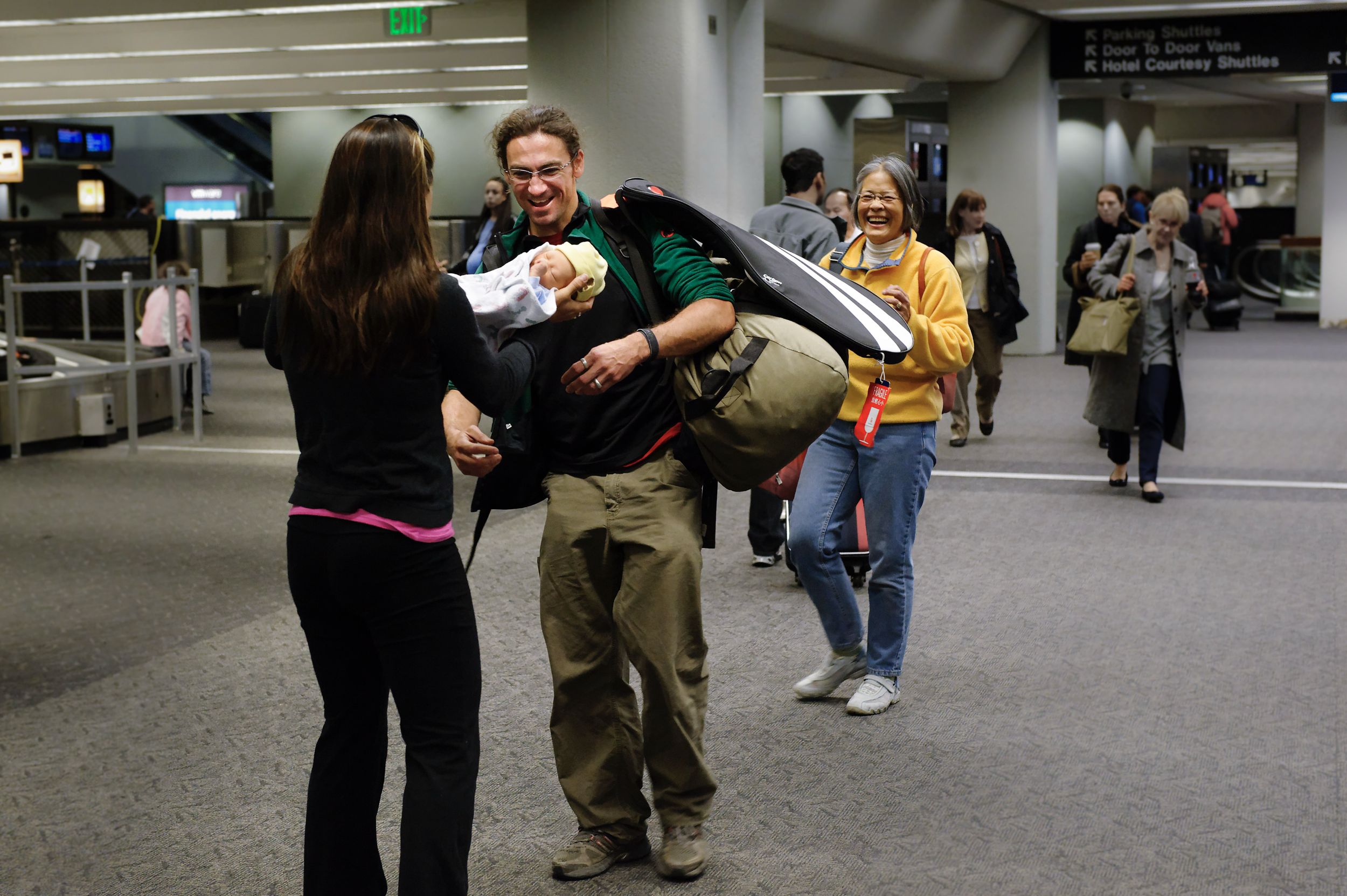
Sometimes it’s more than that. This photograph is one of my favorites. Sixteen years ago our daughter Jennifer gave birth to a son. Andrew, her husband, was in Kathmandu, sitting on a sofa seeing the birth on Skype. When he was finally able to fly to the USA Jennifer was there with baby Susanto, presenting Andrew with his first child. This is that moment. Andrew sees his son for the first time. All the photographic elements are trumped by feeling as the photograph reveals it.

Jennifer, Susanto, Andrew, Jadyne

#70, Glenwood Springs, CO

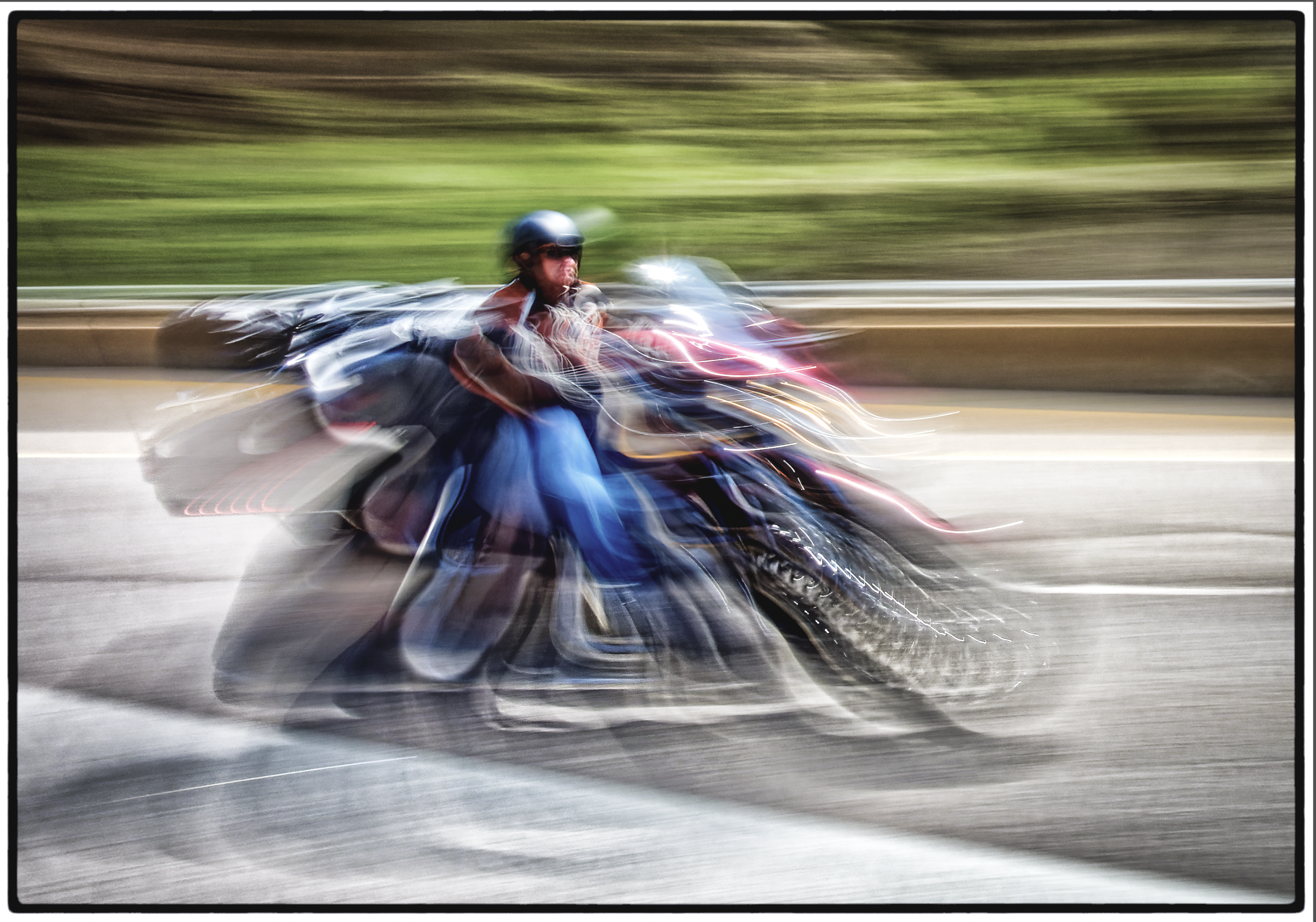
I didn’t take this image. I made it. I made it by combining a slow shutter speed, panning the camera while the shutter was open, and I was lucky. I could have used a fast shutter speed and frozen both the bike and the rider, but I wanted to convey the feeling of movement and speed with what it feels like to ride a motorcycle, and this was the result. Again illustrating the feeling was my goal.

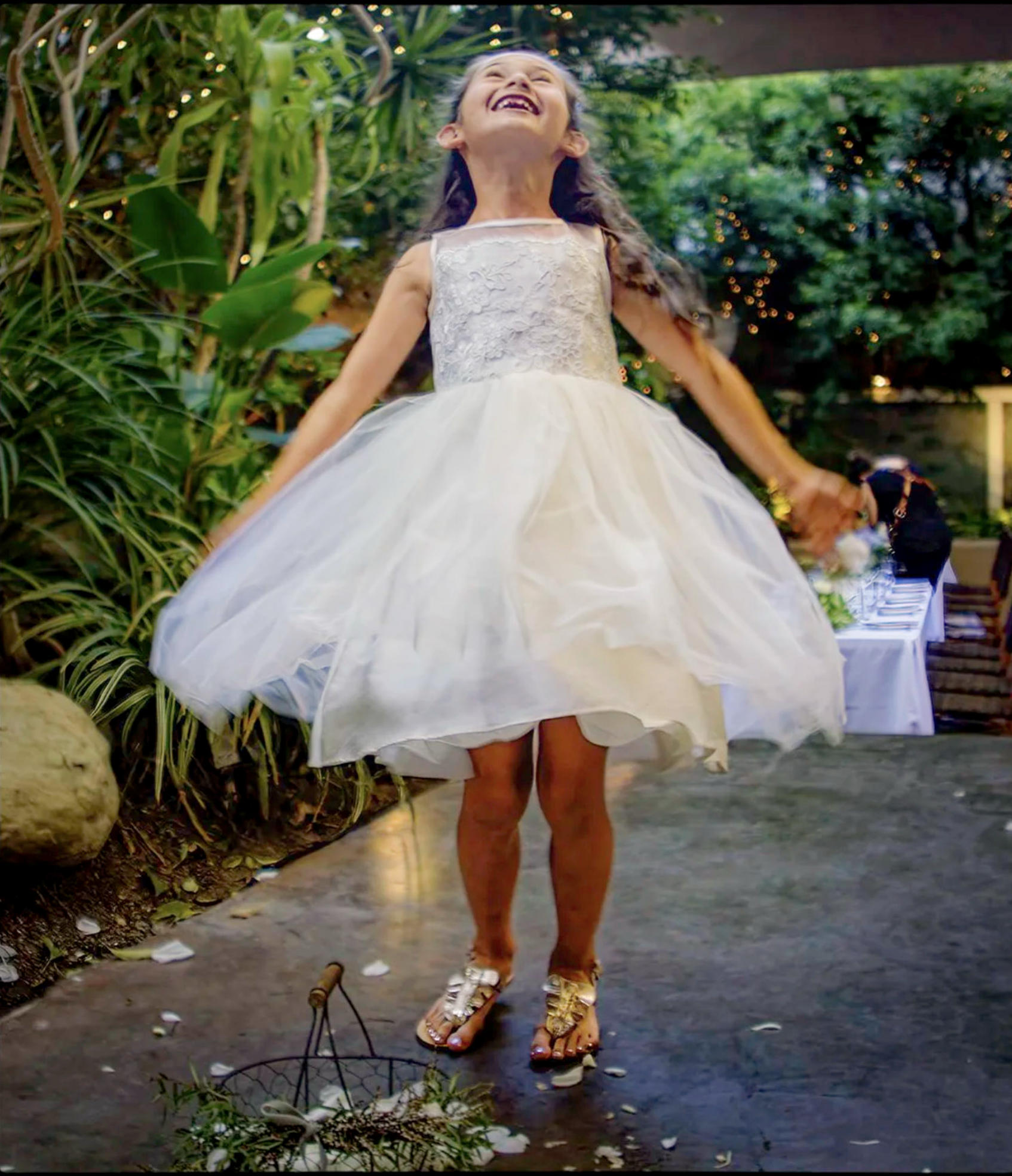
In this image my timing was spot on. This is the flower girl at a friend’s daughter’s wedding. Look at her face. Feeling wins again. Good photographs make the viewer feel what the photographer felt when the image was taken. Or made.

And one more favorite. We were visiting the spot in China where Mao swam across the Yangtze River when a number of uniformed Chinese came to pay respects. One woman brought her child. He’s packing. The image is a jarring juxtaposition of a little boy as a soldier, a pistol at his side, soldiers standing next to him, and the cartoon words on his pants.

If You Had My Camera

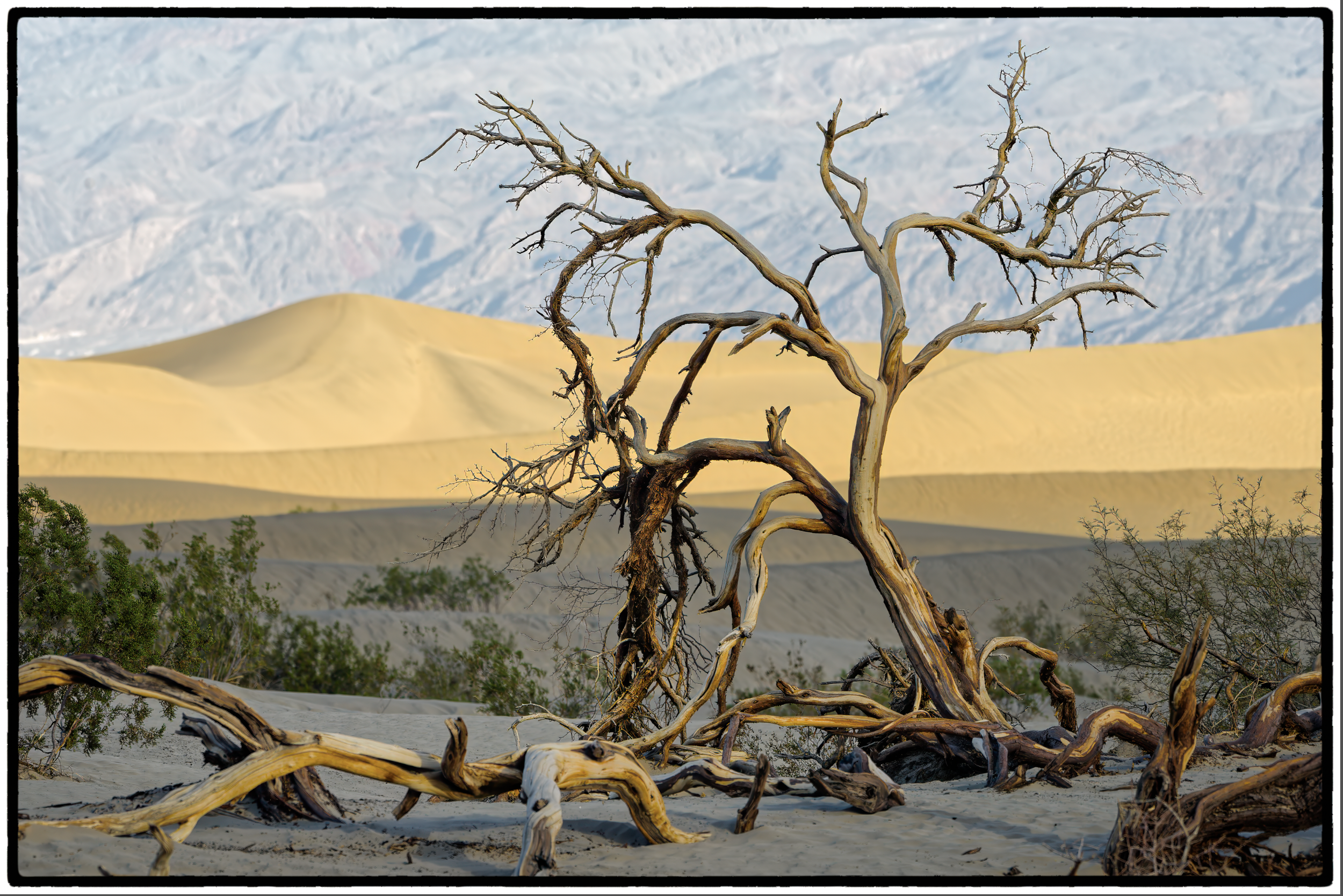
Would you recognize that the dead tree, the sand dunes, and the faraway mountains, all of which are separated by miles could make a decent photograph if you stood far back from the tree and used a massive telephoto lens, thereby compressing the image, bringing the elements close together, and making something that most people would pass by without a glance?

Mesquite Dunes

Life Isn’t Always Serious

These next two images convey humor in everyday life. The first is from a parade in 2006 called “How Berkeley Can You Be?” The tree was in the parade. He stopped in front of the two tie-dyed women.

Haru. To meet him face to face I had to lie on the sidewalk. That isn’t easy for a man about to turn 80. Actually, the getting down wasn’t the problem; it was what followed.

Ask yourself, if you had my camera would you lie on the sidewalk, would you be able to trip the shutter to catch the tie-dyed women, the motorcyclist, the father’s expression, the cat in the window, the woman in the sunlight, the Chinese boy, the flower girl? Some believe it was luck. A great golfer once responded to that by saying, “The more I practice the luckier I get.”

Quantico, September 30, 2025

The Secretary of Defense (now titled the Secretary of War), Pete Hegsteth (former talk show host on FOX), summoned 800 Admirals and Generals from all over the world to Quantico, Virginia, yesterday for a pep talk. Not to be outdone by the secretary, Trump, unwilling to see someone else become the center of attention, appeared and took the stage. Mind you, these 800 officers, many of whom are highly educated, graduates from military academies like West Point and Annapolis, were forced to hear the inanities of a talk show host and a reality TV star, neither of whom possesses a scintilla of intelligence, wit, or wisdom. It had to be excruciating, for the officers, after flying thousands of miles to endure the idiocies of a draft dodger and an alcoholic as they lecture these esteemed officers on the warrior ethos. No fiction writer could conceive of such a thing, but in Trumpworld the inconceivable becomes reality.

The grandson of General Lucian Truscott, a journalist, Lucian Truscott IV, attended the lecture. He had this to write:

“Unhinged” is one word I heard on the news shows describing Trump’s speech this morning. So is “bonkers.” One report called Trump “meandering” and “exhausted.” But no description could capture what took place in Quantico, Virginia this morning. All the papers and cable shows and commentators are talking about how Trump said he wants “dangerous cities” led by Democrats to be used as “training grounds” for the military, and that was on obvious outrage among many others, but I want to begin with Trump’s disquisition on walking up and down stairs.

He began by attacking Biden, naturally, complaining that “We were not respected with Biden. They looked at him falling down stairs every day – every day, the guy’s falling down stairs – and I said, that’s not our president. We can’t have it. I’m very careful, you know, when I walk down stairs, I walk…very…slowly. Nobody has to set a record. Just, try not to fall, ‘cause it doesn’t work out well. A few of our presidents have fallen, and it became a part of their legacy, you know. Walk nice and easy. You don’t have to set any records. Be cool! Be cool when you walk down, but don’t…don’t bop down the stairs. The one thing with Obama…I had zero respect for him as a president, but he would bop down those stairs, I’ve never seen…da-da-da-da-teh-deh-bop-bop…I’ve never seen…he would go down those stairs, bop-bop, he wouldn’t hold on, he’d go down those stairs, I said, it’s great! I wouldn’t want to do it. I guess I could do it, but eventually, bad things are gonna happen, and it only takes one. A year ago, we were a dead country. We were dead. This country was going to hell. We had nothing.”

He went on. And on. And on. Seventy minutes, he blathered through his usual patter of lies, bigger lies, grievance, self-pity, and self adoration. I watched the speech, and he must have said the word “Biden” 30 times. It’s not really worth quoting any more of his lies and nonsense, because you’ve heard it before, heard it too many times.

So had the generals and admirals and noncommissioned officers. They are citizens. They either live in the United States, or they’re stationed overseas where American broadcasts are available via satellite. They know a rally speech when they hear one, and they knew that is what they had been ordered to travel great distances to listen to today. One report noted that the audience of the most senior uniformed officers in our military sat “stone-faced” through the whole thing, with only a momentary chuckle from a few in the audience at something Trump said. There was no applause during the speech despite the fact that Trump hit all his applause points like he does at his rallies.

It’s the bragging and exaggeration that must have really gotten to them. I ended eight wars! The pull out from Afghanistan was the worst day in the history of our country. I did this. I did that. Biden was the worst president. The Democrats don’t respect you and will never treat you right.

Trump seemed oblivious to the fact that everyone in that auditorium, during careers of as many as 30 years, had served under not only Biden, but Trump and Obama and Bush and Clinton. Most of them had seen combat. Most of them had their own experience with “the worst day” on the battlefield or in training accidents. They know that the Marines and the Army have had helicopter accidents that killed more soldiers in a single training incident than died in the terror attack in Kabul that killed 13 which Trump referred to.

In the culture of the U.S. military, generals and admirals don’t brag about themselves. The only bragging that is done by commanders in the military is about the accomplishments of the troops who serve under them. Not one of those generals or admirals had ever stood up before an audience in the military and cried out look at me! I’m the greatest! Look at all I’ve done!

Unseemly is not an adequate word to describe how generals and admirals and senior NCOs consider bragging. They don’t do it, and they don’t put up with it from others who serve with them.

I have concluded that today’s display of ego and bluster and falsehoods by Hegseth and Trump may have served a useful purpose after all. Every one of those generals and admirals and senior noncommissioned officers now has had personal experience with who they serve under. None of them could have missed the sexism in Hegseth’s speech when he told them that the military is “going back to male standards” for combat soldiers. All of them know that female soldiers have earned Ranger status by enduring the exact same hardships male soldiers endure. All of them know that women fly jets off and onto the pitching decks of aircraft carriers in dangerous seas. The Coast Guard admirals know that female officers command the same rescue boats that go out in impossible weather every day.

There were Black generals and admirals sitting amidst their white counterparts in that audience in Quantico today. Not one of them, white or Black, could have missed the rank racism when Trump imitated Barack Obama “bopping” down a set of stairs. Trump said he “never seen” anything like it, as if he were describing a tight end in a football game catching a difficult pass. None of them missed the racism when Trump mentioned, in speaking about “the nuclear” that there are two “N-words” you can’t say. Every person in that room knew what the other N-word is, and they got it that Trump was complaining that “political correct,” as he called it, had stopped its usage.

The really sad thing about what transpired in Quantico today is that there is no one in Trump’s White House or among the top civilian command at the Pentagon or for that matter in the entire Republican Party who thinks there was anything wrong with anything said by either Hegseth or Trump. But generals and admirals endured George Bush and the lies he told that forced them into a war they knew was bogus. They endured his absurd “mission accomplished” moment when everyone in the military knew that precisely nothing had been “accomplished” a few months into the war in Iraq. They knew from reading history that this country and its military had been forced into a war in Vietnam on the basis of another ocean of lies.

In the end, the generals and admirals know that presidents come and go, but their job remains the same. The soldiers, sailors, airmen and airwomen and Marines under their command need them to do their jobs in spite of the madness at the top. Their loyalty is to the Constitution, not to President Donald Trump and Secretary of Whatever the Hell He Thinks He Is Pete Hegseth.

They will endure. So will we.”

Imagining these officers realizing (if they hadn’t already) that the partisan dimwits speaking before them can direct them to do whatever the dimwits want them to do, I wonder whether they now feel it is incumbent upon them to act. So does another writer, Ellis Hovey, who wrote:

Our greatest hope for our democracy should right now be that 800 of the world's greatest military minds are flying back to their posts with solid realizations that it is up to them to save this country from the current totally corrupt administration.

Or will these military generals go into self preservationist mode, ignore their oath, and say to hell with the country?

The situation—800 military leaders grappling with their oath versus the pressures of a potentially corrupt administration—is layered with complexity. Historically, the U.S. military's loyalty is deeply rooted in its oath to defend the Constitution, not any individual leader. This oath is a cornerstone of military service, emphasizing allegiance to the nation and its democratic framework rather than personal loyalty to a president or administration.

However, the actions of military leaders in such scenarios depend on their adherence to this oath and their interpretation of their role within the chain of command. Some may feel compelled to speak out or take action if they perceive constitutional principles are under threat. Others might prioritize stability, fearing that direct confrontation could lead to chaos or undermine the institution they serve. Military professionals are trained to remain apolitical, but moments of political or ethical crisis can test this neutrality.”

I post this because I want a record of what is happening in American in October, 2025. Historians will have their sources. Perhaps my descendants will have this.


MOMA

I bought a new printer, a Canon PRO-1100, which I quickly discovered was able to produce prints that looked better than those from my old unreliable Epson printer. At about the same time improvements in Adobe Lightroom and Topaz Photo AI, were able, via software, to bring out details and colors that neither the printer nor earlier versions of the software were able to reproduce. In other words, my photos looked better, much more like what I envisioned when I first pressed the shutter button.

With time and the will on my side I began looking at images that I had taken over more than the last fifty years, both favorites and overlooked photographs that I had saved but hadn’t printed. I saw all of them in a new light and began to critically examine, then print these images, none of which had come from work, all from travels around the world and through the US.

What I do is both solitary, and at times, a bit lonely. I see things that demand to be photographed, that I can’t ignore. I reduce three dimensional things to two, arrest motion, then capture what’s left with the camera. It may be an event, a person’s expression, a play of light, a meaningful juxtaposition of some kind, a burst of sunlight on a blossom, a bird in flight, just something that announces its presence to me, that grabs my attention. In the hands of skilled and sensitive photographers what they capture can convey an undiscovered meaning to the lay person. The truth of a thing lies in that interpretation.

Not just a cat, but all cats. Looking out a window, indifferent to the bending slats in the blinds, this cat reveals what is commonly known about cats in general. It’s a truth about cats.

Sometimes truths are revealed only by studying a thing over some time. In this neighborhood flower I studied the shapes of each flower, their relationship to each other, then anthropomorphized it, seeing uplifting joy and happiness, a truth that passersby might miss.

Sometimes truth is revealed without the photographer knowing it. It was only after I saw this image on my screen that I realized how much it said about motorcycles and motorcyclists, the open road, and riding.

The Solitary Part. Although the search, the discovery, and the actual capture belong to the shooters, they want others to share in what they’ve done, eat the fish they caught, appreciate the goal they just scored. Some things are meant to be shared. Yes, even if no one ever saw my images I would still look for them. It’s not something I can turn on or off. Writers need readers. Books are incomplete without readers. I need for someone to look at images that bring me pleasure, images that tell truths, that reveal something about the world as I see and understand it.

So I called MoMA, hoping to get an audience with someone in their photography department. No one called. I gathered forty images together and took BART over last week, hoping to leave them. They wouldn’t take them, not wanting to be responsible. The manager suggested that I email them a second time. I did.

To Whom, etc…

I emailed the general office a couple of weeks ago, asking if someone(s) in your department might be willing to look at a selection of mages that I’ve created over the past fifty years or so.  When I didn’t hear from you I took it upon myself to drive to MoMA and bring prints with me.  This morning (the 23rd) I talked to the museum’s manager.  She told me that they couldn’t accept any images, as they didn’t want the responsibility of taking care of them.  She suggested that I email you directly.  I showed her (and one of the gentlemen behind the counter) several of the images, and your manager suggested first that I email you again, and second that she would photograph my personal information and, after seeing  the images, encouraged me to continue to see if I can get audience wi6h you.

I’m 79.  I’ve been slavishly devoted to photography for my adult life, making a living at it for much of that time.   Although nothing is off the table, I love photographing people, especially those whose presence in an image reveals truth.  I’m only asking that someone else looks at these.  My family and friends have seen them all.  I recognize that photographers can easily overvalue their work, and I think I’ve been careful enough to assemble some that reveal more than what’s depicted.  

I can be found at...

David Buchholz

davidkbuchholz@gmail.com

510-847-1715

So this next part could be a bit of a whine, but I’ll try to smooth it out a bit. I would love or would have loved it if anyone in my family, those who know I’m trying to show images at MoMa, would have asked, “Can I see those images? Why did you choose those? What’s in them that make you think that they’re worth considering? Why do these mean so much to you?"

And maybe I couldn’t have answered them in words. That’s the reason I pick up my camera in the first place.

I found an email that I had written to my cousin Donald in 2019, a musician who has had as much success with his songwriting and recordings as I’ve had with the kind of images I’ve referenced above:

“What your brother said about “running in the family” is true, but only in part.  Some people—you, Bob, Susie,  Bill, Jason, Dick and Sarah—think about such things, but many don’t. When John was a little kid we took all of our kids to see the Impressionists.  Jason and Jennifer described paintings that they liked.  John said, “I hated them all.”  Andrew and Jennifer don’t take their kids to art museums—hiking, natural history—but art?  Same with John.  Jack? Not a chance.  He is either indifferent or doesn’t understand what I’m doing or trying to do.  Jadyne knows it means a lot to me, and that’s the extent of her interest.

I’m not looking as much for praise as the understanding from others that what I’m trying to do, however successfully or unsuccessfully, is part of who I am, and that ignoring it altogether might come from several different sources—indifference, an inability to relate to that part of what it is to have an artistic temperament, and perhaps a number of other places.  And “an artistic temperament” doesn’t mean that I’m any good at it.  It just indicates that producing, however good or bad, is part of who I am.

In the past I felt disappointment that I didn’t hear.  I continue to send out stuff.  I’m no longer disappointed. However, when I do hear, even just a word or two that acknowledges what I’ve done, I appreciate it.  I think that some might believe (this is speculation) that I’m just fishing for praise.  For those who take the care to indicate that they’ve looked at it, that’s enough. For those who take the trouble to try to understand, it’s most appreciated. Even negative comments.  It means that someone cared enough to see them.


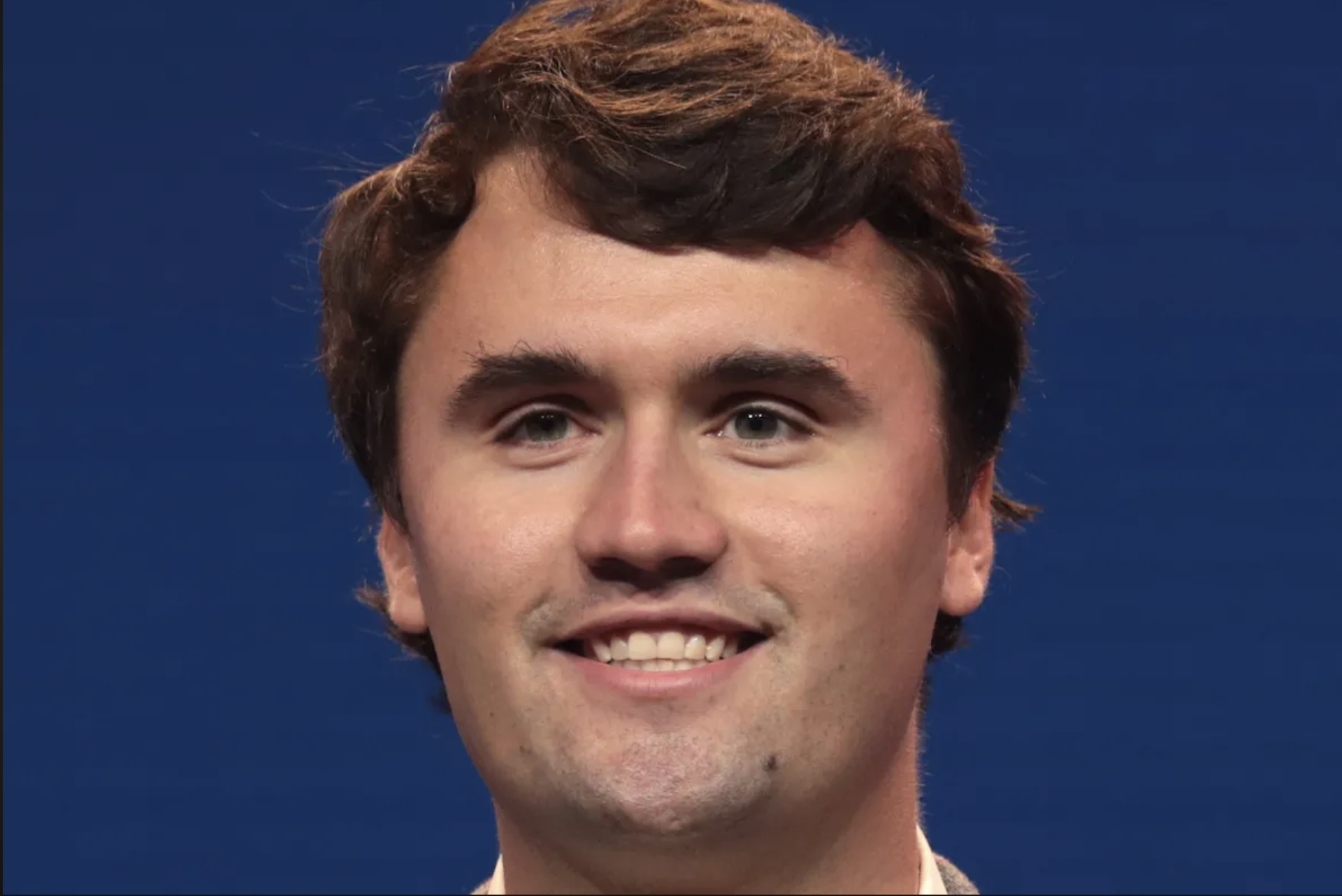
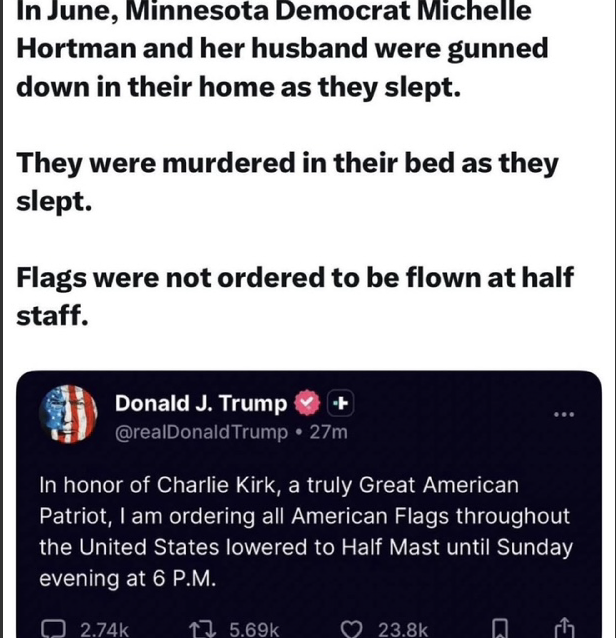
Charlie Kirk (Part II)

“Stephen Miller, one of Trump’s advisers, having copied the format from Nazi Josef Goebbels, had this to say at the memorial for Charlie Kirk.

Our enemies cannot comprehend our strength, our determination, our resolve, our passion, our lineage, and our legacy hails back to Athens, to Rome, to Philadelphia, to Monticello,” Miller said. “Our ancestors built the cities. They produced the art and architecture, they built the industry

We stand for what is good, what is virtuous, what is noble. And for those trying to incite violence against us, those trying to foment hatred against us. What do you have? You have nothing. You are nothing. You are wickedness, you are jealousy! You are envy! You are hatred! You are nothing! You can build nothing. You can produce nothing. You can create nothing. We are the ones who build. We are the ones who create. We are the ones who lift up humanity.

You thought you could kill Charlie Kirk? You have made him immortal. You have immortalized Charlie Kirk and now millions will carry on his legacy. And we will devote the rest of our lives to finishing the causes for which Charlie gave his last measure of devotion. You cannot defeat us. You cannot slow us. You cannot stop us. You cannot deter us.

To our enemies, you have nothing to give, you have nothing to offer, you have nothing to share, but bitterness. We have beauty, we have light, we have goodness, we have determination, we have vision, we have strength. We built the world that we inhabit now.

We will carry Charlie and Erika in our heart every single day and fight that much harder because of what you did to us. You have no idea the dragon you have awakened. You have no idea how determined we will be to save this civilization. To save the West, to save this republic.”

What’s next, Herr Goebbels? Where are you putting the camps? The ovens?

Sports 2025

Let’s begin with Jalen Carter, the star Philadelphia Eagles Center who, even before the first snap of the ball, inaugurated the NFL season by being ejected for spitting on the uniform of opposing Dallas quarterback Dak Presott.

The referee is reaching for his flag to call an “unsportsmanlike conduct” penalty on Carter before his ejection.

Let’s switch to tennis. A Polish millionaire snatched a hat away from a child, becoming for this act, the most vilified adult in America.* (*Not counting Trump, of course). Within a day the hat snatcher was identified, and his business received countess 1 star ratings. This one had a happier ending, though. When the tennis player discovered what had happened he met the boy in the locker room afterwards and greeted him with a new signed hat. And the millionaire issued a heartfelt apology, too, going from the doghouse to the penthouse.

Switching sports. The white-shirted baseball-hat-wearing man took the ball from the hands of the gentleman in blue.

The announcer said, “Wait a second, give it to a kid,” play-by-play man Gary Cohen added. “[He] took it away from an old guy.”

But why stop here? Baseball brings out the very best in us, and fans aren’t the only perpetrators. Enter the internet sleuths. Let’s all go to Miami for this brazen episode last night.

The woman in white is demanding that the man give her a home run baseball that she claimed he took from her.

This one has layers. The video shows the ball landing among fans and empty seats. There is a scramble. The man walks away with the ball and gives it to his son. The woman storms over to the man and demands the ball. Preventing a dispute, he takes the ball out of his son’s mitt and gives it to her. Fans boo the woman. She flips off the entire section.

“Thankfully, the Marlins’ stadium staff went out of their way to make things right, hooking up the fan who was briefly without the home run ball with a new ball and a prize pack. After the game, the Phillies made sure to give the fan an unforgettable moment as well, with Bader coming out to meet the family and offer up a signed bat.” (Sports Illustrated).

The account concludes, “All of that said, please, if you or a loved one happens to be in the stands when a home run ball is hit, or a player offers a fan their hat, or anything of the sort occurs and puts you in a position to possibly nab a souvenir, please just be normal about it.”

But what is “normal?” We are living in an age of intolerance, lies, distrust, and fear. Normal isn’t normal at all.

P.S. There’s a footnote to this story. The woman was mis-identified According to the website House and Whips, “names began circulating, with Cheryl Richardson-Wagner emerging as the primary suspect. Rumors spread that she was a 67-year-old nurse from Moorestown, New Jersey, working in social services, and even that she had been fired from her job due to the backlash. Wrong. Similarly, the Hammonton School District in New Jersey issued a statement clarifying that the woman was not and had never been their employee, adding a touch of humor: “Anyone who works for our school district… would obviously have caught the ball bare-handed.”

While the woman’s actions were widely criticized, the rush to identify her led to misinformation and harassment of innocent individuals. The incident also sparked conversations about sportsmanship and empathy, with many echoing the sentiment, “Balls and pucks should always go to the nearest kid.”

P.S.S. Announcers at the US Open Men’s Final have been warned not to comment on the expected boos that will rain down on #47 who is planning to attend. I wish I could be there to add my voice.