Hate

I can’t remember the last time I hated anything. Oh yes, I’ve hated lima beans my whole life. I’ve never cared for beets, either. I don’t like peas, but I don’t hate them. I don’t know if it’s the taste, the texture, or a combination of the two, but even if I don’t care for peas, I do eat them. I’ve even taken seconds, small seconds, that is.

My hating goes beyond foods. I hate being late. I hate it when others are late, too. I hate being talked down to. I hate having to say something only to find that no one is listening. I hate being criticized. So it’s foods, being ignored, and a few other social interactions that I hate.

I can’t remember the last time that I hated anyone, though. *I asked my neighbor Bob Frassetto if, after a neighbor-to-neighbor misunderstanding, he was ever going to talk to me again, and he sized me up and down, paused, and said, “you disgust me.” I didn’t hate him for that. I felt somewhat sorry for him for feeling that way, believing that it’s painful to carry around hate, much more for the hater than the hatee. Yes, we still don’t talk, but I would. He’s the one carrying the burden. Hating someone is an unwelcome affliction. Seneca said that anger (and hatred) is “an acid that can do more harm to the vessel in which it is stored than to anything on which it is poured.”

Why do we hate? We fear things that are different from us. My brother in law posted this on Facebook this morning:

Mind you, this is just a partial list.

Mind you, this is just a partial list.

We also hate because we reject what we don’t like about ourselves. Brad Reedy, a psychologist, describes this in the Freudian term “projection”, our need to be good, which causes us to project “badness’ outward and attack it. We think, he continues, that this is how one rids oneself of undesirable traits, but in reality it only perpetuates repression which leads to mental health issues.

I believe that this is at the heart of Donald Trump’s issues. He lashes out, criticizes, and attacks not only anyone who disagrees with him but is different from him. On Memorial Day he attacked a Democratic congressman, Conor Lamb, a Marine Corps veteran. It was only a small part of his attacks.

The headline read,

“On weekend dedicated to war dead, Trump tweets insults, promotes baseless claims and plays golf”

The problem isn’t that Trump hates. It’s been long established that he does, that he has no empathy for others, that his modus operandi is to lash out, attack, criticize, demean, and insult. It’s the only way he knows how to comport himself. He is also indifferent when his hating drags along innocent parties. In his tweetstorm on Memorial Day he referred to the death of a 29 year old intern of archenemy Joe Scarborough, suggesting that Scarborough might have murdered her, although he was nine hundred miles away when she died. Her widower is once again reliving the pain of her death because of the mindlessness of a brain that one person suggests is like “six fireflies blinking inside a bottle.” Without hating he would only expose the emptiness inside himself, the meaninglessness of his own existence. He would have to recognize what so many others have known for years, that as Gertrude Stein is reputed to have said about Oakland, “there’s no there there.”

No, the problem isn’t that Trump hates. The problem is more personal—that I hate him. *I began this essay by trying to remember the last time I hated another human being. I have hated him since before he was elected, and that hate has only grown in the years that he’s been in office. What’s crucial for me is to recognize something else that I mentioned earlier in this essay—that hatred is a burden, and that carrying it around weighs down the hater, not the hatee. Sometimes I wish Trump knew how much I (and so many others) hated him. I suspect that he might, though, because in the inner sanctum of his emptiness is the knowledge that he can never consciously confront that he will never be respected, never liked, never loved, that his predecessor was everything he wishes he could but never will be. And knowing that deep in his subconscious causes him to lash out. Again. And again.

And for me? I accept that the antidote to hate is forgiveness and compassion. Ultimately, forgiveness is about letting go, taking appropriate actions to protect oneself. I feel no compassion for Trump. I can’t forgive him, either. I am able, however, to “let go”, to protect myself, and in doing so, recognize that when there’s no there there, there’s nothing that prevents me from moving forward and living without the burden of hate.

Alone

“Behind the School and the Boy Scout Camp on Wednesday?” Ted asked last Friday as we finished our four mile Friday walk down Wildcat Canyon, past the Tilden Merry-Go-Round and back. “Sure,” I replied, using Ted’s nautical background for time-telling, “0700.” I walk a lot during the week, and several days Jadyne and I walk together. On Monday, Wednesday, and Friday she runs. I can run, but the surgeon who performed hip surgery recommended that I not run, as the weight of running puts an extra load on the titanium. So I don’t.

What I treasure about those three days, though, is being by myself. Oh right, Ted walks with me on Friday, and we have spirited conversations about just about everything. Ted is a good friend, and we have a lot in common. He’s slightly to the right of me politically, but that’s nothing unusual. Almost everyone else is, too.

But on Monday and Wednesday I’ve treasured being by myself. When I walk through the trails of Tilden I often listen to the sounds around me; on Monday, climbing up Marin I’m pleasantly distracted by the thousand albums on my phone channeled through my Sony earbuds. Those two days give me ample time to think, to sort out the bits and pieces of my day and my life. But I like walking with Ted, even now, two days a week.

I also like being alone. I’m alone right now sitting by my computer upstairs while Jadyne struggles with yet another Liberty puzzle two floors below. I like playing my guitar, working on photographs, and reading, all solitary activities.

Two days ago I walked around Berkeley’s Aquatic Park and took this image:

Egret.jpg

I sent it to my friend Gail Bray and asked, “Have you ever been really alone?” She replied, “Yes, I have.” We all have. Being alone gives us time to think, solve problems, gather thoughts, sort out relationships, and to recognize and acknowledge all that surround us.

Being alone and being lonely. On Saturday we met our Chinese conversational partners at Live Oak Park. One of them is returning in June to Beijing, flying first to Tokyo, then landing in Shanghai. Once he lands in China he will be taken by bus to a hotel where he’ll be locked in s room for fourteen days. (At his expense, of course, to the tune of $60 a night). All meals will be delivered to the room, and he’ll be tested daily for Covid-19. Needless to say, it’s two weeks of an unwelcome and looming loneliness that he’s thinking about.

Amid the pandemic there are more stories about loneliness. Here’s mine:

Senator Elizabeth Warren echoed that experience, too.

We have friends who have been living alone for the past two months. Gail has been especially cautious, choosing to have food delivered, rather than shopping for it herself. Her son Gabriel has recovered from Covid-19, and she has wondered how she would fare if she should be infected. “Who will take care of me?” It’s a level of fear that we didn’t really know or experience before the pandemic. We have other friends who live alone. Living alone brings whole new levels of meaning in the pandemic. No hugging, no touching, masks in public, six feet away from the nearest human being. Video calls, Zoom meetings, virtual touching, whatever that means.

A thesaurus gives us synonyms for alone—isolation, seclusion, confinement, lonesomeness, peace and quiet, solitude—some more welcoming than others. Take the comfort of “peace and quiet” and contrast it with “confinement.” Somewhere among these conventional definitions are feelings of unwelcome aloneness, one that accompanies the disappointment of failing to connect with someone when connecting is important to one of them.

I don’t believe that the two ships that perpetually pass each other in the night intend to do that. Last week I was one of those ships, and I didn’t just pass by one ship; I passed a dozen. During the pandemic I have spent hours upon hours photographing flowers. I’ve put them up on my website along with some thoughts about finding joy in the Pandemic, with images I’ve captured at Aquatic Park, with macro images of our dogwood tree. Gathering all of these together I sent them out in one email to my offspring, my brothers, Jadyne, my sisters-in-law, and to two friends, asking for any kind of comment, perhaps a question or two. My two Gail friends responded; my sister-in-law did, too, but that was it. Was I looking for praise? No, not really. I was simply excited about the project. I felt I had discovered a technique that I wanted to share with my family, to simply show them what had excited me and why. It would have been enough had they simply said “thanks for sending” so that I would at least know that even if words failed them that they had taken the time to look at the images. That’s all. So, I’m whining about it on my blog, wishing even for a minute alone on that darkened sea that I had seen even one small light.

Pandemic VIII (Finding Joy)

In the midst of this stay-at-home directive I have had to look beyond myself to find joy. On Mother’s Day Jason came by with Hazel. We had only seen her once in the past two months, and it was heart warming just to watch her run around the back yard. She paused for a moment, and looked up at me.

Hazel.jpg

It’s a mixed bag. We’re fifty feet apart. Missing seeing her, her cousins, our kids, the rest of our family…missing hugs, hanging out, dining together, stuff like that.

So what else? I’ve found joy in gardening.

Jadyne and I spend a couple of hours a day grooming, cutting, trimming, pruning, and trying to maintain the yard.

Jadyne and I spend a couple of hours a day grooming, cutting, trimming, pruning, and trying to maintain the yard.

330 c.jpg

I find joy in my photography. I’ve been photographing flowers from in and around our own garden, carrying a pair of clippers as I drive around Berkeley, bringing some home, then doing this…

_DSC4496-Edit-Edit-Edit.jpg

The pink dogwood by our front door only blooms every couple of years. This spring we were gifted with only a handful of pink flowers. Still, I cut about ten or twelve of them from the tree, brought them inside, and turned them into a page on my website.

One of twelve

One of twelve

I find joy in playing my guitar. Almost two months ago I carelessly caught my finger in a pair of pruning shears and needed four stitches to sew up the finger. As the days passed and the wound healed I would try to play, give up, and put the guitar away. A couple of weeks ago it felt well enough to begin again. The finger looks like new; inside the nerves are damaged. I can play, but it isn’t the same. Still, I find joy in playing…

IMG_0682.jpg

…and in just listening to music. My favorite companion on a long walk are my Sony earbuds.

Screen Shot 2020-05-13 at 5.54.18 AM.png

Watching the sky. We are fortunate to live two minutes away from this view. I keep an eye on the sky, watching for dramatic sunsets, or a couple of days ago, a clearing storm.

_DSC2224-Enhanced-Edit-Edit-Edit-2-Edit.jpg

Walking. Living in hills and among lakes. It’s about three miles around Berkeley’s Aquatic Park. That’s where I came across a family of geese and their goslings last week.

Gosling 7.jpg

I’m taking the time to read again, having finished three books and several articles in The New Yorker. I also read a lot online, but this post was about finding joy, and there’s a shortage of joy online. I find joy in the downtime that is a regular part of my life now, recognizing that doing “nothing” is really doing something. I find joy in spending time with Jadyne, my wife and partner of the last five hundred and ninety-nine months. I find joy in talking with friends, even though I can’t see them. I find joy in Talavera’s camarones burrito, the Sechuan Restaurant’s spicy fish and soft tofu, the fresh Acme sourdough baguette, and the two cups of Peet’s Major Dickason''s freshly-ground coffee that starts my day. Someone said that there’s a pandemic going around…not part of my day.

My brother-in-law posted the following on Facebook: I’m on the same page,.

Screen Shot 2020-05-13 at 6.00.09 AM.png


Pandemic VII (Why Trump is ill-equipped to get us out of this mess)

Here’s what the majority of anti-Trump voters honestly feel about Trump supporters en masse: The following are not my words, but they echo my feelings exactly. And when you finish, mind you, this is only a partial list.

That when you saw a man who had owned a fraudulent University, intent on scamming poor people, you thought, “Fine.”

That when you heard him proudly brag about his own history of sexual abuse, you said, “no problem.”

That when he made up stories about seeing Muslim-Americans in the thousands cheering the destruction of the World Trade Center, you said, "Not an issue."

That when you saw him brag that he could shoot a man on Fifth Avenue and you wouldn't care, you exclaimed, "He sure knows me."

That when you heard him relating a story of an elderly guest of his country club, an 80-year old man, who fell off a stage and hit his head, to Trump replied: “‘Oh my God, that’s disgusting,’ and I turned away. I couldn’t—you know, he was right in front of me, and I turned away. I didn’t want to touch him. He was bleeding all over the place. And I felt terrible, because it was a beautiful white marble floor, and now it had changed color. Became very red.” You said, "That's cool!"

That when you saw him mock the disabled, you thought it was the funniest thing you ever saw.

That when the Central Park Five were compensated as innocent men convicted of a crime they didn't commit, and he angrily said that they should still be in prison, you said, "That makes sense."

That you have watched him remove expertise from all layers of government in favor of people who make money off of eliminating protections in the industries they're supposed to be regulating and you have said, "What a genius!"

That you have witnessed all the thousand and one other manifestations of corruption and low moral character and outright animalistic rudeness and contempt for you, the working American voter, and you still show up grinning and wearing your MAGA hats and threatening to beat up anybody who says otherwise.

What you don't get, Trump supporters, is that our succumbing to frustration and shaking our heads, thinking of you as stupid, may very well be wrong and unhelpful, but it's also...hear me...charitable.Because if you're NOT stupid, we must turn to other explanations, and most of them are less flattering.- Adam-Troy Castro

The Pandemic VI (Mourning in America)

In 1984 Ronald Reagan’s presidential campaign produced a very successful television ad entitled “Morning in America” featuring happy couples marrying, families buying new homes, cars, and enjoying a life that was nothing short of paradise.

Fast forward to 2020. George Conway, the husband of White house advisor Kellyanne Conway, with a number of disenchanted Republican friends, produced an ad that draws on Reagan’s and is entitled “Mourning in America”, an exposé of all that has gone wrong under the “leadership” of the incompetent Donald Trump. Conway and friends are working to defeat Donald Trump in November under the guise of an organization called “The Lincoln Project.”

Strangely, Donald Trump seemed somewhat disenchanted in the Lincoln Project’s take on his leadership. He responded, “Their so-called Lincoln Project is a disgrace to Honest Abe," Trump added, referring to revered Civil War-era president Abraham Lincoln.

"I don't know what Kellyanne did to her deranged loser of a husband, Moonface, but it must have been really bad."

No, Don, she did nothing to George. George penned an op-ed piece in the Washington Post that read,

“It may strike you as deranged that a sitting president facing a pandemic has busied himself attacking journalists, political opponents, television news hosts and late-night comedians — even deriding a former president who merely called for empathy and unity in response to the virus. It may strike you as nuts that Trump bragged about his supposed Facebook ranking in the middle of a virus task-force briefing, asserted that millions would have died were it not for him, boasted that “the ‘Ratings’ of my News Conferences etc.” were driving “the Lamestream Media . . . CRAZY,” and floated bogus miracle cures, including suggesting that scientists consider injecting humans with household disinfectants such as Clorox.

“Now, it’s more obvious than ever. Trump’s narcissism deadens any ability he might otherwise have had to carry out the duties of a president in the manner the Constitution requires. He’s so self-obsessed, he can only act for himself, not for the nation,.”

The Pandemic is more than a war of words now. We hate each other. The Trumpies want the country back no matter the cost; the rest of us want to preserve our health. The Trumpies are willing to sacrifice lives of the elderly, the infirm, and the poor so that they can return to their shopping malls. The rest of us don’t buy it.

To call this a “troubling time” is to understate the very seriousness the pandemic and Trump’s sociopathy have on the country that we’ve known for three quarters of a century. Thousands have died. Untold thousands more will die. We can possibly hold out another six months before the 2020 election, but if Trump should win again in 2020 it could be the end of America.

Reagan’s ad concludes, “Why would we ever want to return to where we were four short years ago?” Oh, that we could.


The Pandemic V

At 8:00 last night we heard the howlers. In parts of the Bay Area residents howl for a few minutes to honor the first responders—the doctors, nurses, mailmen, “essential” workers (a security guard was shot and killed yesterday because the shoppers he insisted had to wear a mask felt he “disrespected” them). No insanity there. We missed the nightly dancers on Peralta Street. At 7:50 every night residents go out into the street and dance. Strange. We’re all in this together, and since we can’t touch or hug our neighbors we have our own ways of communicating, of sharing the very real, sad, and depressing news that thousands of us are dying every day, and that the “leader of the free world” isn’t leading.

He said, “Supposing you brought the light inside of the body, which you can do either through the skin or in some other way. Sounds interesting. I see the disinfectant — where it knocks it out in a minute, one minute. And is there a way we can do something like that, by injection inside or almost a cleaning?” Within hours the Poison Control Center had fielded thirty calls from people who had ingested bleach. Later, Trump insisted that he was being “sarcastic.” He wasn’t.

Trump’s entire platform for leading is lying. Before the pandemic his lies were probably less onerous because they didn’t cause people to die. Now they do. The lies, the behavior, the blame game, the denial of science, the embrace of authoritarianism and those that support it. The inevitable comparisons between the USA of 2020 and German ninety years ago are accurate and not overstated. Michael Godwin cultivated the popular notion that “whoever is the first to mention Hitler in an argument, loses the argument,” in a 1990s meme that grew in strength over the years, right up until Donald Trump was elected president.” it’s called Godwin’s Law, and it’s no longer valid. Trump is Hitleresque in so many ways that to deny the comparison is to understate its validity.

Screen Shot 2020-05-05 at 2.59.01 PM.png


So, where does that leave us today on Cinco de Mayo? In the good ol’ USA we have 1,213,010 cases, 69,925 deaths, and because many states are reopening the promise of an increase. It was the government’s position, even touted by Trump, that before states could reopen they would show that deaths and new cases had either flattened or reduced over a two week period. But that all ended when Trump’s ignorant base complained. Now, these “very good people”, who won’t wear masks, who endanger the lives of everyone they see, are pressuring governors to reopen states, and the governors, fearing a backlash from the great unwashed, are doing that. “Speaker Nancy Pelosi dismissed the guidelines even as she pushed for more testing. “The White House’s vague and inconsistent document does nothing to make up for the president’s failure to listen to the scientists and produce and distribute national rapid testing,” she said in a statement.

Meanwhile we’re out of bleach. Drank too much of it a week ago.

The Pandemic IV (Again, in Personal Terms)

Yesterday was Celine’s sixth birthday. Knowing that she couldn’t have a birthday party like other six year olds, her mother Farrah arranged for the party to come to her. The 1 PM parade down Rugby Avenue began with carloads of her friends, wishing her a happy birthday as they went by, each car festooned with banners acknowledging the day in capital letters. Finally, the Kensington Fire Department came down the street, with lights flashing and horns blaring. Neighbors lined the street carrying signs.

Final score. Community 1, Pandemic 0.

Celine, Farrah, and Nigel

Celine, Farrah, and Nigel

Celine taking it all in

Celine taking it all in

Kensington Fire Department…I mean, what have they got to do?

Kensington Fire Department…I mean, what have they got to do?

Neighbors lined the street.

Neighbors lined the street.

The parade begins

The parade begins


Part III The Pandemic in Personal Terms

We’ve been sheltering in place for the last five weeks, and we’ve become adjusted to the changes. Yes, we don’t shop in grocery stores or Costco (as Jennifer and Jason have taken that away from us), we don’t go out to eat, we don’t meet with our friends, when we encounter people out walking either we go out to the street or they do, we wear our masks, we read, we try to manage as best we can. Jadyne assembles jigsaw puzzles; I cut snippets of flowers from my neighbors’ yards to practice “focus stacking” a technique new to me about closeup photography.

Before all this happened Jadyne played Scrabble every week with Diane, a widow living in a nursing home in El Cerrito. Three or four years ago Jadyne, having recognized the many issues that nursing home residents face, volunteered to play games with them. She was assigned Diane, an eighty-plus year old woman who was still sharp, showed no signs of dementia, and found TV and the other residents unable to keep her interest alive. All that changed with Jadyne. More than any of the activities that she faced in the 168 hours that comprised her week, the 90 minutes with Jadyne were unquestionably her favorite. Oh, they played with different rules. No two letter words. No consulting a scrabble dictionary. They had to know the words they used and their definitions. Sometimes Diane won. Sometimes Jadyne did.

After a while they stopped keeping score. They just played. When the pandemic struck and the shelter-at-home rules passed, the caretaker at the nursing home informed Jadyne that she would no longer be able to visit. Jadyne called Diane and explained it to her, but it was a bit puzzling to Diane, who was sheltered not only for her safety, but sheltered, too, from the news. Jadyne would call her from time to time, but after a while no one answered the phone. Jadyne assumed that Diane was talking to someone in her family and wouldn’t have expected another call.

So Jadyne sent her a card, wishing her well. Before the card was returned Jadyne received a call from Diane’s daughter. Diane had died in the hospital. Alone. She had become unresponsive a week or so earlier and was taken to the hospital. No one could visit her. Pandemic regulations. A doctor called the daughter. No the pandemic didn’t kill her, and it’s unlikely that it in any way influenced what happened. But because of the pandemic no one could be with her. She died alone.

When the World Closed (Part II)...and a slight reopening

Since I wrote my previous blog post seventeen days and thousands of deaths have taken place. No, Donald, we’re not reopening for Easter…we’re not reopening at any time. A “stay at home” lockdown has been ordered for everyone. We’re in the third week, and we expect this to continue for at least four more. So, with everyone staying at home we held a Happy Hour Block Party on April 1st at 5:00. And in short, here are the attendees:

John and Renee Ream

John and Renee Ream

John and Renee live at the end of the street with their daughter Amy. John was an Oakland policeman. When he was a boy he was captured by the Japanese and spent time in a prison camp in the Philippines. He had to surrender his POW license plate after his stroke because he can’t drive anymore, and he’s turned his new Honda over to his granddaughter who is not and never has been a POW.

Next…

Charlie Patton and Nancy Rubin

Charlie Patton and Nancy Rubin

Charlie and Nancy are not an item. Charlie lives up the street with his wife Donna and their daughter Eva. They own a yoga studio in Bali and spend many months of the year there. For exercise Charlie runs up and down the seventy Maryland steps ten times in a row. Nancy is a former teacher at Berkeley High School. She is a skilled photographer who has put on several shows showing her portraits. I’m working with her on Lightroom. Nancy always brings me flowers on my birthday. (She’s four months older; I usually forget hers).

George

George

George lives next door to Nancy. Never married, George retired a few years ago from UCB where his work revolved around computers. I recruited George to work with me at the Berkeley Food Pantry, and after seeing the primitive way we were counting faces he quickly designed a software program that allows us to keep track of each of our clients. George is a twitcher, and after hearing about a rare bird sighting almost anywhere in the world heads off in hopes to see it, too.

Jim and Carol Patton

Jim and Carol Patton

Our Happy Hour yesterday was possibly the largest gathering of people that Jim has ever attended. More at home camping for months in Death Valley trapping rodents, Jim has been shipwrecked five times and spends his happiest times in the mountains and deserts. His greatest work is the one thousand page volume “The Rodents of South America”, available everywhere. Carol, patiently, goes with him. They were supposed to be in the desert yesterday, but that’s out. Jim can’t even go to his office at Cal. Carol writes letters to senators and congressmen almost every day, hoping, as we all are, that things will get better. Jim and Carol have no children, but they care for an assortment of pet turtles who have the run of their house.

Maria

Maria

Maria lives by herself at the other end of the street from the Reams. Her husband Wallace died a few years ago. Her son Paul has taken care of her, but the lockdown prevents him from visiting. Her grandson Julian ran away recently to Costa Rica, his mother’s home, was found and returned home only to be quarantined for fourteen days. He was fortunate to find a flight at all. Maria has called me a couple of times to fix things I can’t fix. I smile and apologize.

Alvin, Carys, and Jen

Alvin, Carys, and Jen

The Lumanlans live across the street. Alvin has been trying to make a go of a photography portrait business, and Jen hosts a website called “Your parenting Mojo”. Carys is the subject of about 90% of Alvin’s images, and is a precocious five year old. The Lumanlans are adventurers, having cycled much of the Tour de France course, including the steepest hills. In the rain. Jen backpacked through the Alps with baby Carys. They hike. They cycle. And like everyone else, they struggle in these uncertain times.

Untitled-1.jpg

Guillermo, Davi, and Nico

Guillermo fled Spain to get away from Franco. He’s an avid runner, and on weekdays he rides his bike to the BART station, then takes it on BART to San Francisco where he works as an economist. He married Davi, and together they brought Nico into the world. Davi makes exquisite jewelry. Nico will attend UC Davis next year with the hope that after graduation he will attend graduate school, eventually becoming a veterinarian. Davi loves cats. Her license plate is QAT. At any given time they have, oh about four or five or six or whatever.

This was our first Six Foot Away Happy Hour. It won’t be the last.

M.I.A. Two families sent apologies. Anthony and Farrah, Amber and Kahlil, each have two little children who wouldn’t be able to keep six feet away from anyone. And so it goes…


Telling Stories (What is art?) Part 1

A banana duct-taped to a wall has been sold for a hard-to-stomach $120,000 at Art Basel Miami

A banana duct-taped to a wall has been sold for a hard-to-stomach $120,000 at Art Basel Miami

Why even try to express what it is that makes art art? If a duct-taped banana can sell in the six figures the following exercise is not worth your time trying to find out. I suggest that you do what one of my friends did when he watched the show “Mission Impossible.” He accepted the premise so he never watched the show. If we can’t figure out what it is that separates a “pic” from a portrait, a snap from a work of art, then you’re wasting your time ingesting my humble words. Miss Manners is still being published. Go read Miss Manners.

It’s not bananas or manners for me, though. It’s images. What it is that elevates an image into something more than, as one of my exasperated photography students said after I gave him a five minute critique, “just a picture” is what I’m trying to do here. Some aren’t just “pictures.”

Hey, here’s a picture:

Blind man’s daughter reads the menu to her father

Blind man’s daughter reads the menu to her father

But that only tells a small part of the story. Here’s the rest.

Blind man’s daughter reads the menu to her father

Blind man’s daughter reads the menu to her father

Now it’s a photograph. Now it tells a story. The daughter reads the menu out loud. The woman in an adjacent booth hears the daughter reading aloud and being curious, turns around to satisfy her curiosity. There’s a story here. It tells the truth about life and about people.

Here’s another.

Young, confident, self-assured, and beautiful

Young, confident, self-assured, and beautiful

But this is much more than a picture when you see the effect that the young lady has on another.

The caption reads “A New York iPhone photographer”. Now it’s not a photograph of just a young girl, but the effect that she has on another. And on me, too, as I saw their relationship as a photograph telling a story.

The caption reads “A New York iPhone photographer”. Now it’s not a photograph of just a young girl, but the effect that she has on another. And on me, too, as I saw their relationship as a photograph telling a story.

One more…

Lost in her own thoughts Isla looks out the window of a BART car.

Lost in her own thoughts Isla looks out the window of a BART car.

Isla is still lost in her own thoughts. But the couple behind her are lost in each other, and the contrast between their affectionate relationship and Isla’s solitude makes this a photograph, not just a picture,.

Isla is still lost in her own thoughts. But the couple behind her are lost in each other, and the contrast between their affectionate relationship and Isla’s solitude makes this a photograph, not just a picture,.

Here’s a cat

You can find cat images everywhere. What makes this cat photo a photograph and not just another cat picture? Lighting? Composition? (Partly). What works here is revealing a truth about cats, in effect, telling a story about what it means to be a cat…

You can find cat images everywhere. What makes this cat photo a photograph and not just another cat picture? Lighting? Composition? (Partly). What works here is revealing a truth about cats, in effect, telling a story about what it means to be a cat. The cat wants to climb on the window sill and look out the window. Whatever he has to do he does.

More stories, this time a couple of dogs…

Does this say anything about dogs? Or do his little pink shoes, the trailing leash, and the legs and shoes of his owner standing nearby tell a story?

Does this say anything about dogs? Or do his little pink shoes, the trailing leash, and the legs and shoes of his owner standing nearby tell a story?

This one isn’t just a photograph of a dog. It shows a relationship, too, between both the relative sizes of the two dogs and the comfort that the smaller one takes in the larger one.

dog 2.jpg

Most fine art photographs stand on their own. In some cases the narrative that accompanies the Image enhances the experience, the appreciation, and the enjoyment of the image. Understanding that the blind man’s daughter is reading the menu aloud helps in understanding the image. In the following photograph the explanation below the image also enhances the experience for the viewer.

When Andrew’s first child was born in California Andrew was in Kathmandu.. Here he is arriving at the airport and seeing his son for the first time.

When Andrew’s first child was born in California Andrew was in Kathmandu.. Here he is arriving at the airport and seeing his son for the first time.

Photographers tire of the line from wannabe image makers “If I had your camera.” Having spent more than fifty years trying to create images that tell stories, I am trying to examine what really separates those wannabe photobugs from artists who use the camera as a means to create art. Telling stories is only one part.

China 2019

Jadyne and I saw a post on a town kiosk asking for citizens to volunteer for an English in Action program. Visiting scholars from foreign countries attending UC Berkeley who wish to improve their English signed up for the program, hoping to find a volunteer willing to spend an hour a week with them, just talking and listening. The scholars have at least one Ph.D; my first conversational partner received his second while he was here. Last year I met Zhongbing from Changsha, China; Jadyne met Celia from Xi’an. We spent hours with them, helping them to get CA drivers licenses, sharing dinners and becoming friends.

After giving birth to her second child Celia returned to Xi’an in February; Zhong left in June. We arranged a three week trip to China in October, spending the first few days with Celia, then took an eight day tour before meeting up with Zhongbing.

What we saw wasn’t available to Westerners—a Tibetan wedding in a 12,000’ high cow pasture near Shangri-la, one of the millions of apartments where many of the 1,400,000,000 Chinese call home, seven little girls and their mothers headed to Kunming for ice skating tests, and a shrine where Chinese communists visit to pay homage to Mao. Not your China 1A tour. We had visited in 1992 and were overwhelmed this time by the cleanliness, the efficiency, and the progress. Audis replaced bikes. Exotic housepets (a Vicuna) replace the oxen.

We were also aware of the cameras with face-detection technology. They followed us everywhere. Before we could get a Visa we had to list where we would be staying every night of our visit. We understood that we could be found in this crowd of one and a half billion people within minutes.

Here are our two hosts and their families:

http://www.davidkbuchholz.com/china-friends-2019

And here are two more links, one for the many faces we found, the other for the places we saw.

http://www.davidkbuchholz.com/china-faces-2019

and

http://www.davidkbuchholz.com/new-gallery-17

Why I Take Photos (Part I)

You spend too much time with your nose pressed up against a camera, your eye squinting through a viewfinder, watching life pass you by. You’re an observer, an escapist, not a participant. You miss so much. As a photographer, while you are arresting movement and reducing what’s happening from three dimensions into two you’re just seeing or experiencing a shortcut, an abridged version, the Cliff Notes of life.

I’ve heard it all. How can I explain? I feel incomplete without a camera, an emperor with no clothes. I can still see images in my mind’s eye that demanded to be photographed and weren’t, images on a crashed hard drive that weren’t backed up that now exist only in my mind or some netherworld perhaps where missing photos await a resurrection. It would be harder for me to figure out how not to take a photograph than to consider the merits of whether it should be taken at all. How do I decide what I need to record? I don’t. Things demand to be photographed. It’s a subpoena, and I am required to respond. I’m not choosing to do any of this. I have to do it because, well, because I have to.

The Photographer as Thief

My father, an Episcopal minister, was quick to look at technology and reject it if it “didn’t bring people together.” The camera, then, is the tool that separates the shooter from the shootee. It doesn’t bring the two together at all. It creates a distinction, a difference. Indians have believed that the camera takes away your soul. Moroccans do, too. They’re quick to turn their heads when a camera is pointed in their direction. Taking someone’s photograph is an invasion of space, an aggressive gesture, one that provides the shooter with something taken illicitly, and whether it’s a soul or spirit or in plain terms just an image, he often takes it surreptitiously and sometimes with an ulterior unspoken motive. And even when permission is granted, the reward exists primarily for the photographer. The shootee gives something (himself) to the shooter. The shooter is part thief.

But there are exceptions to the exchange. In smiling, in asking for permission to photograph someone, a connection is being made, an exchange that otherwise wouldn’t have taken place now does. I asked two women in a restaurant in NYC who had unique hairstyles if I could take their photograph because, as I said, “You two have the most fabulous hair.” So yes, I “stole” the photo, but I couldn’t have done it without their kind and generous cooperation. And there wouldn’t have been a connection at all if I hadn’t asked.

NYC.jpg

Here’s why I do what I do. The reasons are countless, but the first one that comes to mind is just to tell the truth, to show something about the subject that only a photograph can reveal.

There’s no shortage of cat descriptions, about their independence, their indifference, but this image reveals it without words. It tells the truth. It’s not set up or staged. This is what cats do. When you see this you see a truth of cats.

There’s no shortage of cat descriptions, about their independence, their indifference, but this image reveals it without words. It tells the truth. It’s not set up or staged. This is what cats do. When you see this you see a truth of cats.

Here is a photograph of a father and his daughter. Doesn’t this say more than could be expressed in text? Does the look of contentment on the little girl’s face need to be interpreted? And in the half-hidden father’s face, eyes narrowed, cheeks fill…

Here is a photograph of a father and his daughter. Doesn’t this say more than could be expressed in text? Does the look of contentment on the little girl’s face need to be interpreted? And in the half-hidden father’s face, eyes narrowed, cheeks filled, how can we mistake the love and affection he feels for his daughter? It’s truth and it speaks for the love between all fathers and their daughters or sons.

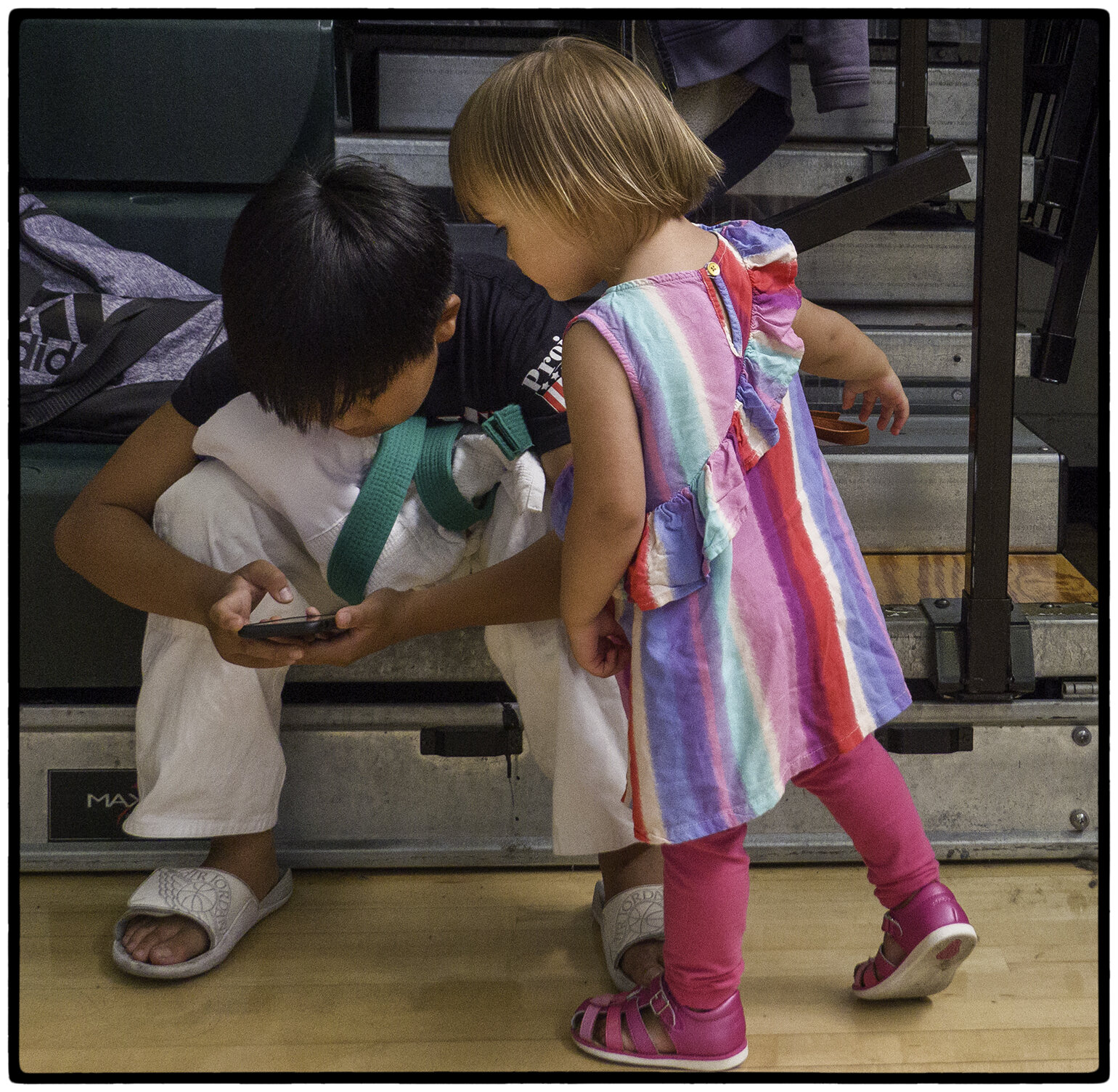
The little girl below is curious about what the boy is doing.She doesn’t know him. She’s never seen him before. The unwritten rules of “personal space” don’t appear in her playbook. The fear of rejection, the reluctance to invade his space, neither of these is something she understands. It’s a delightful innocence and naivete that is part of early childhood that is being revealed here. So telling and revealing truths are part of the same equation.

And next is a double revelation.

Comfort and Tears.The girl on her back was just defeated in a judo match. Whether she was hurt or just disappointed is unknown, but that she’s experiencing grief is clear. The girl who beat her is expressing comfort in a physical gesture that recogn…

Comfort and Tears.

The girl on her back was just defeated in a judo match. Whether she was hurt or just disappointed is unknown, but that she’s experiencing grief is clear. The girl who beat her is expressing comfort in a physical gesture that recognizes, sympathizes, and cares for the girl she’s just beaten.

Love and Death

Countless images show the love between couples. This lady (and her six month old daughter) are watching her husband play rugby. What we’re willing to do to show our love for someone can be revealed in new and different ways, and sitting on a plastic tarp under a pounding rain just to watch someone you care about play rugby is one such thing, more revealing and truthful than a box of chocolates or a dozen roses.

_DSC4082-Enhanced-Edit.jpg

I love to take photographs that reflect the gamut of human experience, but until Patrick O’Day was killed in the Gulf War I had never pointed my camera at a person who has just lost someone, or whose sense of grief is so intense. It’s times like that that I put the camera down and change hats, except this one occasion, when Patrick O’ Day was honored and his widow presented with his flag. And the family hired me to record the event.

O'Day.jpg

The other side of that coin. Jennifer and Andrew knew that giving birth in Nepal was an unnecessary risk, so Jennifer flew back to California while Andrew, sitting on a sofa in Kathmandu, watched it all on Skype. Weeks later he was able to fly to SF and meet his son for the first time. Jennifer is handing Andrew his first born child while Jadyne is totally caught up in the moment.

DDD meets Susanto.jpg

SFO

And the third side of that coin is humor. In a now defunct parade called “How Berkeley Can You Be?” a tree marched up the street to chat with two tie-dyed ladies. This makes me smile, too.

And the third side of that coin is humor. In a now defunct parade called “How Berkeley Can You Be?” a tree marched up the street to chat with two tie-dyed ladies. This makes me smile, too.

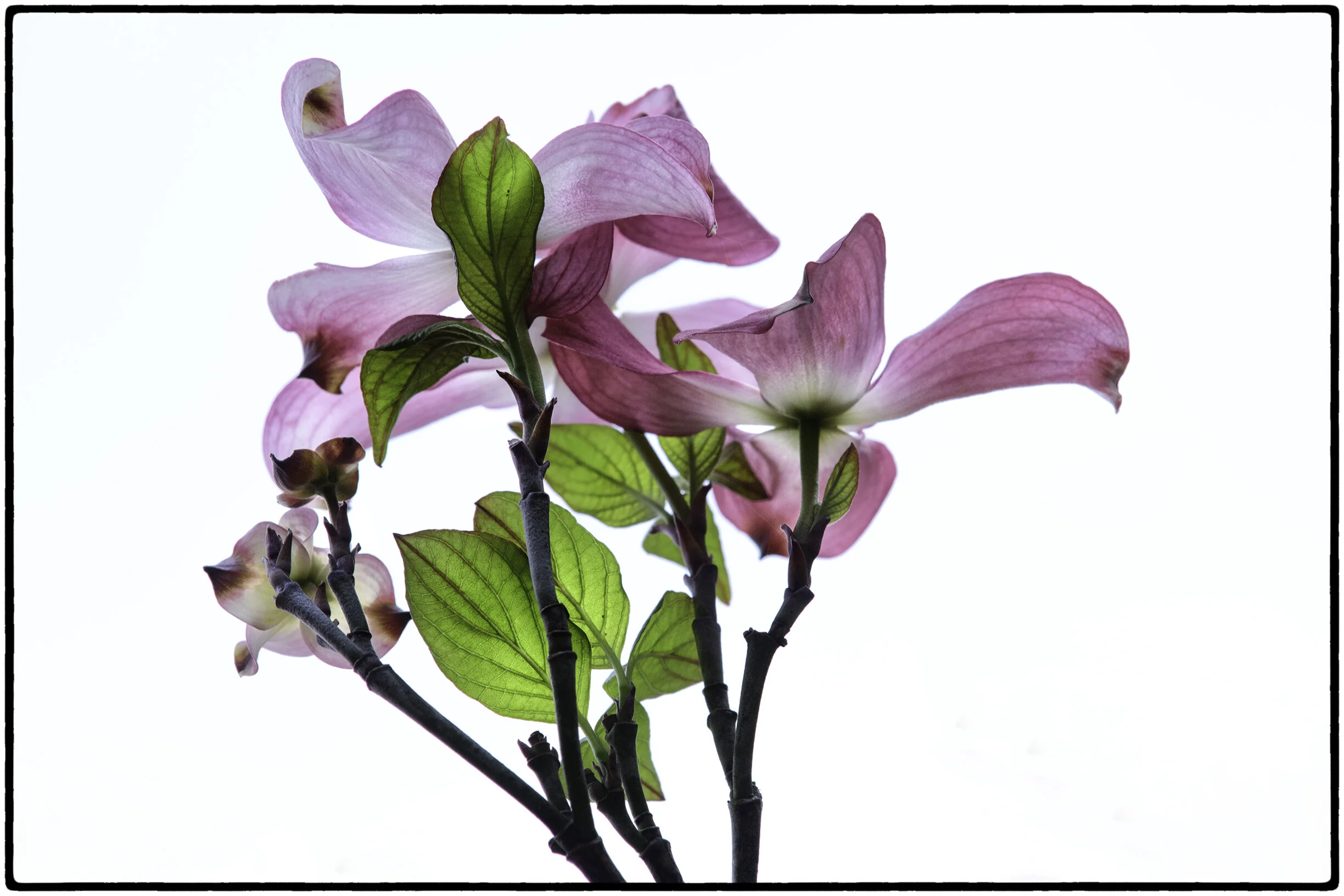
Since everything in the world has been photographed innumerable times by skilled and competent artists why bother? To make a photograph the artist/ photographer needs to see and record everyday things in ways that aren’t everyday, that shed a new truth, a new light when the viewer sees it. And maybe finds a way to do it that has never been done before. We’ve all seen dogwood trees. But lying on the ground beneath the tree and photographing a part of the tree under a foggy sky possibly reveals something new about dogwood.

Seeing as Art

What’s also revealed here in this still life in the translucence of the leaves is the essence of what leaves are all about.

What’s also revealed here in this still life in the translucence of the leaves is the essence of what leaves are all about.

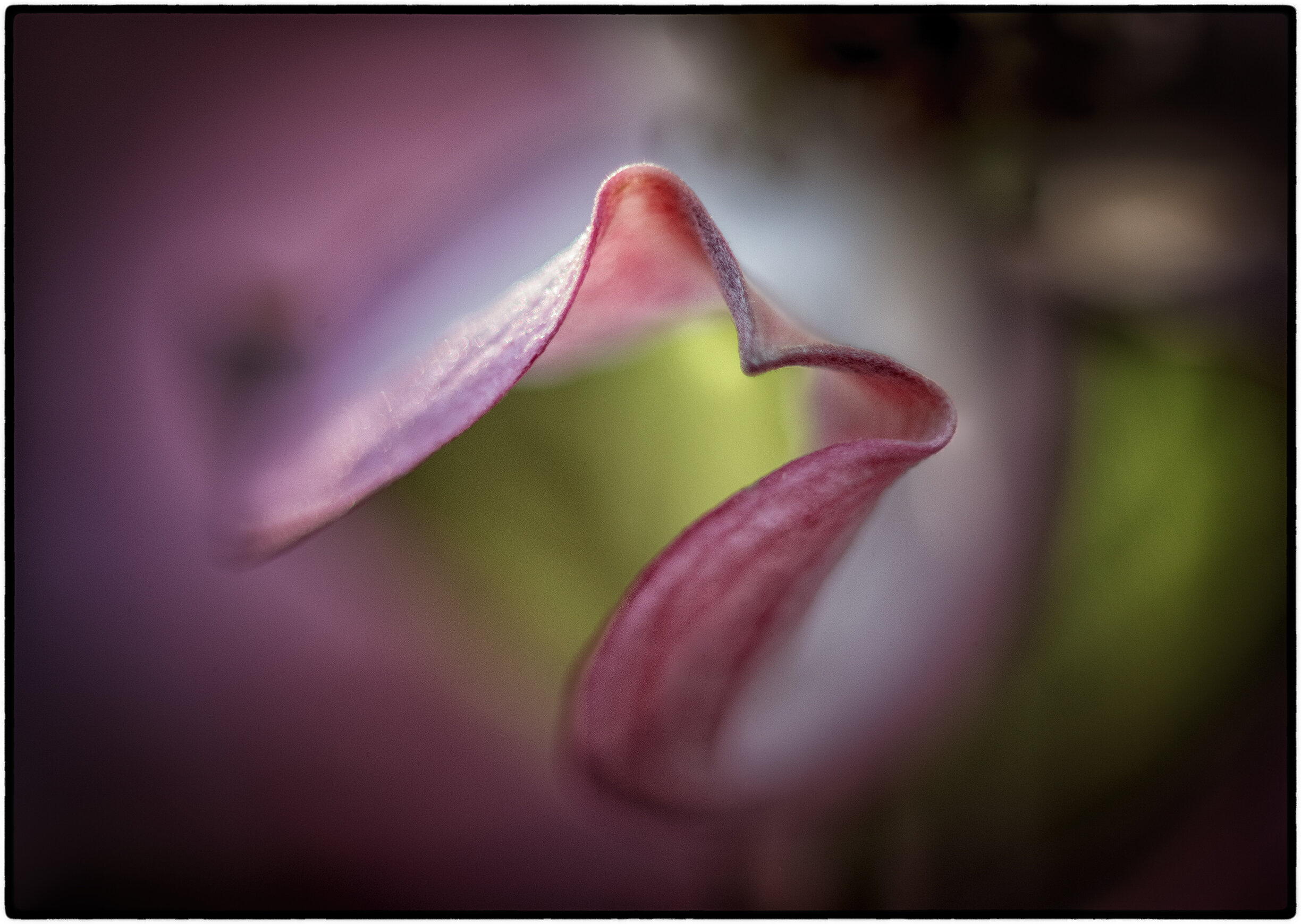
Or looking at it with close-up equipment which reveals textures, lines and forms.

Or looking at it with close-up equipment which reveals textures, lines and forms.

More of the same. In a photograph we are drawn to an interpretation of what is. In this case, the patterns of the fronds, the peculiar curving end to the major frond, the staggered growth of the offshoots on the main frond reveal a truth in nature,

More of the same. In a photograph we are drawn to an interpretation of what is. In this case, the patterns of the fronds, the peculiar curving end to the major frond, the staggered growth of the offshoots on the main frond reveal a truth in nature,

Sometimes conditions give photographers opportunities to see in ways that are closed off to others. Riding in the bow of a tugboat and shooting with a fisheye lens allowed me to see and photograph a container ship my own way.

Bow.jpg
Asphalt Autumn. We’ve all seen, admired, and photographed the colors of autumn, but the photographer looks elsewhere, tries to interpret the beauty of nature in a whole new way, like on a wet road having been crushed by passing cars.

Asphalt Autumn. We’ve all seen, admired, and photographed the colors of autumn, but the photographer looks elsewhere, tries to interpret the beauty of nature in a whole new way, like on a wet road having been crushed by passing cars.

So far it’s truth, revelation, fresh or new interpretation, and I’m now adding preservation. Photographers take thousands of images of their wives, husbands, parents, and children. And embedded in those photographs are truths of who these people were at one specific time, where they lived, experiences they’ve shared.

Recording for Posterity

My forty-five year old son at age three months.

My forty-five year old son at age three months.

My sister-in-law Teeny, killed in an avalanche almost thirty-two years ago., preserved both in our memories and in photographs.

My sister-in-law Teeny, killed in an avalanche almost thirty-two years ago., preserved both in our memories and in photographs.

6210 Ridge Avenue, the house I lived in until I was seventeen. Now torn down and replaced with an apartment building, my childhood home exists as far as I know in this one 35mm transparency.

6210 Ridge Avenue, the house I lived in until I was seventeen. Now torn down and replaced with an apartment building, my childhood home exists as far as I know in this one 35mm transparency.

The Natural World and Photography.

Some psychologists believe that people bring plants and animals inside their homes to reconnect with the world they (their ancestors) once lived in. Perhaps that explains the fascination photographers have with nature, with landscapes, flowers, sunrises and sunsets. We’re all going home. But once again we have to make our image unique, better or different from the many that have preceded it and the many that will follow. But how do we do that? For Ansel Adams the clarity of his 8 x 10 view camera, his patience, his understanding of all the processes that make up film photography, his understanding and search for perfect light, made him one of the best landscape photographers.

It’s not my strength. I have favorites, but they pale. I walked to the beach as Hurricane Iwa came ashore in Oahu in 1982.

I remember the power of the wind, the darkening skies.

I remember the power of the wind, the darkening skies.

Annapurna, along the Jamsom Trek in the Himalayas in Nepal. (Path in the lower right) A grab shot. We were in the Himalayas when I turned, saw Annapurna, and was struck by all the elements that make this a photograph.

Annapurna, along the Jamsom Trek in the Himalayas in Nepal. (Path in the lower right) A grab shot. We were in the Himalayas when I turned, saw Annapurna, and was struck by all the elements that make this a photograph.

Closer to home. I live about five minutes from a vacant lot that overlooks the San Francisco Bay, San Francisco, the Golden Gate Bridge, and points beyond. On a late February day in 2016 I watched as a thunderstorm just south of San Francisco was il…

Closer to home. I live about five minutes from a vacant lot that overlooks the San Francisco Bay, San Francisco, the Golden Gate Bridge, and points beyond. On a late February day in 2016 I watched as a thunderstorm just south of San Francisco was illuminated by the colors of a dramatic winter sunset.

I’m more at home with the smallness of nature—a backlit spider on a rainy day, the colors of strawberry leaves, a passion flower in full bloom., and a hummingbird feeding.

I’m more at home with the smallness of nature—a backlit spider on a rainy day, the colors of strawberry leaves, a passion flower in full bloom., and a hummingbird feeding.

At the end of Part I. Why do I take photos? I look for the truth in all things and I enjoy watching life revealing itself through images. I’m a collector of photos. In preserving the images that make up my collection I am preserving not only what I’m photographing but also pieces of myself. And last, I am grateful for the incredible beauty of nature as it’s revealed to me in shapes, colors, and life, and I photograph such things to make them a part of my collection and to be a part of theirs. That’s not exactly right. I photograph them because they demand to be photographed. I have no choice.

The Trailer for Part II. Sometimes the photographer uses what he photographs to create something altogether different. Softness and blur are in my toolkit. There are infinite possibilities, only a few of which have I explored.

Motorcyclist, Glenwood Springs, Colorado

Motorcyclist, Glenwood Springs, Colorado


eBay

A few weeks ago I put up my Panisonic Lumix LX 100 II for sale on eBay. Instead of filling the twelve photo spaces with pictures of the camera I chose images that I had taken with the camera just to show prospective buyers what it could do.

Screen Shot 2019-09-13 at 11.23.29 AM.png

I wrote this to Derek:

“Hi Derek, thank you for your purchase of my Panasonic camera. I will send it out today and will update you with the tracking number. I'm also using this space to give you a little hint about using the camera. As a professional photographer I loved the dial on top of the camera that allowed me to override auto settings when unusual lighting situations required a different setting than the camera indicated. Just be apprised that it's something to check before you do a quick grab shot. I would have preferred a little locking button so the dial couldn't change exposure without me performing a two-step operation. It's not a problem, just something that on occasion requires your attention. I have left you positive feedback and would welcome the same upon receipt and your satisfaction. Thank you, David”

Yesterday I received this note from him:

merriyou70:

I just let you know, the camera you sold to me, has bugs, it does not work well.

I sent him the following and enclosed the December 12th sales invoice from B & H cameras in New York, showing that the camera is still under warranty:

“Derek, I used the camera up until the day you purchased it. It worked fine, and all the photos on the listing were taken with that camera. I'm attaching a sales order from B & H for the camera which was purchased on the 12th of December, 2018. It should still be under factory warranty. If you can tell the nearest service center what the "bugs" are they should be able to take care of them for you.”

And here was his reply:

David, thank you for quick responses, unfortunately it is too late for me to do anything, I'm at stage 4 Cancer, I was going to photograph my last experiences of Cancer. I think time ran out, I'm not not going to ask you do anything about the camera. I'm just going left along. Only thing I asked you is that just do details of product next time. I'm asking this person who love photography. Two photos I added took with my old Lumix, I had good experience with it. The camera you sold, the menu button are very jumpy, and camera is behaving punky, not sure if it is firmware problem or what. But I can't take pictures with it. It is my mistake, I should just bought the brand new camera. Anyway good luck and thank you.
God bless,
Derek

David

The Solano Stroll

On a sunny September Sunday the city of Berkeley closes Solano Avenue, a one mile stretch between the Alameda (on top) and San Pablo Avenue (down below) so that thousands of people can march up and down the street sampling slices of pizza from Zachary’s, sandwiches and fries from food trucks, and quench their thirst with lemonade from the many food and beverage stands that punctuate the road between the two arteries. Every year we go. Every year we say “we’ll never go again”, as it’s always the same.

Weaving in and among the strollers and skateboarders turns the stroll into a slither.

Weaving in and among the strollers and skateboarders turns the stroll into a slither.

And of course, the opening act is a parade. Hundreds of booths featuring camera clubs, churches, hang-gliding classes, Kung Fu exhibitions, Scottish folk dancing, high school jazz bands, political candidates, and this year, two opposing Jewish group…

And of course, the opening act is a parade. Hundreds of booths featuring camera clubs, churches, hang-gliding classes, Kung Fu exhibitions, Scottish folk dancing, high school jazz bands, political candidates, and this year, two opposing Jewish groups, one supporting Palestinians’ rights, the other, opposed.

And amid the booths, the food, always the food.

And amid the booths, the food, always the food.

For me the fun is the people. Here’s a kid on a pogo stick.

For me the fun is the people. Here’s a kid on a pogo stick.

And a Taiko drummer

And a Taiko drummer

It’s Berkeley, remember?

It’s Berkeley, remember?

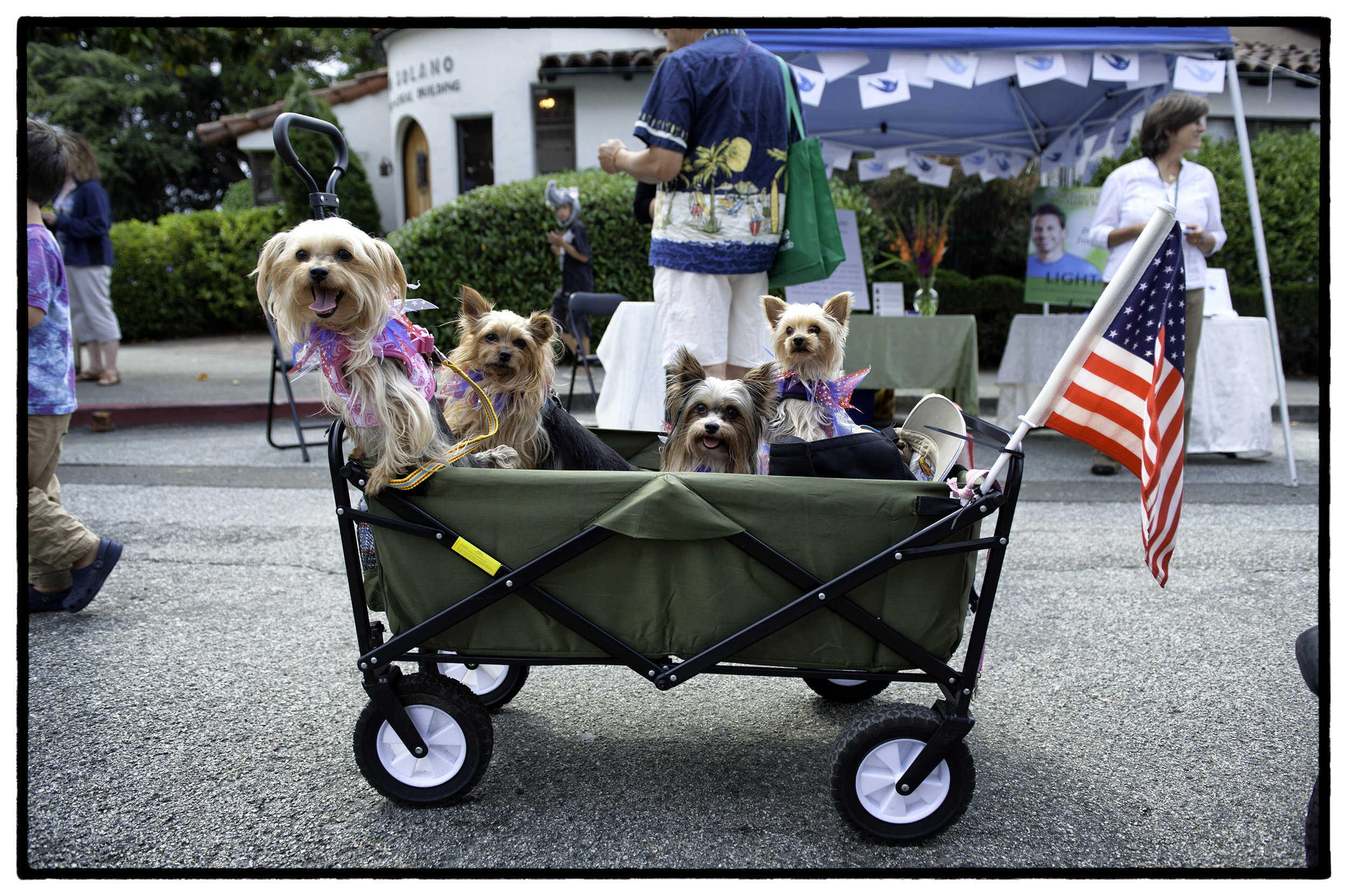
It’s an All-American stroll with All-American dogs…

It’s an All-American stroll with All-American dogs…

…and family portraits of two happy sons

…and family portraits of two happy sons

Music is the order of business, whether Scottish Folk,

Music is the order of business, whether Scottish Folk,

Big Band,

Big Band,

or Mexican, with real Dancing in the Street

or Mexican, with real Dancing in the Street

Or Rock n’ Roll, and anyone can join in.

Or Rock n’ Roll, and anyone can join in.

Ye Olde School Trail

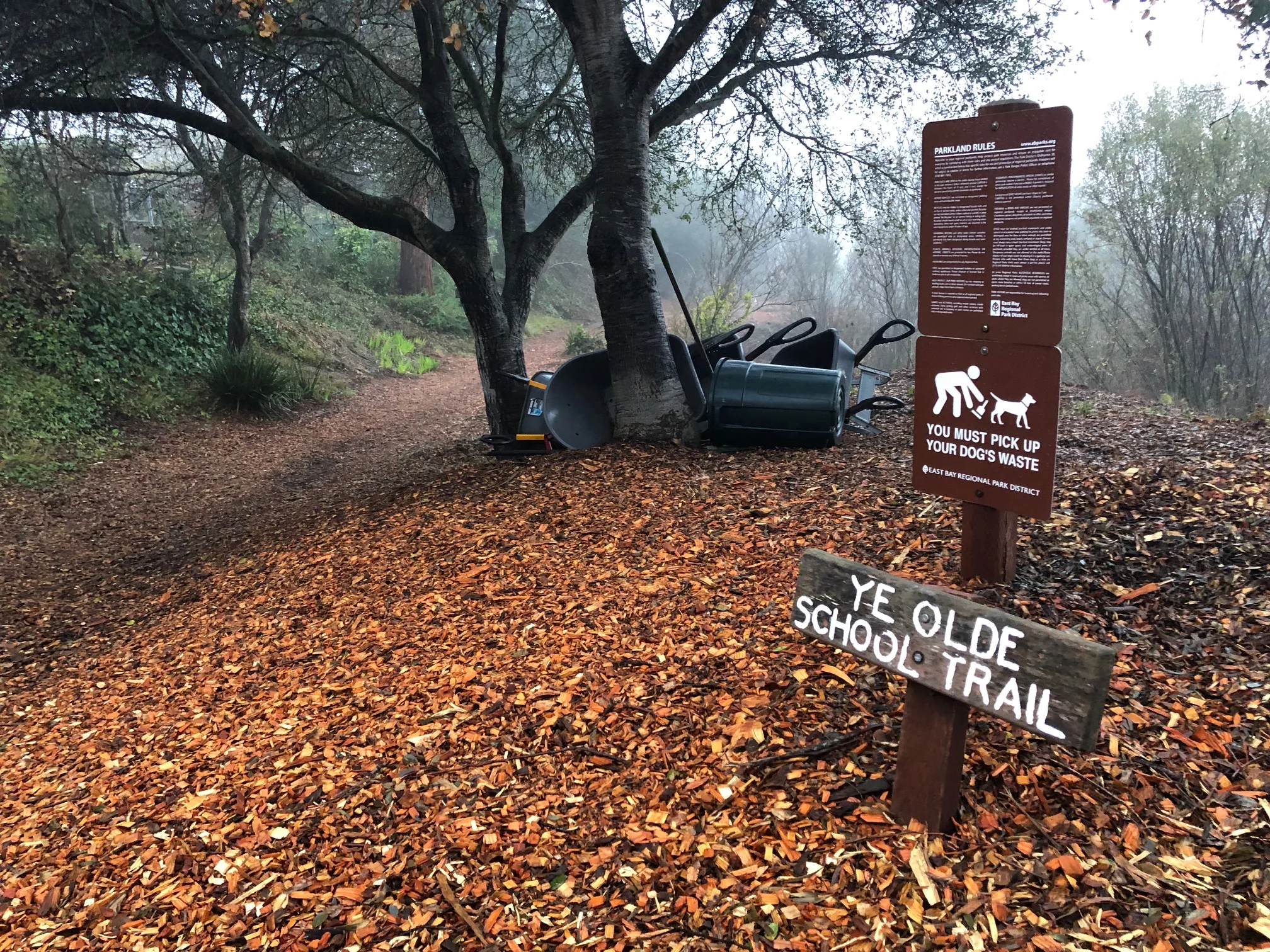
We chose to move to Kensington because we found a house that had lovely grounds, redwood trees, a place for a vegetable garden, and neighbors whose homes were hidden by large trees, giving us the sense of privacy that we had enjoyed in Santa Rosa. Tilden Park, with its many forested trails, views of the city and even the mountains, was an unknown. We discovered that we were only fifteen minutes away from Tilden’s Selby Trail, one of our favorites. And Selby wasn’t alone. Another hidden gem was the Olde School Trail which begins where Lake Street ends, runs along the ridge that separates Kensington from Tilden, and ends at the playground behind Hilltop School.

The Beginning

The Beginning

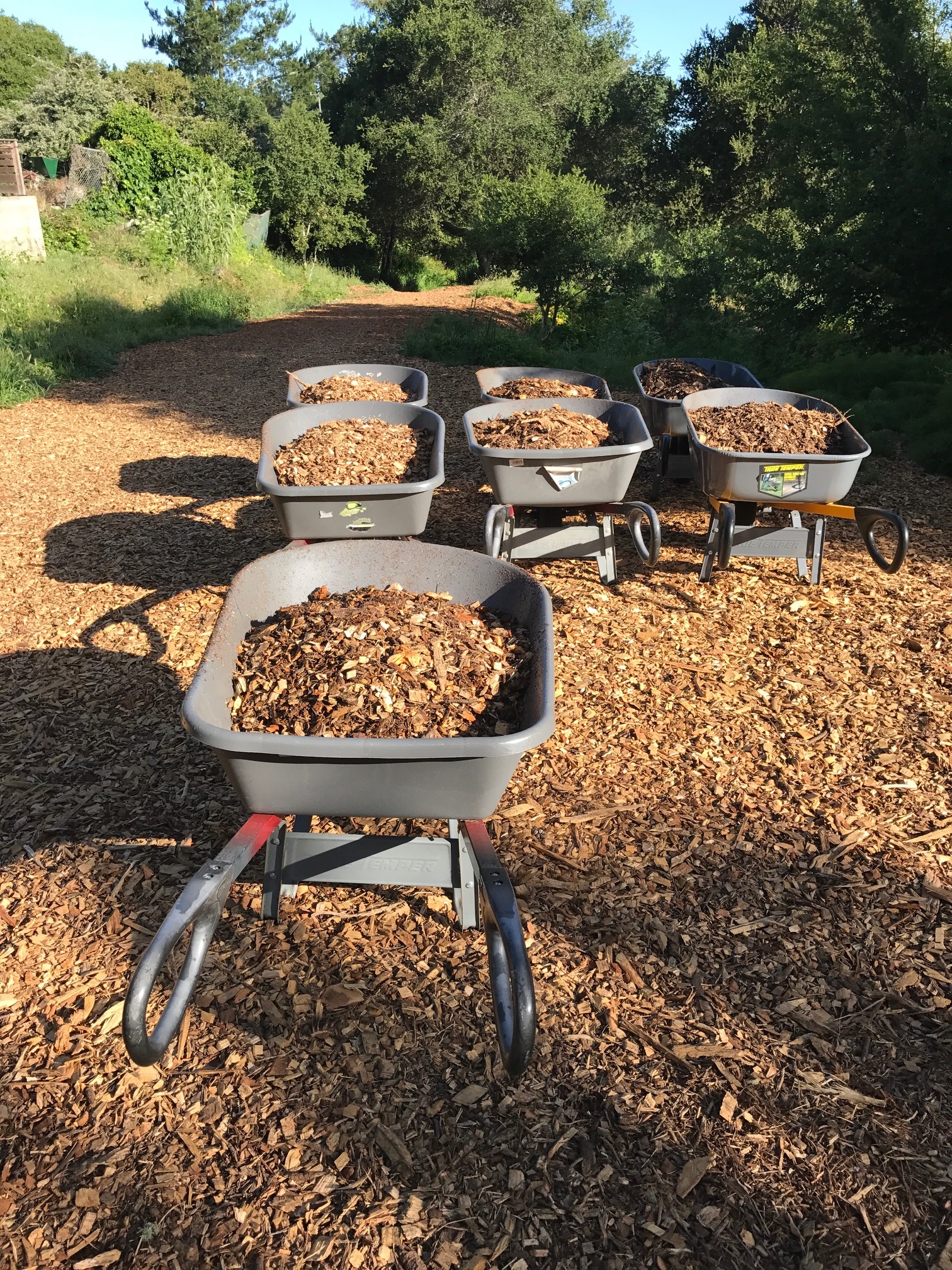
Every Wednesday morning I include the trail as part of my mostly urban stroll. The trail takes about twenty minutes to navigate.  The residents have been stockpiling mulch and wheelbarrows so that those who frequent the trail can take a wheelbarrow and dump the mulch in the spots where the winter rains might otherwise make the path muddy and treacherous. 

An open invitation for hikers to help the neighbors whose properties back up to the trail maintain it..

An open invitation for hikers to help the neighbors whose properties back up to the trail maintain it..

IMG_1111 copy.jpg

Naked ladies alongside Olde School Trail. The hills of Tilden are off to the right.

I was up early yesterday before the fog had a chance to clear, and except for a couple of dogwalkers, I had the trail to myself.

I was up early yesterday before the fog had a chance to clear, and except for a couple of dogwalkers, I had the trail to myself.

IMG_1853 copy.jpg

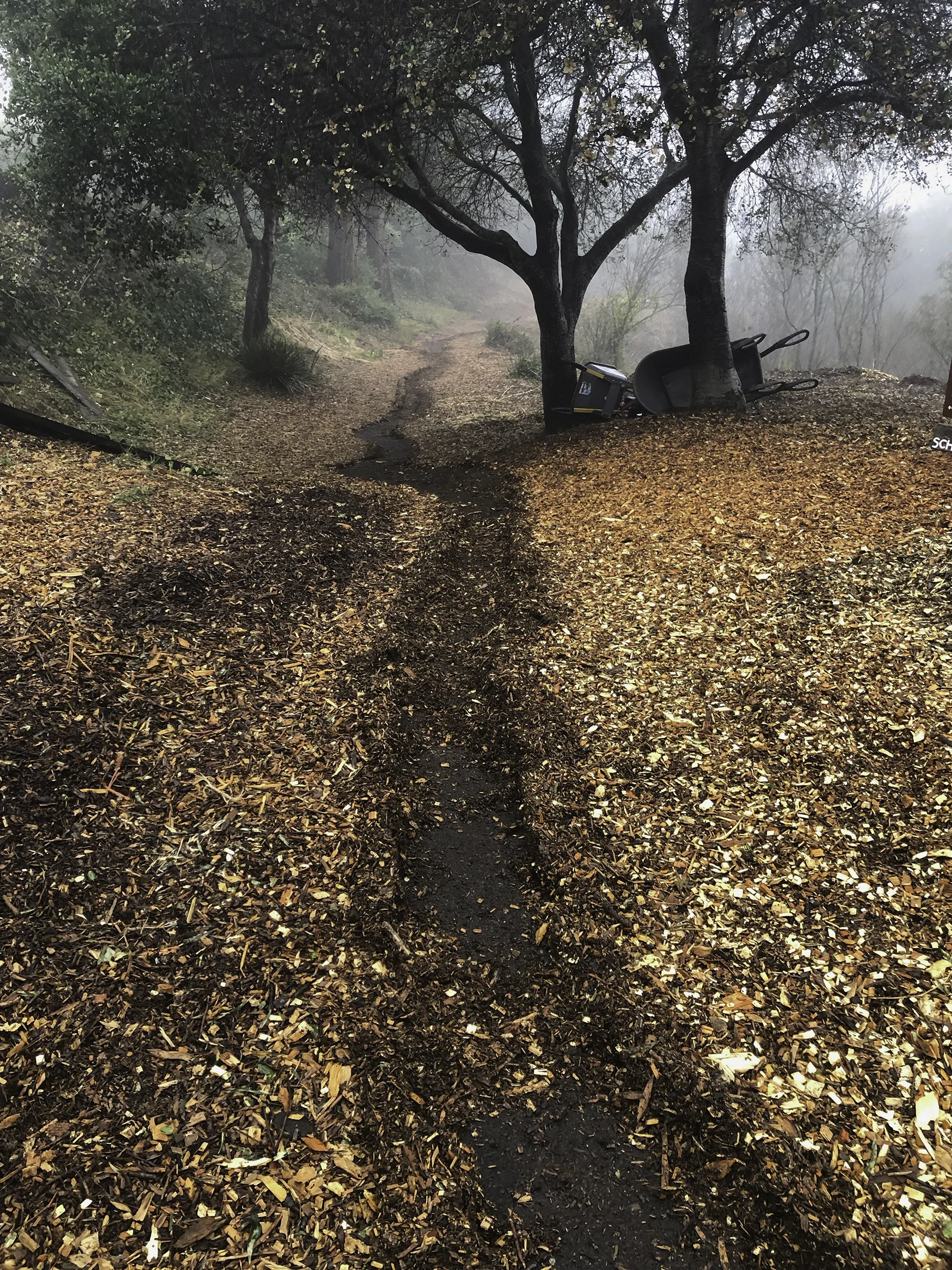
Even with the wood chips and mulch, the Olde School Trail was no match for last year’s soggy winter. Rivulets during the first heavy rains carved a path through the mulch.

Later in the winter…after the rains have fallen. This gentleman walks the trail with his son, taking him to Hilltop School, while pushing his twin daughters and carrying his dog at a time when the trail isn’t as pleasant a walk as it is the rest of …

Later in the winter…after the rains have fallen. This gentleman walks the trail with his son, taking him to Hilltop School, while pushing his twin daughters and carrying his dog at a time when the trail isn’t as pleasant a walk as it is the rest of the year.

Not all hikers on Ye Olde School Trail are human

Not all hikers on Ye Olde School Trail are human

On a prettier day

On a prettier day

The Paradise fire preceded the rains by a couple of months. We couldn’t see San Francisco for a week. Everyone wore masks. For several days the air quality was deemed the worst in the world, even worse than Beijing and Delhi. I still walked on Wednesday, mask over my face, camera in hand. Three sunrise images during the fires.

Looking north through Tilden.

Looking north through Tilden.

IMG_1826.JPG
IMG_1733.JPG
The Naked Ladies aren’t the only floral companions on the Olde School Trail.

The Naked Ladies aren’t the only floral companions on the Olde School Trail.

And since the Olde School Trail has uninterrupted views to the east it was a perfect spot to set up a tripod and await the arrival of one of last year’s two “supermoons.”

And since the Olde School Trail has uninterrupted views to the east it was a perfect spot to set up a tripod and await the arrival of one of last year’s two “supermoons.”

Plus Ca Change

Perhaps one of the more revealing emails that I have received over the past few years included this image of a man and a little girl.

I met Gail Anderson fifty-one years ago. She sent me this email recently, saying that for her it represented a relationship that we had in 1968. She was eight; I was twenty-one..

I met Gail Anderson fifty-one years ago. She sent me this email recently, saying that for her it represented a relationship that we had in 1968. She was eight; I was twenty-one..

Many years ago Jadyne and I took our kids to Hawaii.  We were sitting around a hotel open-air fireplace one cool evening when we overhead a conversation between a father and his daughter.  They had been snorkeling when he lost sight of her.  “Dad,” she said, “You needn’t worry about me.  I was fine, I’m thirty-five!”  He replied, “You don’t understand.  I’m your father!”  Some things simply don’t change.

When Jennifer was 21 she went to Bangkok and traveled around Asia for about fifteen months, living in virtually every country for a month or so.  We were worried about her so Jadyne and I, after realizing that she wouldn’t be home by Christmas, wanted to confirm for ourselves that she was okay, so we agreed to meet her in April in Hanoi.  When I saw how comfortable she was in dealing with the Vietnamese in the markets and hotels our respective roles reversed.  She was now in charge, as she knew more about bargaining, traveling, and simply getting along in Asia than I did.  I realized subconsciously that this signified not only a growth in her but also a real change in our relationship, and that I could put away my worries and fears about her being able to manage in these circumstances. I could rely on her experience to provide advice.  But, as I began to recognize that she had grown into a capable and independent young woman, and second, that in Vietnam our roles had switched, I was (and am), still her father. C’est la meme chose.

My relationship with my two brothers—Jack in Cincinnati and Bill, who lives just five minutes away, has changed over the years.  I was the youngest of three, and even though Bill was a stepbrother, the age difference when we were growing up was the biggest factor in our relationship. That was especially true with Jack, my “real” brother.  Now that we are all grown up the age difference is irrelevant, and what has determined or affected how we relate to each other has more to do with our understandings of who we are today. And by “who we are” I’m referring to our interests..  I have become closer to my stepbrother while maintaining a closeness with my “real” brother.

Jadyne spent two days with her high school friends in Sonoma, which she does once or twice a year.  These are girls (women) who were close in high school. They still enjoy each other’s company for a night once a year or so.  They can talk, but they have less in common today than when they were little Catholic schoolgirls with common interests and experiences. Relationships are living things, susceptible to change in so many ways, especially when people see each other frequently.

Marriages break up.  The couple has grown (or not), and in either case the relationship changes.  Some remain in those relationships “for the kids” even when the love is gone and the relationship has stagnated or failed to meet the changing needs of one or the other. In more successful marriages the couple embraces, accepts, or adjusts to the inevitable changes, and the changes enhance the relationship.

And that brings me back to the photo. Eight year old Gail will be sixty this year. Twenty-one year old David will be seventy-three. Because we haven’t seen each other for almost a quarter of a century our relationship hasn’t evolved the way others might.  But that’s not necessarily a bad thing.  Fifty years ago she needed someone like me.  And fifty years ago I needed someone like her.  I was the youngest of three brothers.  I never had a sister.  She was that little sister.  We still write to each other occasionally, mostly about our kids, our grandchildren, and the everyday comings and goings in our lives. We’re friends, maintaining a friendship and relationship that began fifty-one years ago, and even though we’re both grandparents, the foundation of our relationship is still frozen in the image of the little girl holding onto her doll and the man who soothes and comforts her.

Plus Ca Change Plus La Meme Chose